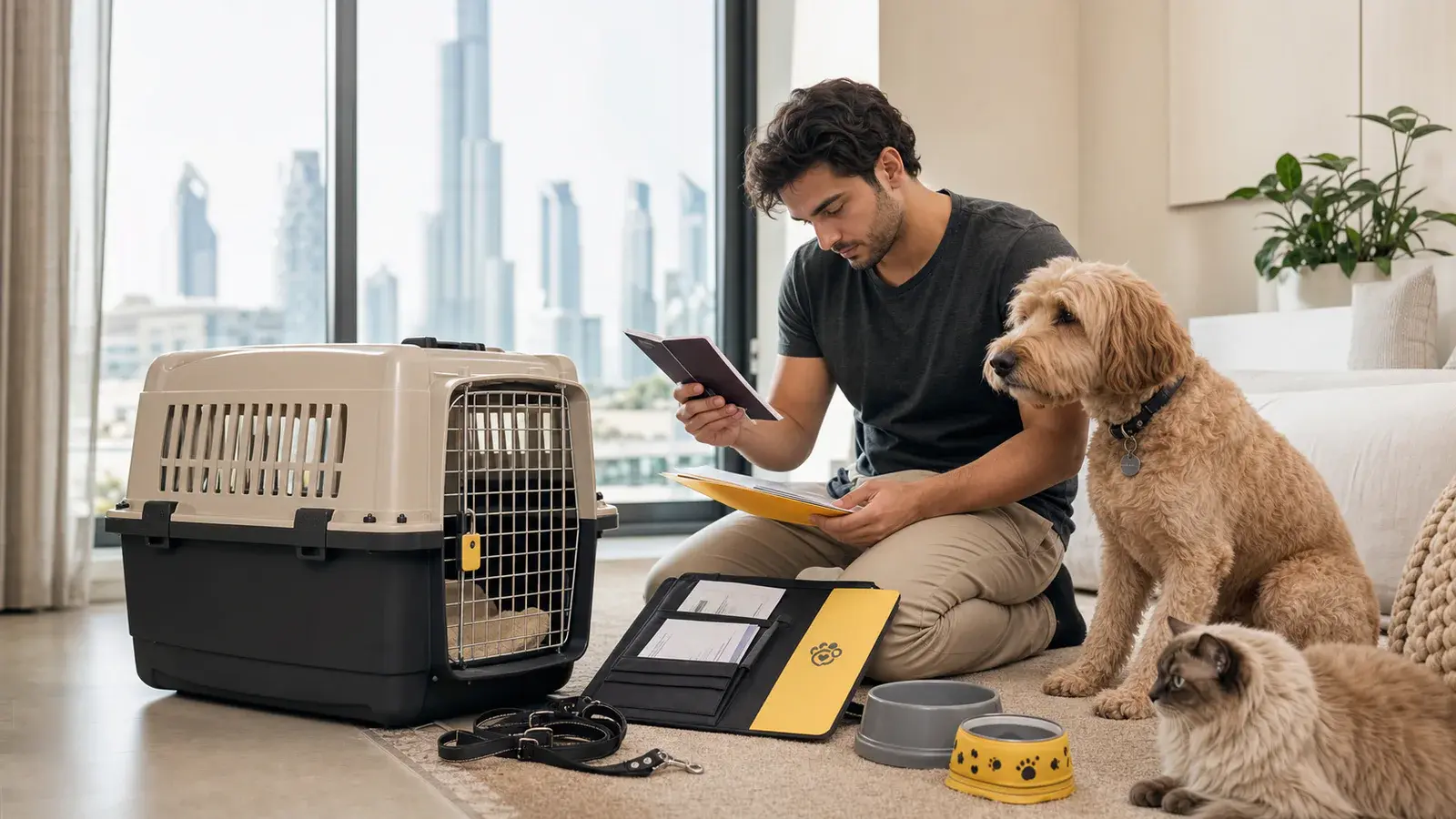
The safe planning order
- Check the destination government's current import requirements first.
- Verify microchip, vaccinations, tests and document details with your vet.
- Confirm the exact route and pet booking with the operating airline.
- Apply for the UAE veterinary health certificate inside the required timing window.
- Recheck destination, transit and airline rules immediately before travel.
- Plan the UAE return requirements before leaving if the pet may come back.
Exporting a pet from the UAE is a sequence of destination, airline and veterinary requirements. The safest approach is to work backwards from the travel date and avoid assuming that one certificate covers every country.
1. Check the destination country first
- Import permit or advance approval
- Microchip standard and required sequence
- Vaccinations and waiting periods
- Rabies antibody testing
- Parasite treatments
- Exact certificate wording and endorsement
- Approved arrival points, notices or quarantine
Use the destination government's veterinary, agriculture or border authority. Check transit-country requirements too. Do not substitute an old relocation-company checklist for the current official rule.
2. Confirm the microchip and records
Ask your veterinarian to scan the microchip and confirm that its number matches the vaccination book, pet passport, test results and every application. Correct any mismatch before requesting certificates.
3. Review vaccinations and tests early
The destination controls the required vaccines, titre tests, waiting periods and treatment timing. Show the official destination requirements to your veterinarian and build a dated plan. Do not revaccinate or schedule testing from memory.
4. Confirm how the airline will carry your pet
- Species, breed and age restrictions
- Route, aircraft and transit limitations
- Seasonal or temperature restrictions
- Accepted travel method and booking deadline
- Crate specification and document pouch
- Check-in or cargo-terminal location
- Total cost and change rules
Policies vary by airline and route. Obtain confirmation for the exact operating flight before buying non-refundable travel.
5. Prepare the travel crate
Follow the operating airline's current crate requirements and the applicable IATA live-animal standard. Introduce the crate gradually and confirm permitted water containers, absorbent lining, labels and accessories directly with the carrier.
6. Apply for the UAE veterinary health certificate
MOCCAE's current service includes an online application and payment, visual examination, laboratory tests if needed and electronic certificate issuance. The certificate is listed as valid for 30 days from issue, but the destination may require it much closer to travel.
The current service lists AED 100 for a personal consignment of no more than two animals, including companion animals, alongside a general AED 400 certificate fee. Confirm the fee that applies to your application in the portal before paying. Additional destination, veterinary, laboratory and airline costs are separate.
7. Recheck everything before departure
- Destination import permit or approval, if required
- Original vaccination record or pet passport
- Microchip record
- Rabies titre or other test results, if required
- UAE veterinary health certificate
- Destination-specific forms and endorsements
- Confirmed airline pet booking
- Secure copies and emergency contacts
8. Plan the return to the UAE before leaving
If the pet may return, current MOCCAE guidance says returning resident dogs and cats require a UAE import permit, must be microchipped and must have obtained the MOCCAE veterinary health certificate before departure. Rabies vaccination must remain valid through return, and the pet returns with an official health certificate from the exporting country. Review the current UAE pet-import requirements before leaving so the return is planned from the start.