The calm-training plan
- Choose a secure carrier that opens easily and is large enough for your cat to turn around and lie down.
- Leave it open in a familiar indoor space instead of bringing it out only before a journey.
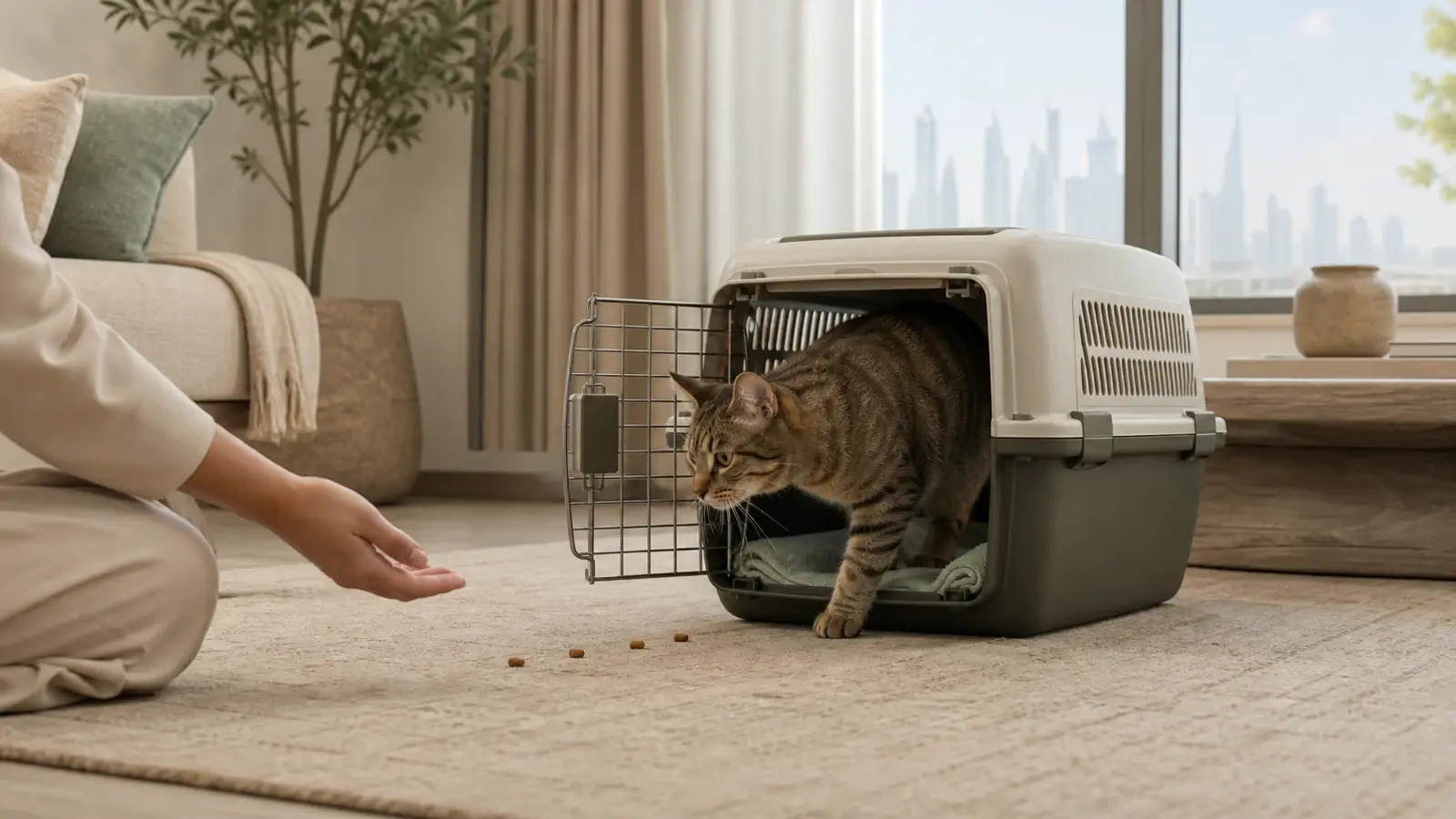
- Reward looking, approaching and entering; let the cat leave whenever the door is open.
- Add the door, lifting, movement and the car as separate, gradual steps.
- Pause or make the task easier when your cat shows fear, frustration or stops taking a usual reward.
- For an urgent trip or a cat with severe travel distress, ask your veterinary clinic for an individual plan.
A carrier is often a cat's route to veterinary care, a house move or an emergency. If it appears only when something stressful is about to happen, hiding from it makes sense. Training changes that prediction through small, voluntary experiences rather than a last-minute struggle.
The 2022 AAFP/ISFM feline guidelines describe positive-reinforcement training for voluntary carrier entry and calm travel as beneficial to welfare. UAE animal-welfare law requires carers to take necessary precautions against harm, pain and suffering and to account for an animal's needs. The law establishes the duty of care; the steps below are an editorial application of feline professional guidance, not a legal transport specification.
Choose a carrier that supports calm handling
Look for a strong, well-ventilated carrier that closes securely and gives your cat room to stand, turn and lie down. A removable top can let a veterinary professional examine a worried cat in the base when appropriate, avoiding the need to pull or tip the cat out. Check every latch before use and follow the carrier manufacturer's instructions.
- Place familiar, non-slip bedding inside.
- Keep the entrance unobstructed and secure the open door so it cannot swing towards the cat.
- Choose a quiet, accessible spot your cat already uses.
- For more than one cat, train and transport each cat in their own suitable carrier.
Stage 1: Make the carrier ordinary
Leave the carrier out as part of the room, with the door open. At first, place a valued treat or toy near it. Over later sessions, reward a glance towards the carrier, an approach, a sniff and paws at the entrance. Put rewards just inside only when your cat is comfortable at the previous distance.
Stage 2: Build voluntary entry
Move the reward gradually farther inside until your cat chooses to place all four paws in the carrier. You can feed part of a normal meal there if the cat readily enters, but never withhold essential food to force participation. Let the cat turn and leave. Repetition should make entry predictable, not trap the cat by surprise.
- Reward the smallest successful step immediately.
- Keep your hands away from the entrance while the cat is deciding.
- Do not push, chase, scruff or drop the cat through the top.
- If the cat will not approach, increase the distance and reward calm observation instead.
Stage 3: Add the door in seconds
Once your cat is relaxed inside, move the door slightly, reward and release. Build to touching the latch, closing it for one second, then a few seconds. Open it before the cat becomes distressed. Increase only one feature at a time: door duration, your movement or distance from the carrier.
Stage 4: Practise steady lifting and movement
With the door latched, support the carrier level from underneath, lift it a few centimetres, set it down and reward. Build towards a few steady steps around the room. The feline guidelines advise supporting carriers rather than carrying them only by a handle or strap, and avoiding sudden, erratic movement.
Stage 5: Introduce the parked car, then short journeys
Start with the car parked safely and the engine off. After your cat is comfortable there, practise the sound of the engine without moving, then a very short journey. Secure the carrier according to its instructions and your vehicle guidance so it remains stable and cannot interfere with the driver. Never open it outside a fully enclosed, secure space.
If the appointment is tomorrow
Do not try to compress weeks of gradual learning into one evening. Prepare the carrier in a small secure room, use familiar bedding and ask the clinic how it wants you to manage arrival. If your cat has intense fear, travel sickness, pain or a history of difficult transport, contact the treating veterinarian in advance. Only a veterinarian who knows the case should advise whether prescription support is appropriate; do not give human medicine or another animal's medicine.
Keep the skill after the journey
After a trip, clean the carrier if soiled, restore familiar bedding and leave it available again. Continue occasional easy entries and brief door closures when no journey follows. Pairing the carrier with ordinary, safe experiences helps prevent every appearance from predicting a vet visit.
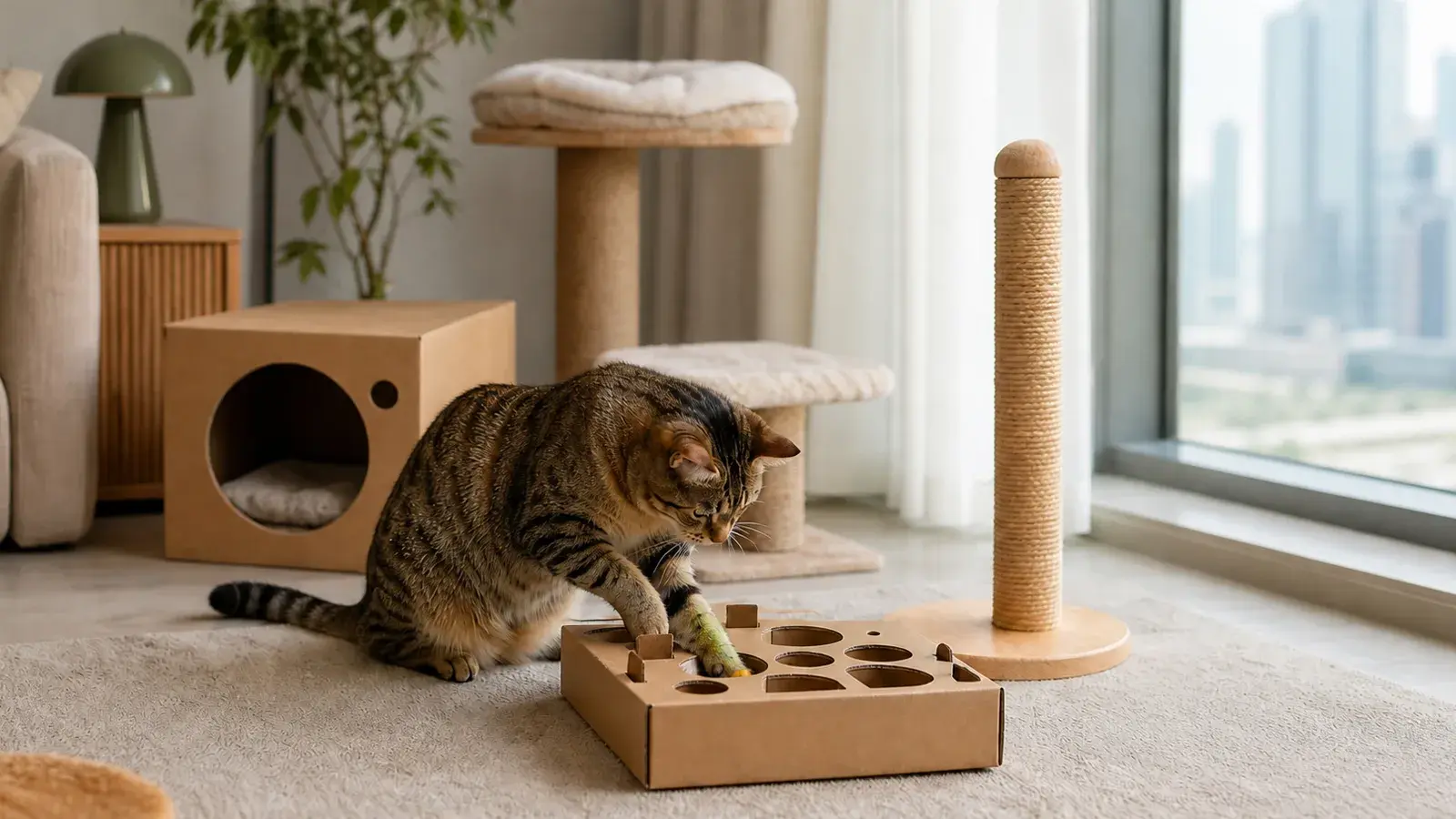
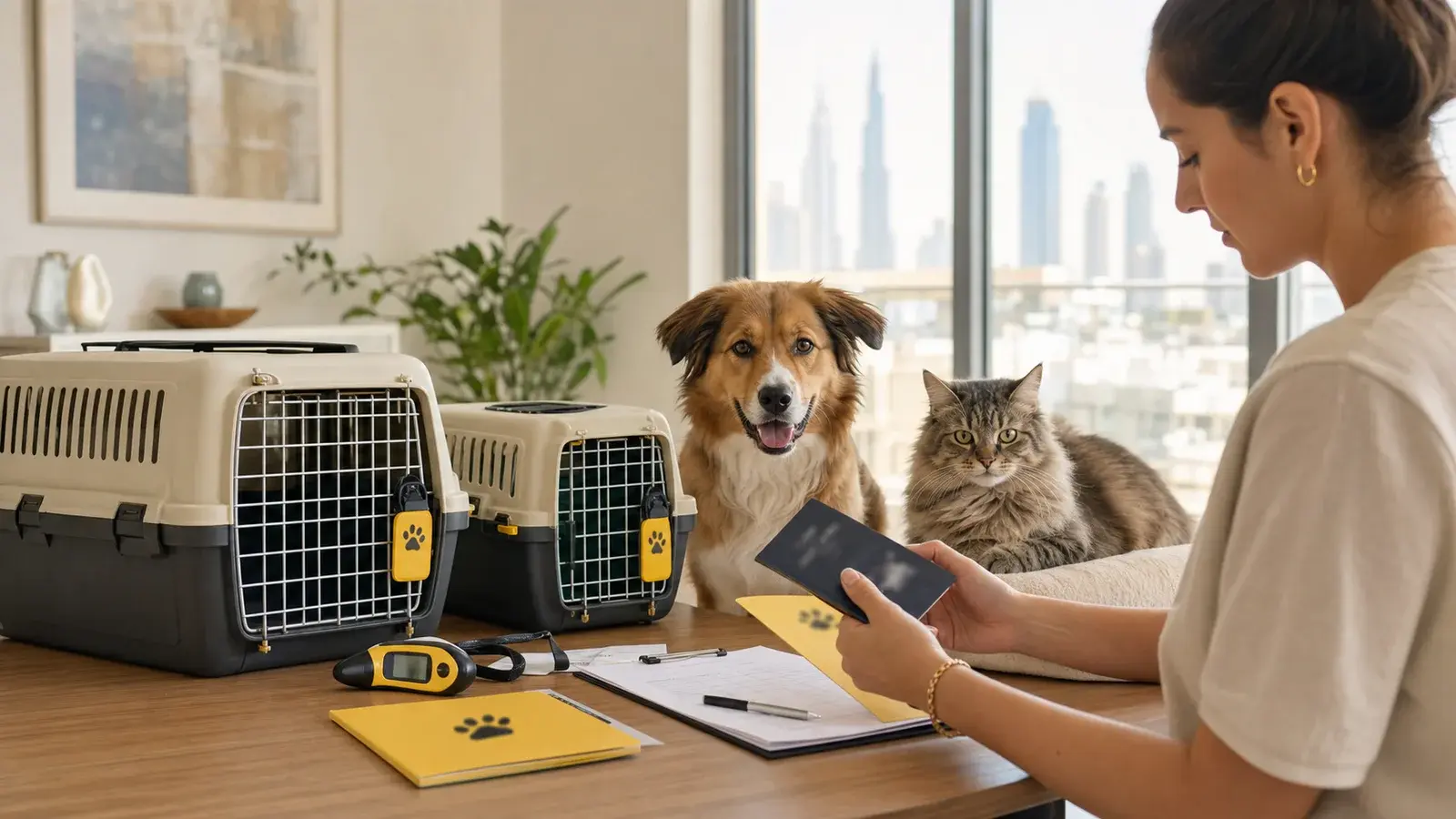
Carrier practice can sit naturally beside your cat's indoor enrichment routine. If the carrier is for an international move, training is only one part of preparation: also use the current UAE pet-import checklist and confirm the exact airline and government requirements for the journey.