Before every summer outing
- Check the National Center of Meteorology's live temperature, humidity and warnings for your location rather than relying on a usual walking time.
- Choose the coolest suitable conditions and shorten the outing to a toilet break when a safe exercise window is not available.
- Inspect the actual route for sun-heated paving, shade, water access and a quick return to cooling.
- Carry drinking water and let the dog set a comfortable pace; do not use a walk to push fitness in hot or humid conditions.
- Stop immediately for unusual or excessive panting, breathing difficulty, weakness, confusion, vomiting, collapse or unwillingness to continue.
- If overheating is suspected, move to shade or air conditioning, start cooling with water and airflow, and contact a veterinarian urgently.
A familiar clock time is not a safety guarantee in a UAE summer. Air temperature, humidity, direct sun, stored heat in paving, breeze, route length and the individual dog can all change the risk from one outing to the next. The practical question is not simply “morning or evening?” but “are today's conditions, this route and this dog suitable now?”
UAE animal-welfare law requires the person caring for an animal to take necessary precautions against harm, pain and suffering, protect animals kept outdoors from fluctuating weather and health risks, and provide access to appropriate water. Those are legal duties. The walk-planning steps below are an editorial application of UAE weather information and veterinary guidance, not a separate legal code or a veterinary assessment.
1. Check live conditions, not yesterday's routine
The National Center of Meteorology provides UAE forecasts, weather-station readings and warnings. Check your location shortly before leaving and look at temperature, humidity, wind and any warning affecting the route. Conditions can differ between a coastal neighbourhood, an inland community and a mountain area, so a screenshot from another emirate is not enough.
- Prefer the coolest suitable part of the day, but reassess it each day.
- Treat high humidity and still air as reasons for extra caution, even after sunset.
- Reduce both duration and intensity; sniffing and a toilet break can replace a long walk.
- Skip outdoor exercise when you cannot find a suitably cool route and use safe indoor activity instead.
- Never leave a dog waiting in a parked vehicle before, during or after the outing.
2. Inspect the surface the dog will actually use
Tarmac, tiles, concrete and artificial surfaces can retain strong solar heat after the air begins to cool. The Royal Veterinary College warns that hot paving can burn paw pads. Check several points on the planned route, including the unshaded return section, and favour shaded natural ground where access is permitted and the surface is otherwise safe.
- Choose a short loop with shade and an early turnaround point.
- Avoid routes that force a long crossing of open car parks or sunlit paving.
- Keep the dog on a comfortable lead so it cannot be rushed across a hot section.
- Check paws after the walk for any apparent injury or discomfort, and seek veterinary advice if you are concerned.
- Do not apply creams, dressings or human pain relief unless a veterinarian directs you.
3. Prepare water, shade and a fast exit
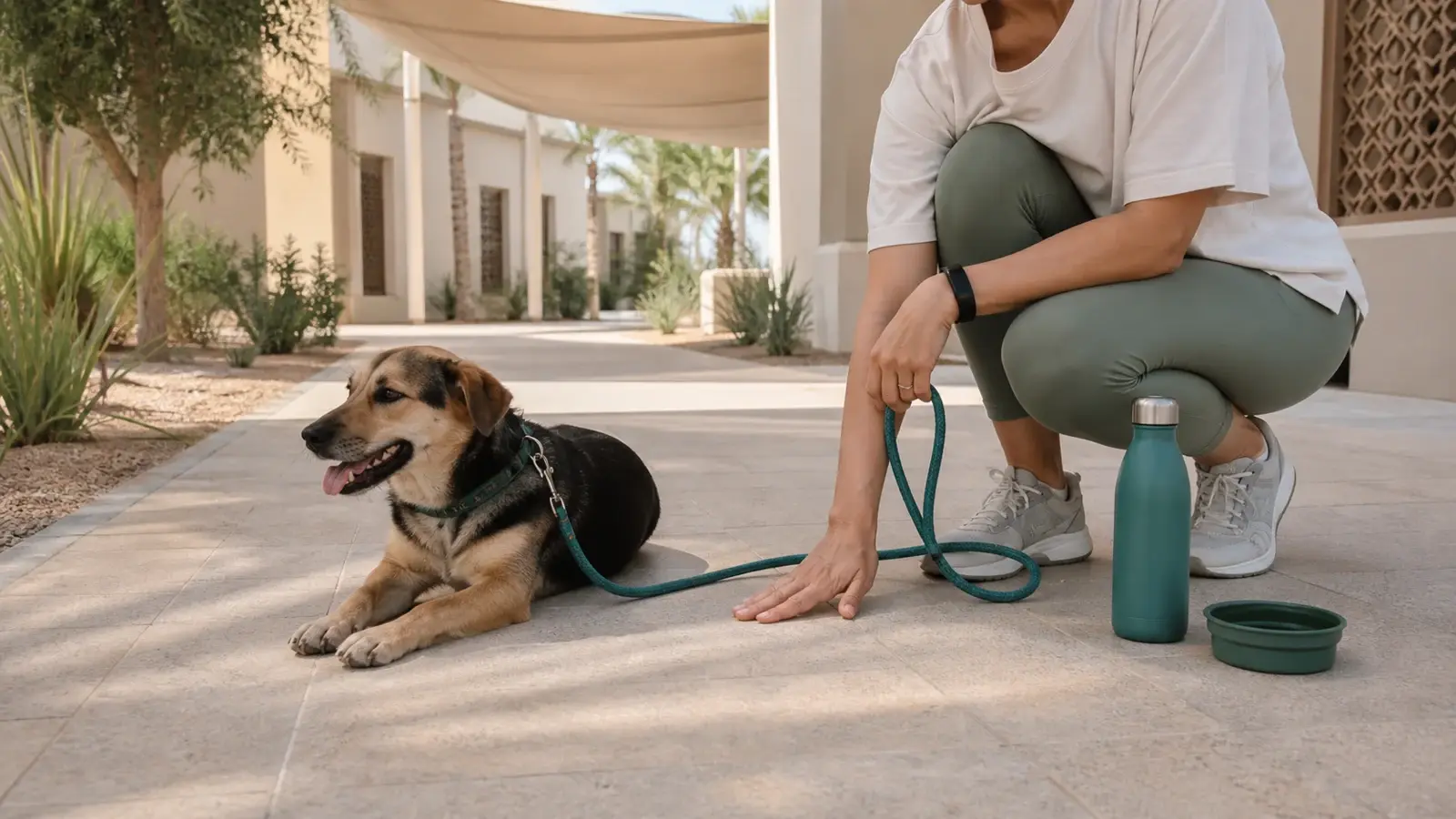
Carry fresh drinking water and a clean bowl, offer calm opportunities to drink and never force water into a dog's mouth. Start near home or a cooled indoor space, keep the first summer outings deliberately short, and turn back before the dog looks tired. Water supports the plan, but carrying it does not make an unsuitable walk safe.
- Use a well-fitted harness or collar and ordinary lead; avoid equipment that restricts breathing.
- Keep excitement low before leaving, because hard pulling and running add exertion.
- Build in shaded pauses without tying the dog outside or leaving it unattended.
- Cool the vehicle before the dog enters if driving is unavoidable, secure the dog safely and maintain airflow.
- Tell a dog walker or sitter exactly when to shorten or cancel the outing.
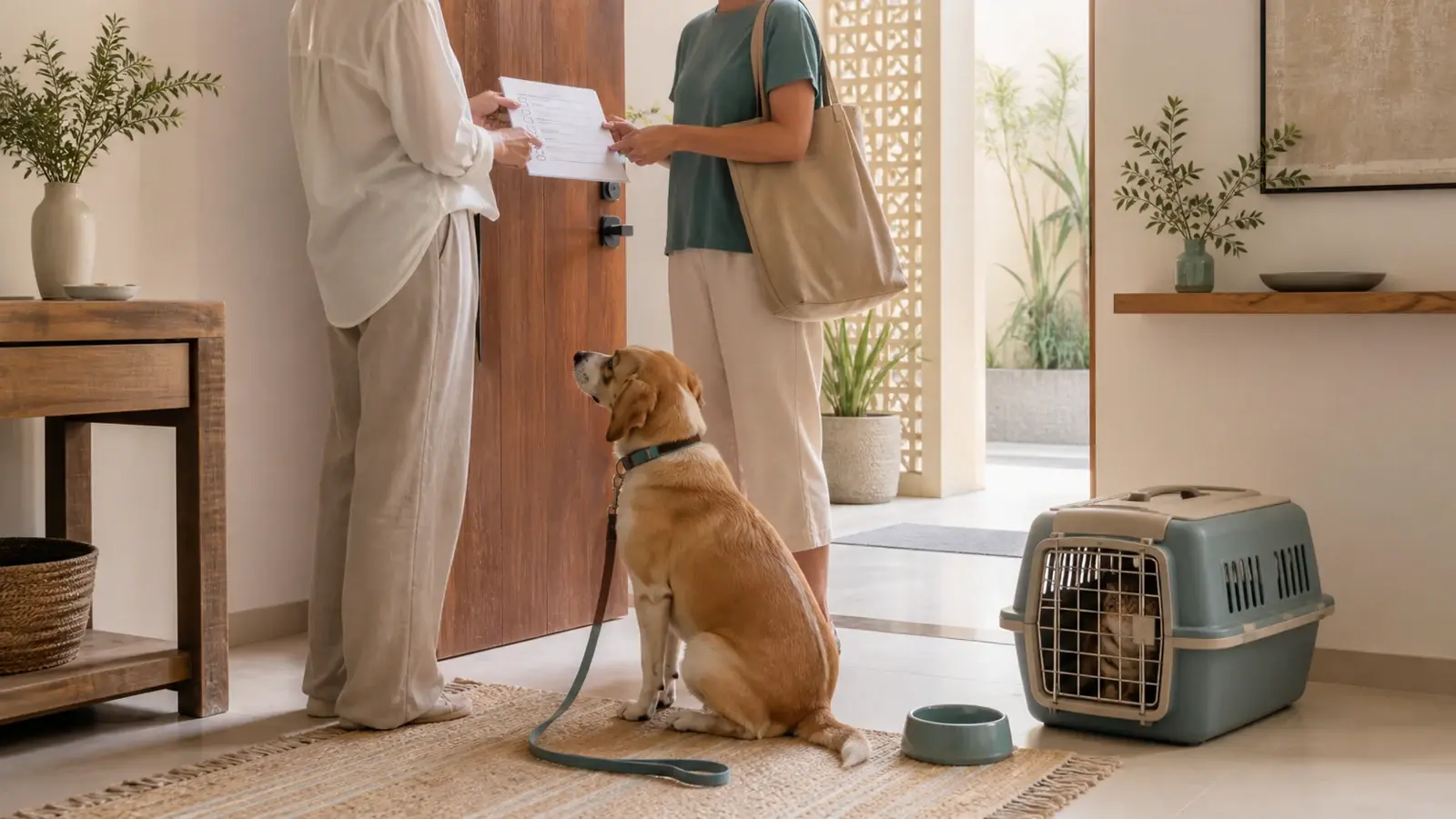
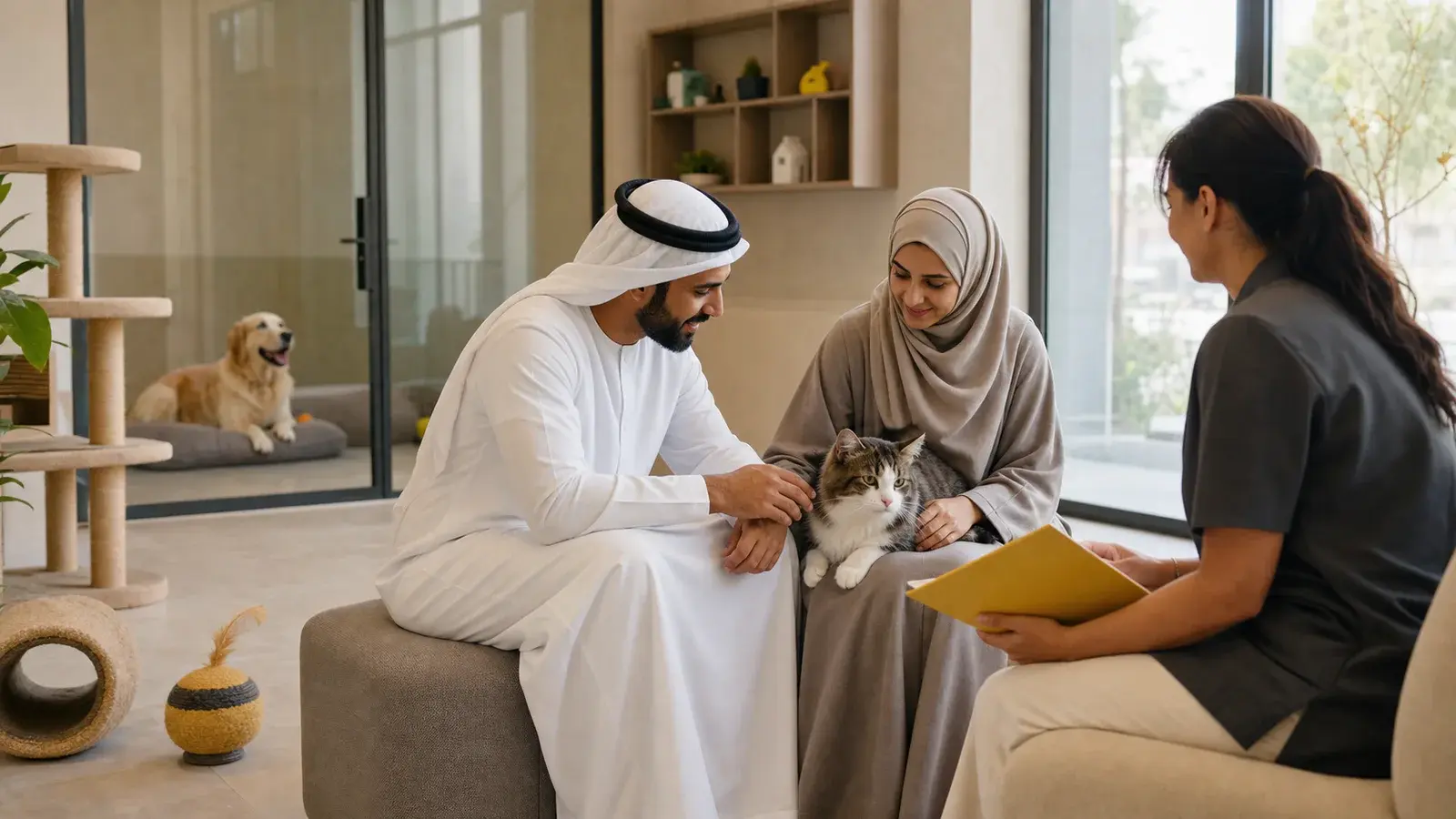
If somebody else will exercise your dog, include the summer route, cancellation rule and veterinary contacts in the written handover. The UAE boarding and pet-sitter checklist explains how to agree cooling failures, transport and emergency decisions before care begins.
4. Plan for the individual dog
A large UK VetCompass study found that heat-related illness risk varied with factors including flat-faced anatomy, age and bodyweight. Because it used UK veterinary records from 2016, it does not provide UAE incidence or a local temperature threshold. It does support a cautious principle: dogs do not share one risk profile.
- Ask your veterinarian for an individual exercise plan if your dog is flat-faced, older, very young, overweight or has an airway, heart, lung, mobility or other health condition.
- Do not assume a fit, energetic dog can safely exercise hard in hot weather; exertion itself generates heat.
- Let the dog choose a slower pace and stop when it seeks shade, lags behind or resists continuing.
- Do not shave a coat or change grooming solely from online heat advice; ask a veterinarian or qualified groomer what is appropriate for that coat and health status.
5. Know when to stop and get help
Heat-related illness can become life-threatening. Stop the outing for panting that is unusual or excessive for that dog, noisy or difficult breathing, heavy drooling, agitation, weakness, confusion, vomiting, diarrhoea, collapse or an inability or refusal to continue. These signs can have more than one cause, so do not diagnose the problem at home.
Replace the missed walk rather than forcing it
When outdoor conditions are unsuitable, meet toileting needs as safely and briefly as possible, then move activity indoors. Scatter part of the normal meal for a simple search, practise a few reward-based cues, offer a safe food puzzle or play gently in a cooled room. Adjust food rewards within the normal daily allowance and stop if the dog disengages or becomes overexcited.
Skipping one long walk is not a failure. In a UAE summer, a good plan is flexible: check the live conditions, choose the safest available route, keep the outing shorter than the dog expects and return while the dog is still comfortable.