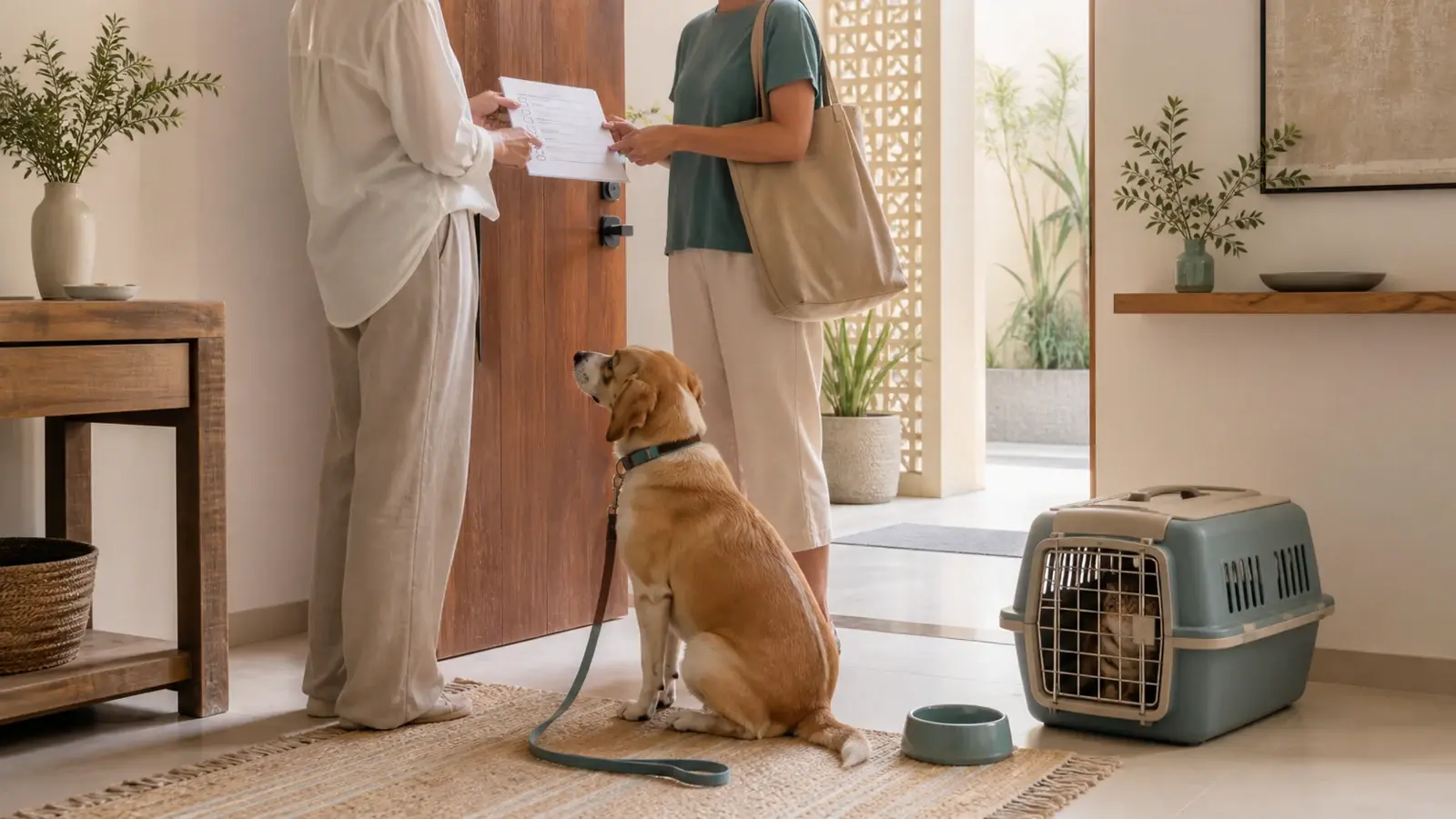
Before you book
- Choose between home care and boarding according to your pet's needs, not the most luxurious listing.
- Verify the provider's current trade licence, stated activity and any approval required by the relevant emirate or free-zone authority.
- Visit the setting or meet the sitter, and ask who will actually provide care day and night.
- Agree feeding, exercise, medication handling, transport and emergency decisions in writing.
- Arrange a gradual introduction or short trial when practical, and keep a back-up carer available.
- Ask your veterinarian which preventive care is appropriate for your individual pet and the proposed setting.
Holiday pet care is not simply a choice between a kennel and a sitter. You are choosing a person, a setting and an emergency system. A sociable dog that already rests comfortably away from home may cope well in suitable boarding; a cat attached to its territory may be more comfortable with reliable home visits. Those are starting points, not rules.
UAE animal-welfare law applies to the person who has actual control of an animal, whether or not that person is the owner. It requires precautions against harm, pain and suffering, suitable experienced carers, at least daily examination, healthcare when needed, adequate space, suitable food and access to water. The law establishes the welfare duty; it does not endorse a particular sitter or boarding model.
Compare the care setting with your pet's needs
- Boarding facility: ask about overnight supervision, staff changes, rest areas, noise, cleaning, exercise and separation between unfamiliar animals.
- Home boarding: ask which people and animals live there, how doors and outdoor areas are secured, and whether other clients' pets will stay at the same time.
- Live-in sitter: agree which parts of the home they may use, how long the pet may be left, visitor rules, security and the exact overnight arrangement.
- Drop-in visits: agree visit frequency and duration, feeding, litter or toilet care, play, exercise and what happens if the sitter cannot attend.
- Friend or relative: use the same written handover and emergency plan you would give a paid professional. Familiarity does not replace preparation.
Think about age, mobility, medical needs, behaviour around unfamiliar people or animals, ability to cope with noise, and current routine. A pet that needs observation more than once a day cannot be matched to a once-daily visit merely because the legal minimum mentions daily examination. The arrangement must meet the individual animal's actual needs.
Inspect before paying a deposit
The RSPCA recommends meeting a sitter in advance and visiting a boarding establishment before choosing it. For a UAE booking, arrange the visit during normal operations if the provider permits it. A refusal may have a reasonable biosecurity or privacy explanation, but the provider should offer another credible way to show the areas, routines and safeguards that will apply to your pet.
- Are sleeping and resting areas clean, dry, secure, shaded and temperature controlled?
- Can dogs and cats be housed away from one another, and can incompatible animals be kept apart?
- Are gates, windows, balconies and transfer points protected against escape?
- How often are animals checked, and is a written record kept for food, water, toileting, behaviour and health concerns?
- Who is present overnight, and what happens during a power, air-conditioning, fire or transport failure?
- Which veterinary clinic is used, how is transport arranged and who may authorise urgent care?
- Will your pet ever be photographed, posted online or handled by a subcontractor? Agree consent and limits in writing.
Ask who will actually care for your pet
- What experience do you have with this species, age and type of care need?
- Who covers illness, delay or an emergency, and can I meet the back-up person?
- How many animals are assigned to each carer, including at busy travel periods?
- What signs would prompt you to contact me, my back-up contact or a veterinarian?
- How do you prevent punishment, forced interaction and unsafe mixing between animals?
- What insurance and written terms apply to injury, escape, property access, cancellation and veterinary costs?
- How and when will you send updates without exposing my address, travel dates or pet's identifying data publicly?
Confirm health requirements early
Ask the provider which vaccination, parasite-control and health records it requires, then discuss the proposed setting with your licensed veterinarian well before travel. WSAVA guidance treats vaccination as an individual professional decision and notes that boarding requirements may also be set locally. Do not arrange extra vaccination, change a schedule or give preventive medication solely from an online checklist.
Use an introduction or trial when practical
Arrange a calm meeting with the person who will provide care. For home visits, walk through entry security and the routine. For boarding, ask whether a short daytime or overnight trial is suitable. Do not force a frightened animal to interact. If the pet shows escalating distress, discuss a different arrangement with the provider and, when health or significant anxiety may be involved, your veterinarian.
If your cat will travel to boarding, begin reward-based carrier practice well ahead of the stay. Never let a cat travel loose in a vehicle.
Prepare one written handover
- Your contact details, travel dates and a reachable local back-up person
- Usual veterinary clinic and the nearest appropriate out-of-hours option confirmed with your clinic
- Feeding quantities and times, food location and known restrictions
- Normal toilet, sleep, exercise, play and handling routine
- Current medicines in original labelled packaging, with the treating veterinarian's written directions
- Known fears, escape risks, bite or scratch risk, resource guarding and safe handling cues
- Microchip, registration, vaccination and insurance details where relevant
- A signed agreement covering emergency contact attempts, veterinary transport and spending authority
- Home access, alarm, key, visitor and privacy instructions where relevant
Keep departure and return uneventful
Send familiar food and permitted bedding or toys in clearly labelled amounts, without irreplaceable items. Reconfirm the booking, carer, contacts and handover shortly before departure. On return, ask for the care log and note eating, drinking, toileting, movement and behaviour. A sudden or concerning change should be discussed promptly with a licensed veterinarian rather than diagnosed at home.
If you are deciding whether your pet should travel with you instead, compare the paperwork and timescales in the UAE pet-export checklist. Boarding and sitting should be a planned care choice, not the fallback left after travel arrangements are final.