The short answer
- Keep balcony doors and accessible windows closed until each opening has a strong, securely fitted, gap-free barrier intended to contain a cat.
- Treat insect mesh, a balcony rail and supervision alone as insufficient containment.
- For balcony access, use a continuous floor-to-ceiling enclosure, remove hazards and let the cat return indoors freely.
- Check every edge, latch and route from furniture to an opening; repeat the audit after cleaning, maintenance, moving furniture or building work.
- Give visitors, cleaners and contractors one clear closed-door plan before they enter.
- If a cat falls, becomes trapped or escapes, contact a veterinarian or the relevant local authority promptly rather than relying on this guide for assessment.
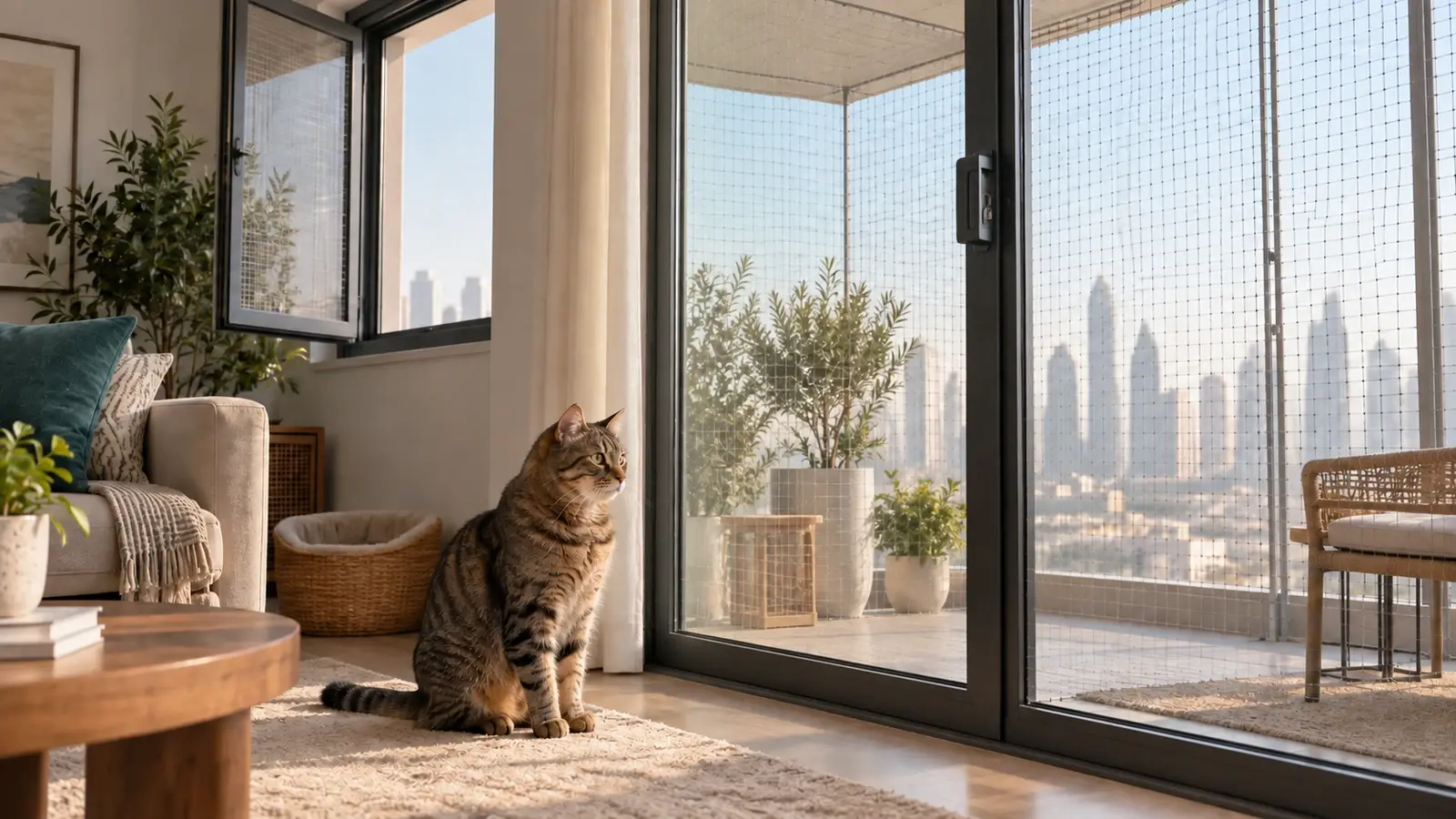
The safest default in a UAE apartment is simple: keep an accessible window or balcony door closed until the entire opening has secure, gap-free protection that your cat cannot push through, climb around or become caught in. Cats Protection advises a floor-to-ceiling wire mesh or net enclosure for a balcony, or a sturdy window screen designed for cats, and recommends supervision during balcony access.
UAE animal-welfare law requires a person responsible for an animal to take necessary precautions against harm, pain and suffering and to consider the animal's needs. That is the legal duty. The room audit, installation questions and household handover below are PetsGo's editorial application of that duty and cat-welfare guidance; they are not a building-code interpretation or a guarantee that a product is escape-proof.
1. Map every opening from the cat's point of view
Walk through the apartment room by room. Include ordinary windows, tilt-and-turn windows, balcony sliders, service doors and any opening used for ventilation. Then look for launch points: a sofa arm, bed, cat tree, appliance or narrow ledge can turn an opening that seems high into an easy route.
- Record how each window and door opens, closes and locks.
- Check whether a cat can reach the handle, track or surrounding ledge from furniture.
- Look along the top, bottom and both sides of every existing screen, not just across the middle.
- Include secondary routes, such as a bedroom window opened by a cleaner or a balcony door used to dry laundry.
- Use a closed internal door to keep the cat away while an opening is being measured, repaired or cleaned.
2. Choose containment for the actual opening
For a window, International Cat Care advises keeping open windows inaccessible to kittens or using screens and locks. Cats Protection also warns that tilted windows can trap a cat in the narrowing V-shaped gap. Keep a tilt-and-turn window closed around an unsupervised cat unless a suitable guard or grille makes the mechanism inaccessible.
For a balcony, professional welfare guidance describes a continuous enclosure from ceiling to floor rather than protection at rail height alone. Ask a competent installer how the material, frame and fixings handle climbing, pushing, weather and every change of direction. PetsGo cannot verify a product or installation from a marketing label.
- Confirm in writing what your tenancy terms, landlord and building management permit before drilling, attaching or altering anything.
- Ask the installer to identify every fixing point, seam, opening around a pipe and gap at the floor or ceiling.
- Choose a design that does not create loose loops or damaged edges in which a paw, claw, collar or body could become caught.
- Keep a separate secure door or latch between the apartment and balcony; an enclosure does not remove the need to control access.
- Arrange inspection after installation and whenever the material, frame or fixings look loose, damaged or weathered.
3. Test the setup without using the cat as the test
Keep the cat securely in another room while you inspect. Follow the manufacturer's and installer's instructions rather than pushing or loading the barrier in a way it was not designed to withstand. The aim is to find visible gaps, movement, damage or incomplete latching before the cat has access.
- Trace the full perimeter with your eyes and good lighting.
- Operate every latch as a household member would and confirm the door or window cannot drift open.
- Check from furniture height as well as floor level.
- Remove chairs, tables, planters and stored items that create a route to an edge or weak point.
- Write down the next inspection date and the event that should trigger an immediate recheck, such as maintenance or a sandstorm.
4. Make balcony time optional, supervised and easy to end
A protected balcony can add sights and scents for some cats, but it is not essential and it does not replace a suitable indoor environment. Cats Protection recommends supervision and an easy route back inside. If the cat tries repeatedly to climb or escape, becomes frustrated or cannot return freely, close access and use indoor enrichment instead.
- Stay present and attentive; do not leave the cat outside when you leave the room or home.
- Keep the route indoors open while access is allowed, without creating another escape gap.
- Remove unsafe plants, chemicals, breakable items and furniture close to the enclosure.
- Do not rely on a harness tether tied to balcony furniture; it can add entanglement and fall risk.
- Close access during unsuitable heat, strong wind, maintenance, cleaning or any uncertainty about the barrier.
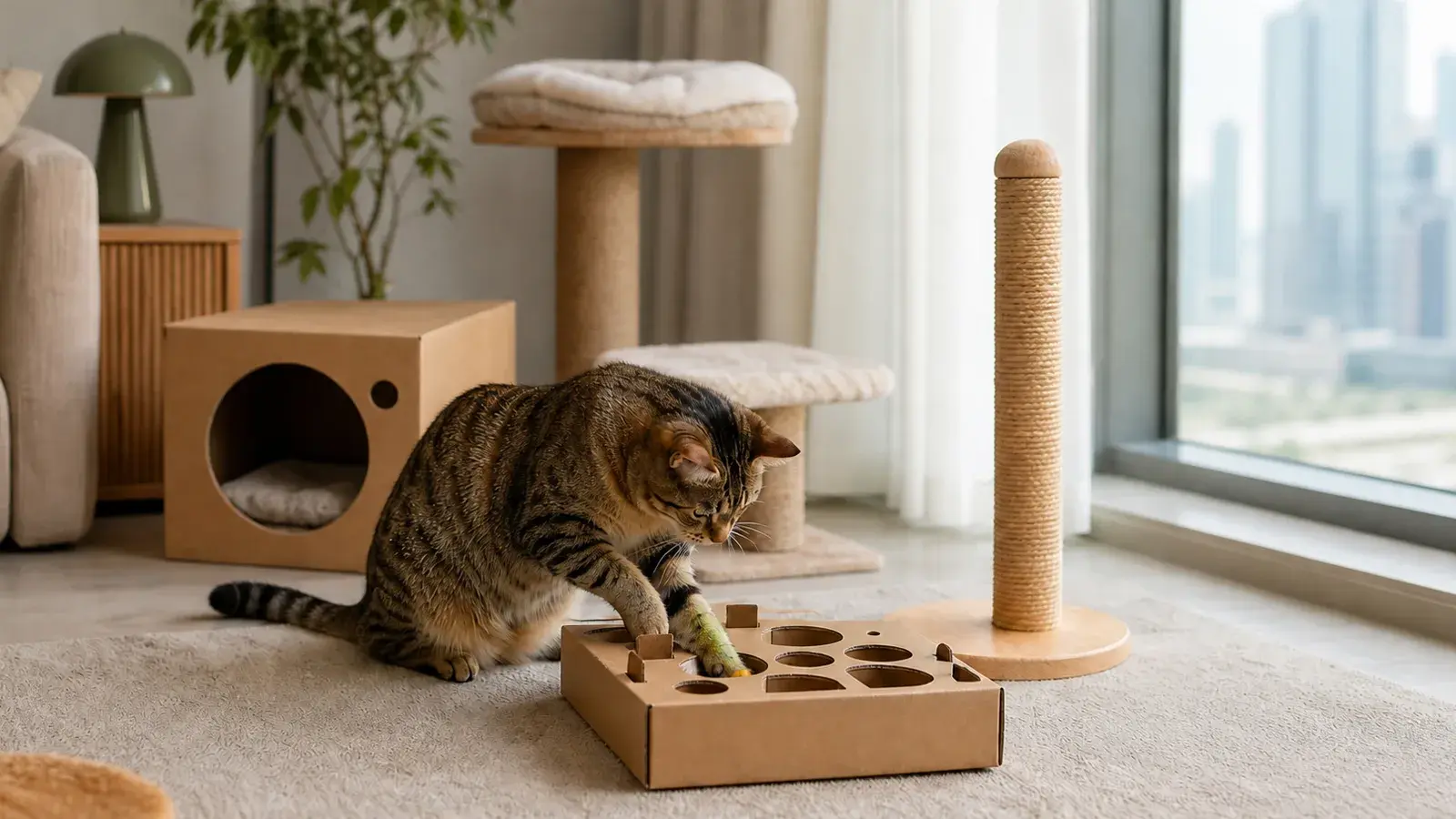
For a fuller indoor routine with climbing, scratching, hiding, play and food activities, use the UAE apartment cat-enrichment guide. A balcony should be one optional choice, not the only interesting place in the home.
5. Give every visitor one door-and-window rule
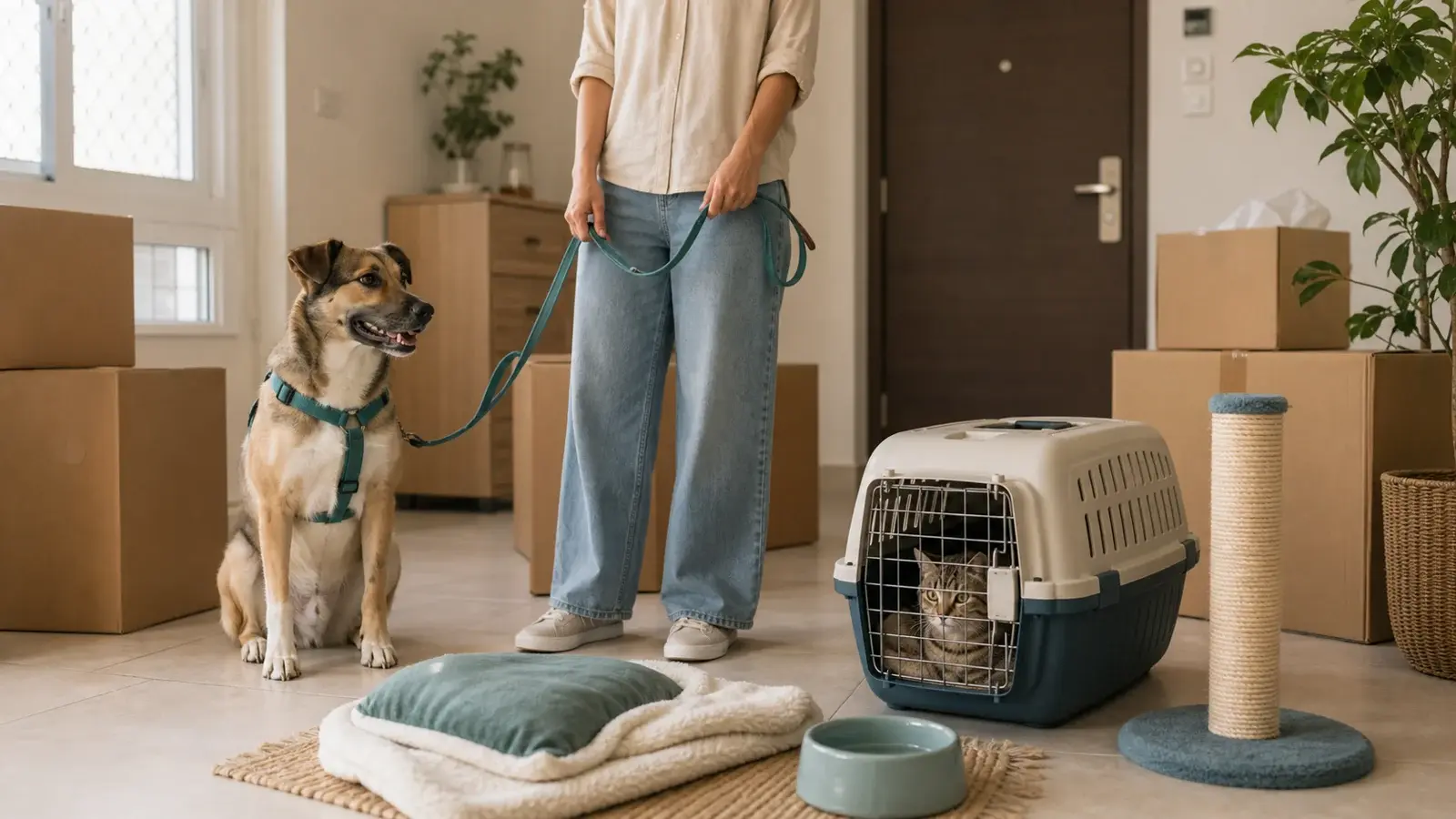
Many apartment safety failures happen during an exception to the normal routine: a contractor props a door open, a cleaner opens a window, luggage blocks a slider or movers carry boxes through the entrance. Before anyone arrives, confine the cat comfortably behind a labelled internal door with water, a litter tray and familiar resting options, then explain which openings must stay closed.
- Name one adult responsible for checking the cat and the secure room.
- Tell visitors not to open that room until the external door, windows and balcony access are secured.
- Count the cat visually before work begins, before an external door opens and after everyone leaves.
- Recheck screens, locks and furniture positions after window cleaning, air-conditioning work or other maintenance.
- Keep a clear photo and current microchip details available in case prevention fails.
For a relocation, combine this rule with the controlled-transfer steps in the UAE moving-home checklist. If a cat does get out in Dubai, the first-24-hours lost-pet plan explains how to search and report promptly.
6. Repeat the audit when the apartment changes
A setup is not permanently safe because it passed one inspection. Recheck after moving furniture, replacing a window, renewing a tenancy, adding a pet, changing cleaners, returning from travel or noticing wear. Close access immediately when something no longer fits, locks or looks as intended, and arrange a competent repair before testing the opening again.