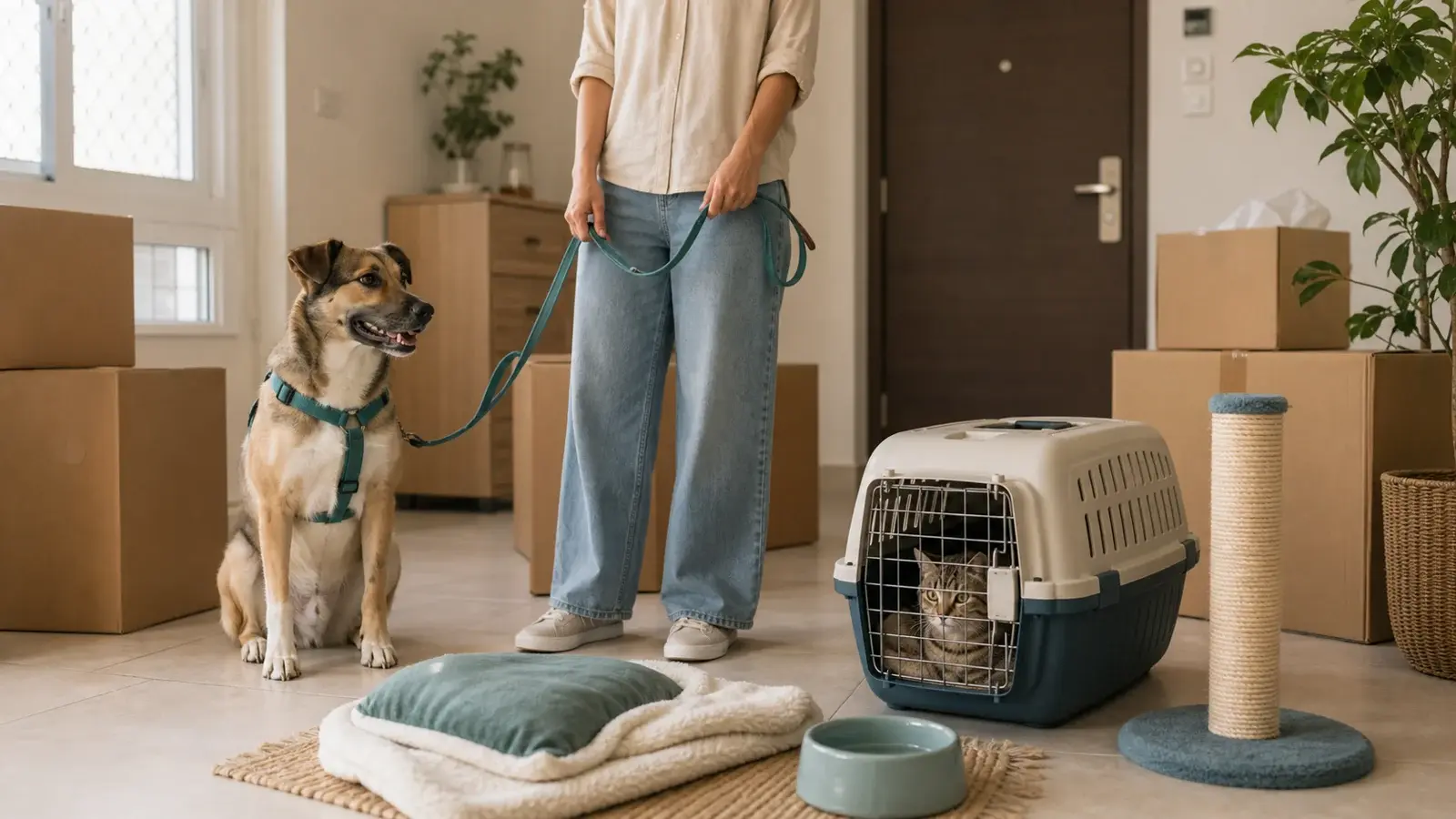
The local-move plan
- Confirm the new property's pet permission and building access arrangements in writing before committing to the move.
- Choose one safe moving-day arrangement: a trusted carer away from the activity or a prepared closed room that movers will not enter.
- Set up water, rest, toilet resources, familiar items and reliable cooling at the new home before the pet arrives.
- Move a cat in a closed secure carrier and keep a dog safely controlled with suitable equipment throughout each transfer.
- Restore familiar routines first, then let the pet explore the new home gradually without forced interaction.
- Update contact details with each relevant official or veterinary record holder; a PetsGo profile is a useful reference, not an official registration.
A move between two UAE homes is different from importing or exporting a pet. There may be no flight or border paperwork, but packing crews, open doors, a warm vehicle, unfamiliar corridors and a changed routine create their own risks. The most useful plan separates the animal's journey from the household logistics.
UAE animal-welfare law requires owners and other people in actual control of an animal to take necessary precautions against harm, pain and suffering, account for the animal's needs and provide appropriate care. That is the legal duty. The room setup, transfer sequence and settling steps below are editorial applications of that duty and professional welfare guidance; they are not a separate moving law.
1. Confirm the home and the route to it
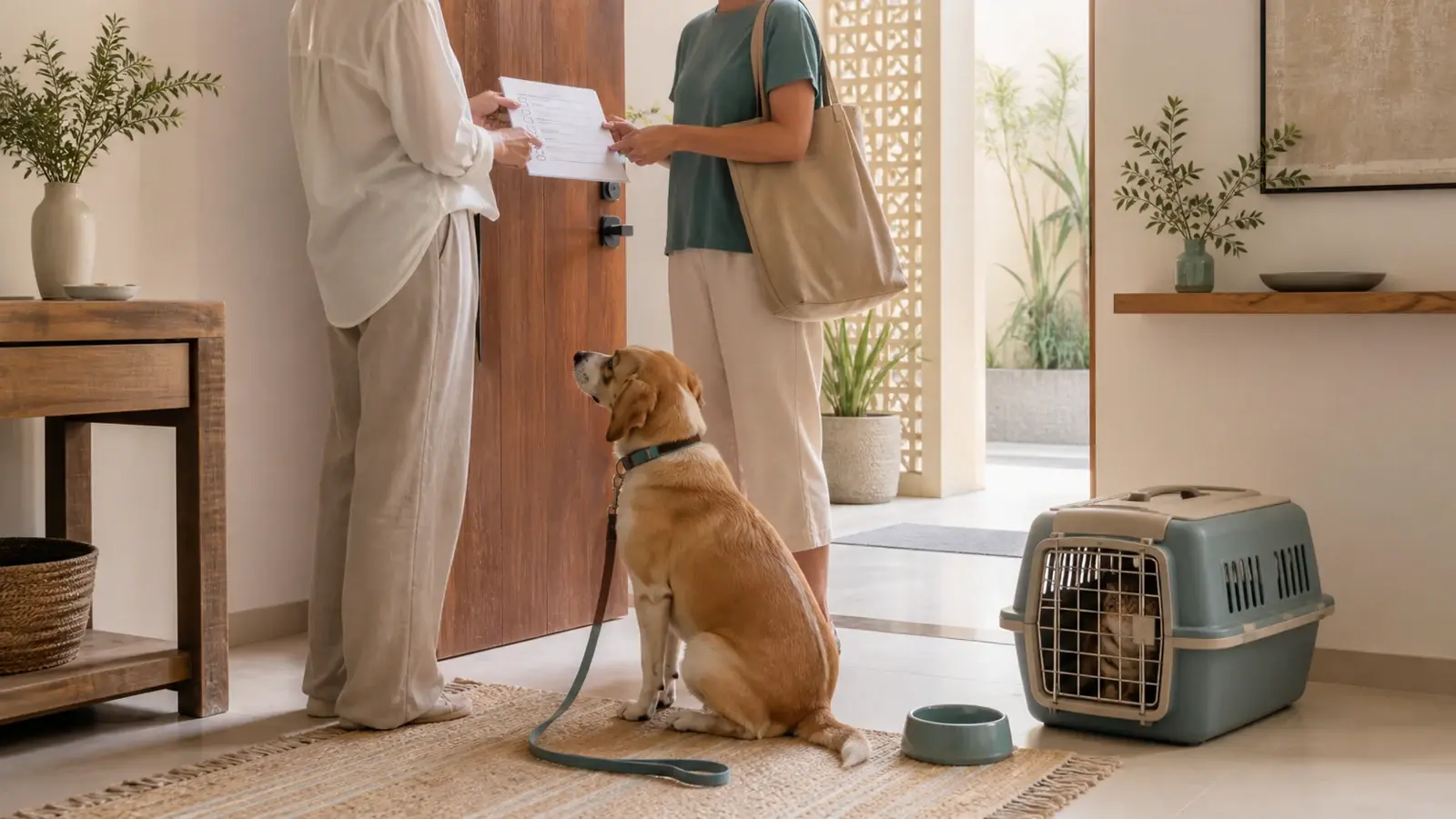
Permission to keep the pet and permission to use a particular entrance, lift or loading area are separate questions. Ask building management how the move must operate and whether any rule affects your species, number of pets, shared areas or normal toilet route. Keep the reply with the moving booking rather than relying on a verbal assurance from a listing or agent.
- Which written property terms and building or community rules apply to this pet?
- Which entrance, lift, loading area and moving hours must the household use?
- Can the pet travel by a quieter route while movers use the service route?
- Where can a dog toilet, and what cleaning or access rules apply to shared areas?
- Who should be contacted if a lift, access card, electricity or air-conditioning handover is delayed?
2. Audit the empty home before boxes arrive
Walk through the new property without the pet. Dogs Trust highlights the particular risks that high windows and balconies can present in flats; the RSPCA likewise advises a secure, hazard-free cat environment with accessible rest, hiding and toilet areas. Check the actual space rather than assuming a closed-looking window, screen or balcony barrier is animal-proof.
- Secure external doors, balcony access, windows, loose screens and any gap the pet could enter or fall through.
- Remove exposed cables, medicines, cleaning products, pest-control materials, sharp packing waste and unsafe plants.
- Confirm that electricity, air conditioning and water work before the pet arrives, with a named back-up if cooling fails.
- Choose a quiet internal room away from the entrance and moving traffic.
- Photograph the room and access route so the person transporting the pet knows exactly where to go.
3. Choose who controls the pet on moving day
One named adult should be responsible for the pet from before the first mover arrives until the new-home room is closed. The calmer option may be care with a trusted familiar person, or suitable day boarding that has already been checked. If you use a provider, follow the UAE boarding and pet-sitter checklist rather than choosing an unfamiliar service on moving morning.
If the pet stays at the old home, prepare a closed room before packing starts. Put a clear instruction on the outside, tell every mover not to enter and keep the key or door control with the responsible adult. Provide the animal's normal water, rest and toilet resources. A sign is a reminder, not a security system: confirm the animal is present and the door is secured after every necessary entry.
4. Pack one kit that does not enter the moving van
- Normal food for the day, fresh water, bowls and any feeding instructions
- Litter tray, litter, waste bags or the dog's normal toilet supplies
- Familiar bedding, one safe toy and a hiding option for a cat
- Secure carrier for each cat, or appropriate dog harness, collar, lead and travel restraint
- Current veterinary and identification records, plus the usual clinic and emergency contact details
- Cleaning supplies, towels and any prescribed item in its original labelled packaging
Keep this kit with the responsible person in a cooled vehicle. Do not bury it in a box or send it ahead in a truck whose arrival time may change. Photograph the pet on moving morning so you have a current image, and keep identification and contact information easy to reach without posting full microchip or identity details publicly.
5. Make one controlled transfer
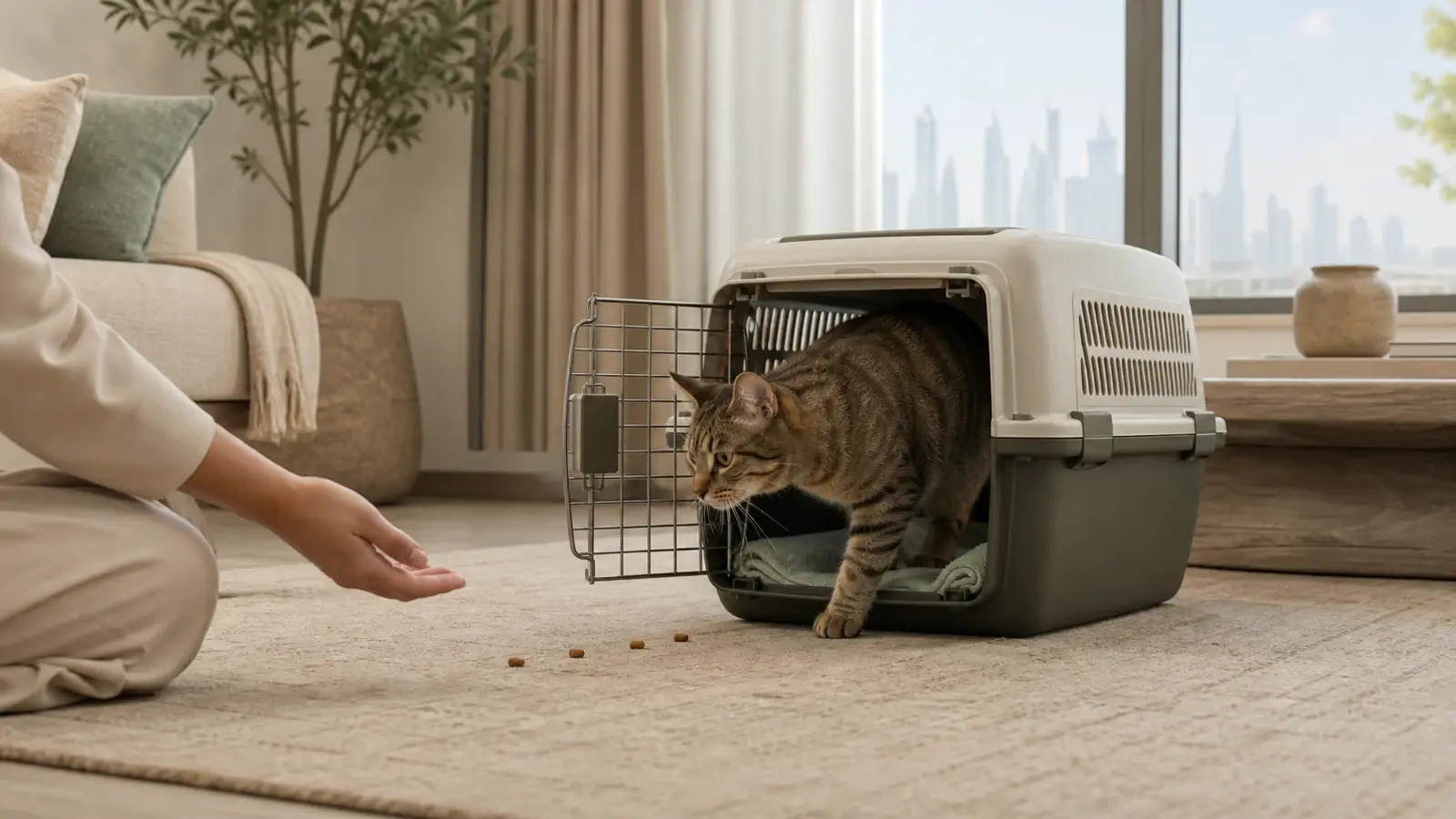
Finish the busiest door-opening work before moving the animal when possible. Cool the vehicle first and use the shortest practical route. Each cat should travel inside its own closed, secure carrier; keep it level, ventilated and closed until it is inside the prepared room. If carrier practice is still possible before the move, use the reward-based cat carrier plan. Do not open a carrier in a corridor, car park or vehicle.
For a dog, check the fit and condition of the harness or collar and lead before leaving the closed room. Use a suitable vehicle restraint or travel crate according to its instructions and the vehicle guidance. Keep the dog controlled through lifts, lobbies and car parks, even if those areas appear empty. Never leave either species unattended in a vehicle or on a loading bay.
6. Make the first hours deliberately small
At the new home, take the pet straight to the prepared room and close the door before opening a carrier or removing travel equipment. Offer water, familiar bedding and the normal toilet setup. Keep food and water separate from a cat's litter tray, and provide a safe hiding place. Let the animal observe, rest or hide without pulling it out or introducing visitors.
A dog may benefit from a short, quiet tour and a familiar toilet opportunity once the route is secure. A cat may need to begin in one room and choose when to approach. There is no reliable fixed number of hours or days for every animal. Expand access one internal area at a time when the pet is eating, drinking, toileting and moving around in its usual manner, and when the next area is fully secure.
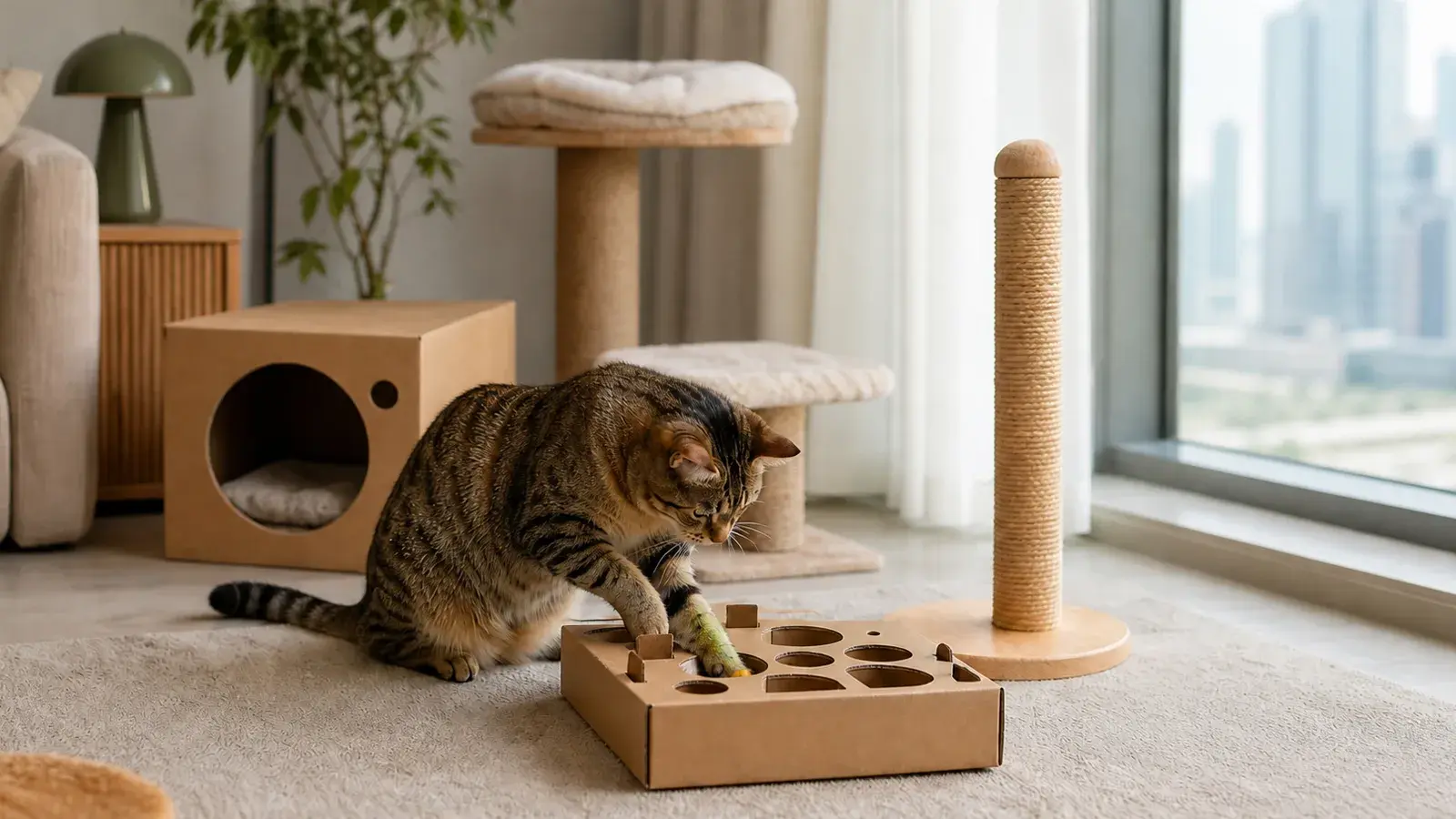
For cats, keep all external doors, windows and balcony access secured during settling; an open balcony is not an extra room. Rebuild climbing, scratching, play and feeding choices with the UAE apartment cat-enrichment guide. In a multi-pet home, provide separate resources and reintroduce shared access gradually rather than forcing everyone into one room.
7. Restore the routine before testing independence
Dogs Trust notes that predictability can help dogs cope with change. Keep normal food, toilet, rest, play and safe exercise cues as consistent as the move allows. Do not try to tire a worried dog with hard exercise, especially in hot or humid weather; calm indoor activity can bridge a disrupted day.
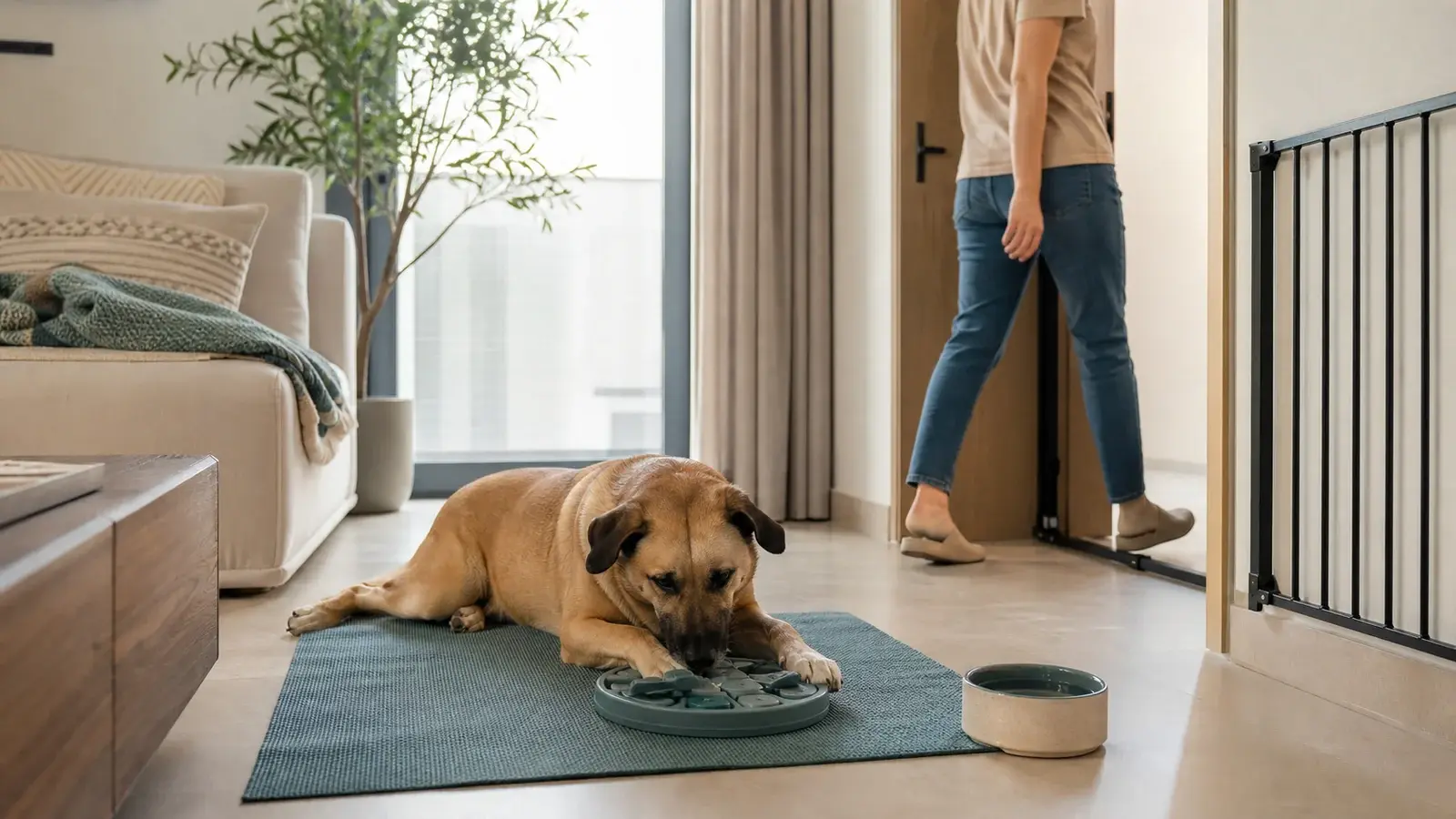
A dog that was comfortable alone at the previous address may react differently to new lift sounds, corridors or neighbouring doors. Before returning to the old absence duration, make a short observation with a camera inside your private home and use the gradual home-alone plan. Do not punish barking, toileting, hiding or damage. A sudden or concerning health or behaviour change needs veterinary advice, not a tougher settling routine.
8. Update each record with the organisation that holds it
After the move, check the address and mobile number held by your veterinary clinic, microchip record holder and any municipality or other registration system that applies to the pet. Processes differ, so ask the organisation that issued or maintains each record how to make the current change. Confirm the full microchip number privately against the official record rather than publishing it in a community post.
A calm first-week check
- Recheck windows, balcony doors and the front door after furniture and screens have been fitted.
- Keep a simple note of eating, drinking, toileting, rest and any behaviour change without trying to diagnose it.
- Maintain the familiar routine while adding only one new room, route or absence challenge at a time.
- Give movers, maintenance workers and visitors the same door-control instruction until the pet is settled.
- Confirm that the cooling back-up, access cards, dog toilet route and emergency contact plan work in practice.
- Store the final property permission, veterinary contacts and updated official-record confirmations where the household can find them.
A successful pet move is usually uneventful: permissions are clear, doors stay controlled, the journey is direct and the first few days feel familiar. Prepare the safe room before the animal arrives, let confidence set the pace and keep official records aligned with the new address.