A safe home routine
- Ask a veterinarian to check your dog's mouth before brushing if there is pain, inflamed or bleeding gum tissue, a damaged tooth or any uncertainty.
- Introduce face touch, lip lifting, the brush and a few strokes as separate, rewarded steps; never pin the dog down or force the mouth open.
- Use a suitably sized soft brush and a dog-safe product recommended for your individual dog; do not use human toothpaste.
- Build towards brushing the cheek-facing tooth surfaces gently at the gumline once a day.
- Remember that brushing controls soft plaque; it does not remove hardened calculus or replace veterinary dental assessment and treatment.
- Treat chews, diets and additives as possible adjuncts, not shortcuts, and check their evidence and suitability with your veterinarian.
A dog's dental routine should do two things: reduce plaque consistently and keep handling calm enough to repeat tomorrow. The WSAVA Global Dental Guidelines identify toothbrushing as the most effective mechanical method of home plaque control, while also making clear that home care sits alongside professional veterinary care.
UAE animal-welfare law requires owners and carers to take precautions against harm, pain and suffering, account for an animal's needs, provide healthcare and refer an animal to a veterinarian for examination and treatment. That is the legal duty. The gradual routine below is an editorial application of veterinary dental and handling guidance, not a diagnosis, treatment plan or extra legal rule.
Check before you start brushing
You can notice changes at home, but you cannot assess the full tooth or the area below the gumline. Ask your veterinarian to include the mouth in routine preventive examinations and to show you where and how to brush. A complete dental assessment may require anaesthesia, dental radiographs and treatment by the veterinary team; daily brushing does not remove that need when disease is present.
- Book an examination for persistent bad breath, red, swollen or bleeding gums, drooling, a broken, loose or discoloured tooth, or blood on a toy.
- Seek veterinary advice promptly if the dog drops food, chews on one side, seems painful around the mouth or has facial swelling.
- Do not try to diagnose the cause, loosen a tooth or scrape away calculus at home.
- If the dog is a puppy losing baby teeth, has recently had dental treatment or has an existing oral condition, ask when and how home brushing should begin.
Choose simple, dog-safe tools
Use a soft-bristled brush that fits your dog's mouth and is easy for you to control. WSAVA notes that a soft child's toothbrush can be a practical alternative for some small patients, but your veterinarian can recommend a suitable size and design. Use only a pet dental product that your veterinarian considers safe for your dog, and follow its label. Do not use human toothpaste or an improvised household paste.
Introduce brushing in small, rewarded steps
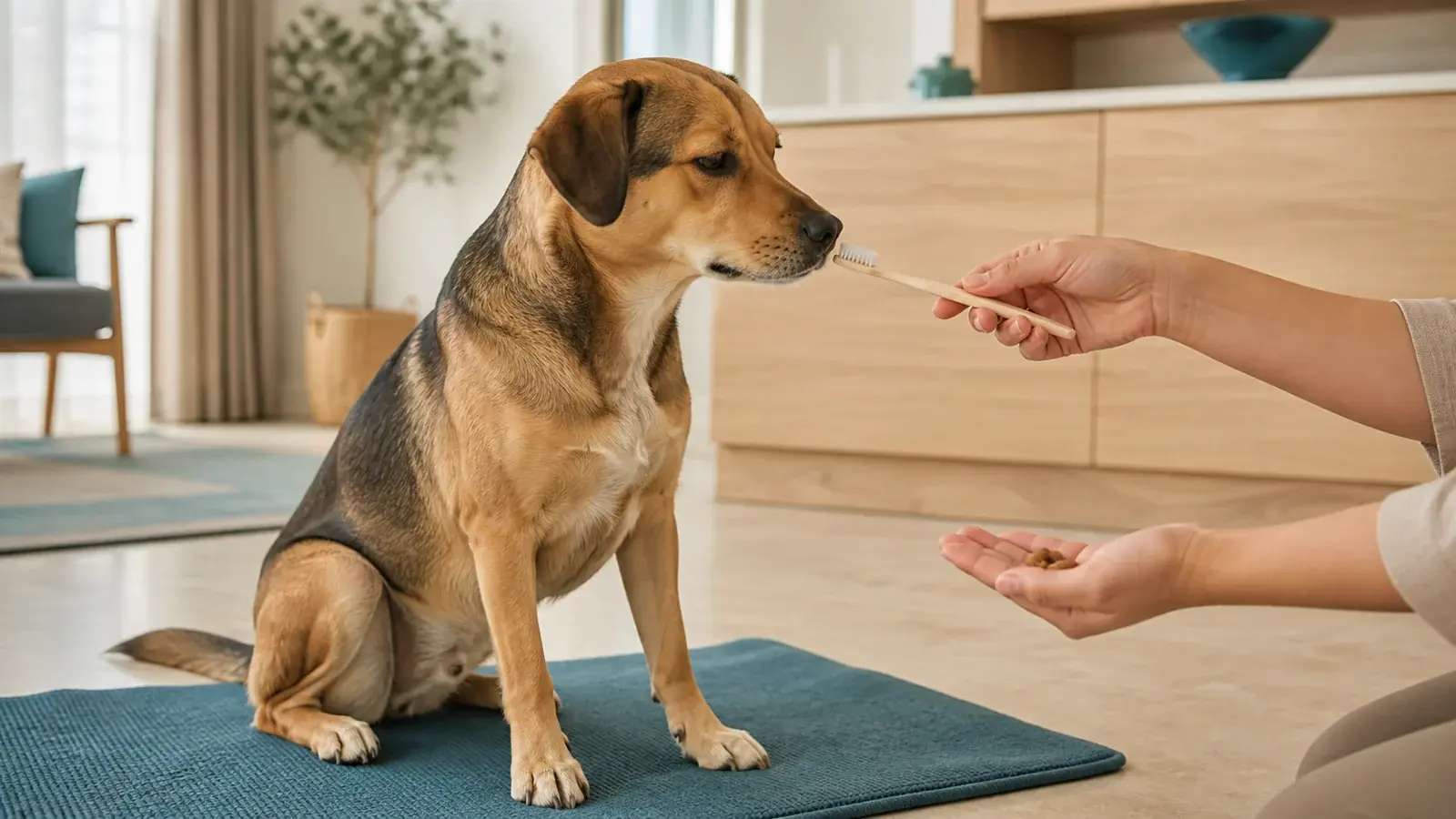
Choose a quiet, cooled indoor space and a time when your dog is settled. Keep the first sessions very short. Use part of the dog's normal food allowance or another veterinarian-approved reward, and finish before the dog wants to pull away. Progress is measured by comfort, not by completing every tooth on the first attempt.
- Show the brush, reward a calm look or sniff, then put it away.
- Touch the side of the face briefly, reward and release.
- Lift the upper lip for a moment without forcing the jaws apart, then reward.
- When that is comfortable, touch one outer canine tooth gently and stop.
- Introduce the soft brush for one or two light strokes on an outer tooth.
- Add a few teeth or a little duration across later sessions, returning to an easier step if the dog becomes worried.
Build towards a brief daily brush
Lift the lip gently and use light strokes where the tooth meets the gum. Veterinary guidance places particular emphasis on the cheek-facing surfaces, especially the upper teeth, because plaque and calculus accumulate rapidly there. Work methodically without forcing the mouth wide open, and let your veterinarian demonstrate any adjustment needed for your dog's teeth or gum health.
Daily brushing is the professional goal because plaque returns quickly. VOHC also recognises that some dogs will not initially tolerate a complete sequence and says regular partial brushing is better than none. Build the habit gradually rather than turning one missed area into a struggle.
Evaluate dental chews, diets and additives carefully
If brushing is incomplete or your veterinarian recommends an adjunct, the Veterinary Oral Health Council's current accepted-products list is a useful evidence check. The seal applies to the listed product and its stated plaque or tartar claim; it does not mean every product from the brand is accepted or that the item is suitable for every dog. The list and UAE availability can change, so check the live entry rather than relying on packaging seen online.
- Ask whether a chew is appropriate for your dog's size, chewing style, diet and health.
- Count edible dental products within the dog's normal daily energy allowance.
- Supervise chewing and remove an item that breaks into unsafe pieces or becomes small enough to swallow.
- Avoid very hard items such as antlers, hooves, bones and hard nylon chews, which veterinary dental guidance associates with tooth fracture risk.
- Do not replace drinking water with an additive unless the product instructions and your veterinarian's advice make clear that normal water access is maintained.
Make the routine fit everyday UAE life
UAE heat does not create a different brushing technique, but an indoor routine is easier to repeat than one tied to a long summer outing. Choose a stable cue such as after the evening meal or before bed, keep the brush clean and dry, and store every product exactly as its label directs rather than in a hot car or exposed outdoor area. This timing is a practical editorial suggestion, not a veterinary schedule.
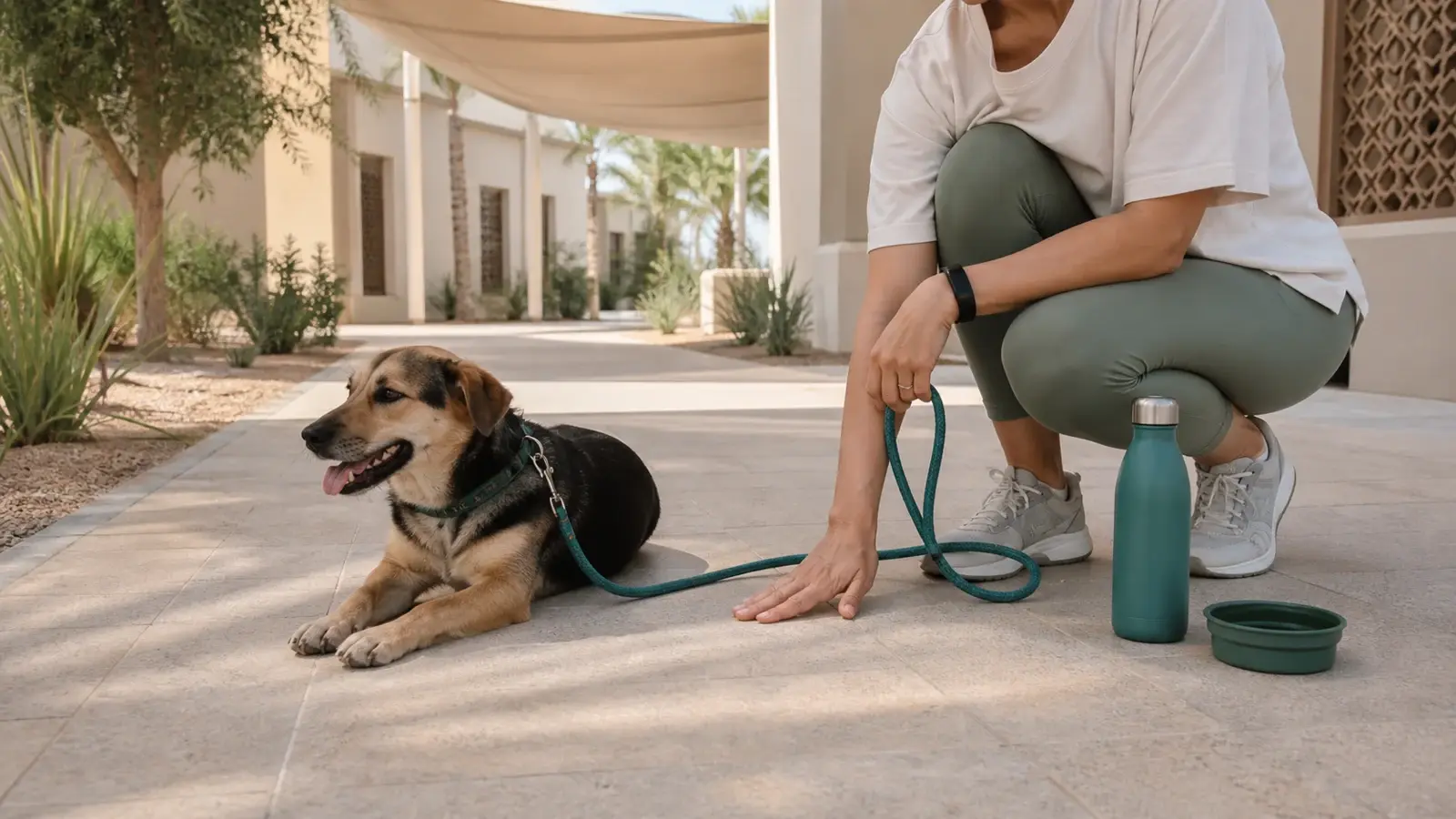
Keep brushing separate from the immediate return from a hot-weather outing: first let the dog settle comfortably indoors with normal access to water. Plan the outing itself with the UAE summer dog-walk heat-safety guide, then use a calm point later in the routine for dental practice.
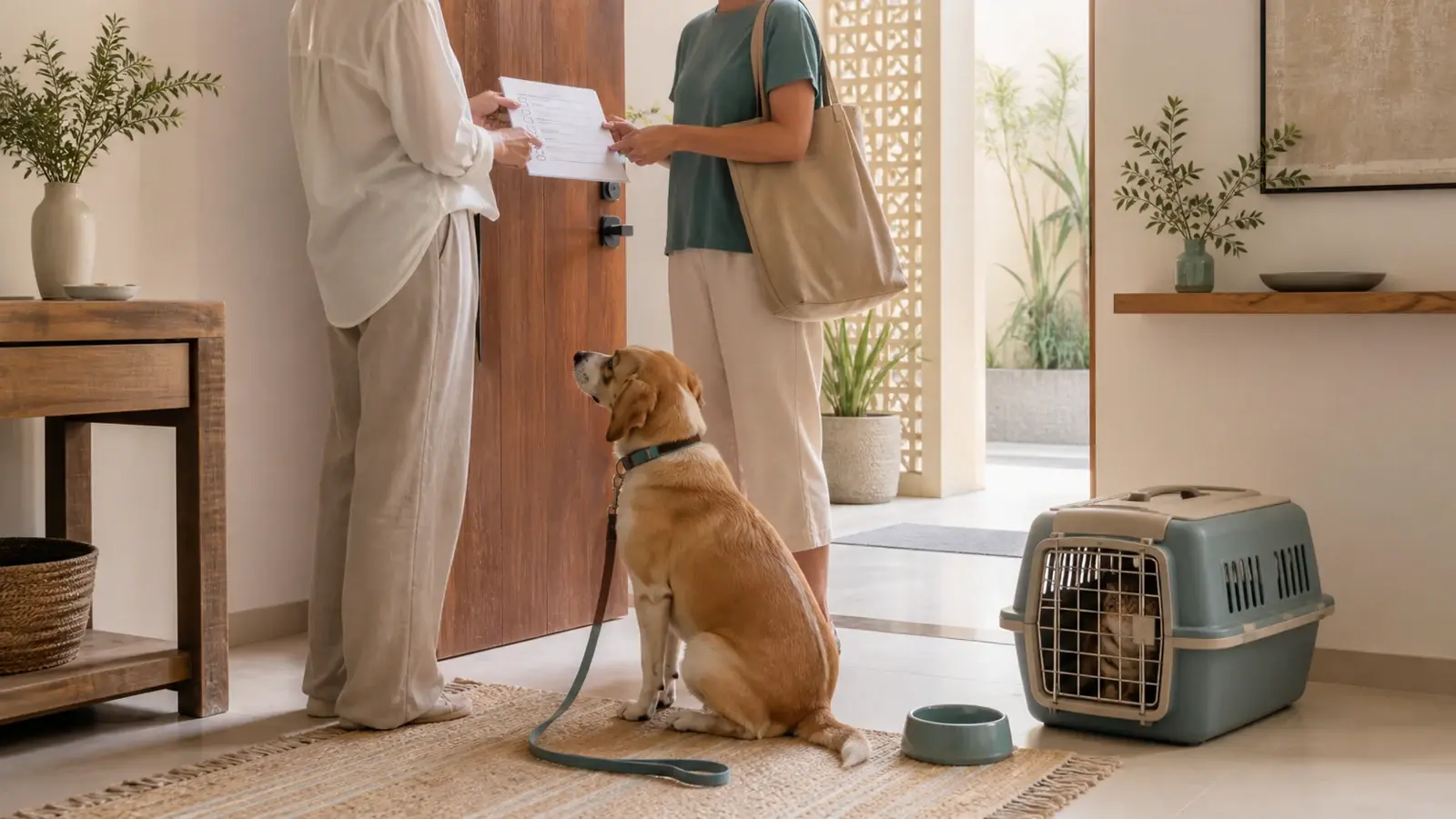
If a sitter or boarding provider will care for your dog, add the dental routine to the written handover only if the dog is already comfortable with that person doing it. Never ask an unfamiliar carer to force mouth handling. Use the UAE boarding and pet-sitter checklist to agree normal care, warning signs and veterinary contacts before you travel.
A seven-day start that does not rush the dog
- Day 1: check the mouth from the outside and arrange veterinary advice first if anything is concerning.
- Day 2: show the brush and reward calm investigation.
- Day 3: practise a brief touch to each side of the face.
- Day 4: lift one side of the lip for a moment, then release and reward.
- Day 5: touch one outer tooth only if the previous step remains comfortable.
- Day 6: add one or two gentle brush strokes.
- Day 7: repeat the easiest successful stage and decide whether to progress, hold or step back.
Seven days is a structure, not a deadline. Some dogs need longer at one stage, and a dog with pain, strong fear or a bite risk needs veterinary guidance rather than repeated home attempts. A useful dental routine is calm, evidence-based and sustainable: check the mouth, train the handling, brush what the dog comfortably allows and keep professional examinations in the plan.