The calm alone-time plan
- Start while your dog is already comfortable: reward settling with you present before adding any separation.
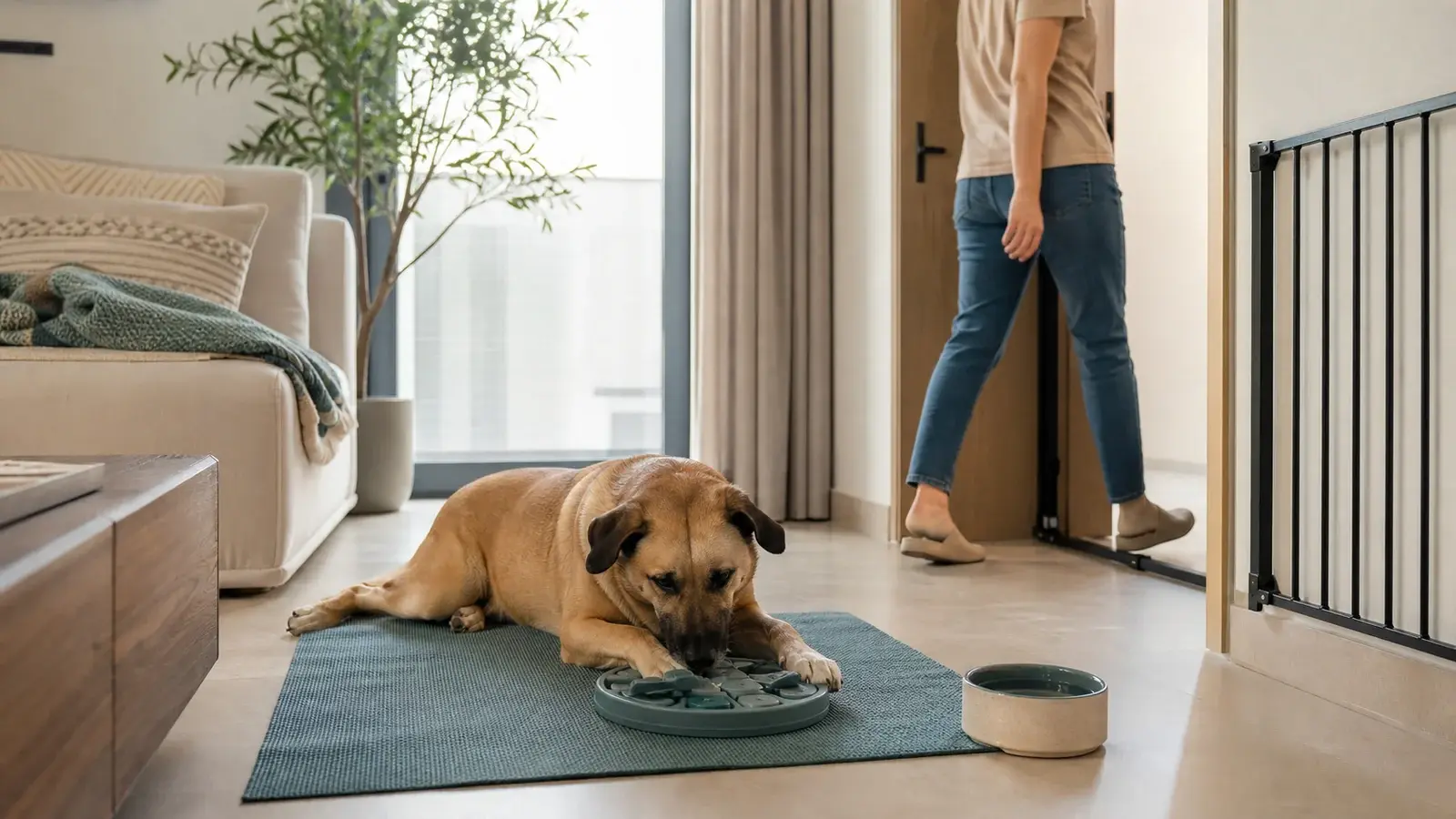
- Use a secure indoor area with fresh water, comfortable rest, tested enrichment and reliable cooling.
- Build from a barrier to one step out of sight, then very brief exits through the front door.
- Watch live or recorded video and increase only when the dog remains relaxed; reduce the next repetition at the first sign of worry.
- Never use punishment, forced confinement, flooding or a ‘cry it out’ approach.
- If your dog already panics, tries to escape, injures itself or changes behaviour suddenly, contact a licensed veterinarian and ask about qualified reward-based behaviour support.
A dog who follows you from room to room has not necessarily learnt that a closed door is safe. Home-alone training builds that skill in small, ordinary repetitions: the dog settles, the person moves away briefly and the reunion happens before worry takes over.
The American Veterinary Society of Animal Behavior recommends reward-based methods for all dog training and says aversive methods should not be used. UAE animal-welfare law separately requires carers to take necessary precautions against harm, pain and suffering, account for an animal's needs and provide appropriate care. The law establishes the welfare duty; the sequence below is an editorial application of professional training guidance, not an additional legal rule or a treatment plan.
First, find out what happens when you leave
Set up a camera inside the dog's usual area and record a very short, ordinary absence that is already within the dog's comfort. Watch the whole sequence: your preparation, the door closing, the time alone and your return. A dog can be quiet while still pacing, freezing, scanning the door or ignoring something it normally enjoys.
- Keep the camera inside your private home and frame only the pet area; do not record shared corridors, neighbours, staff or visitors without appropriate permission.
- Note the first change in posture or activity rather than waiting for barking or destruction.
- Treat eating as one clue, not proof of comfort; some dogs eat while tense and others ignore food for unrelated reasons.
- If the dog is distressed by the shortest realistic check, stop the exercise and seek individual help.
- Discuss a sudden change, new toileting problem or behaviour that may involve pain or illness with a licensed veterinarian.
Prepare a safe, cool settling area
Choose the indoor place where your dog already rests. Provide a comfortable bed or mat, fresh water and enough room to change position. Secure windows, balcony doors, bins, cables, medicines, cleaning products and anything the dog could swallow. In UAE conditions, confirm that cooling is reliable and decide who can reach the dog if the air conditioning or power fails.
Stage 1: Reward settling while you stay nearby
When your dog chooses to lie on the mat or relax in the resting area, place a small reward calmly between its paws. Sit nearby and do something quiet. Reward loose muscles, a lowered head or another relaxed behaviour your dog offers; do not repeatedly cue a rigid stay. The aim is comfortable independence, not holding position through pressure.
Stage 2: Add a barrier for one easy moment
A securely fitted baby gate can introduce separation while the dog can still see, hear and smell you. Step across, return immediately and reward calm behaviour. If the dog rushes the gate, stops eating, stiffens, vocalises or cannot settle, make the next repetition easier by staying closer, shortening the moment or returning to Stage 1.
Stage 3: Move out of sight in seconds
Once the visible separation is easy, step just beyond the doorway and return. Begin with less than the time you think the dog can manage. Across later repetitions, change only one feature: how far you move, how long you disappear or whether the interior door moves slightly. Vary easy and slightly longer repetitions so every absence does not become a harder test.
Stage 4: Make departure cues ordinary
Keys, work shoes, a bag or the sound of the lock may predict a long absence. Practise one cue without leaving: pick up the keys, put them down and continue a quiet activity. On another repetition, put on the shoes and make tea. Keep the action low-key and stop if the cue itself causes worry; repeated exposure while the dog is distressed is flooding, not training.
Stage 5: Practise the front door with a camera
Begin by touching the handle, then opening and closing the door without leaving. Later, step outside and return almost immediately. Watch the camera and come back while the dog is still comfortable, not after a fixed target. Increase in small increments across successful sessions and include easier repetitions. One calm second is a better foundation than a distressed minute.
Fit practice around a real UAE day
Give the dog an appropriate toilet opportunity and activity before a planned absence, then allow time to settle. Do not try to manufacture calm by exhausting the dog in hot or humid conditions. The UAE summer dog-walk safety plan explains how to check live weather, the route and the individual dog; when outdoor conditions are unsuitable, use a brief safe toilet trip and calm indoor enrichment instead.
There is no single training timetable or absence length that suits every dog. Age, health, toileting needs, previous experience and the dog's observed response all matter. A full workday is not a training increment. If you must be away longer than your dog can comfortably manage, arrange suitable company or care rather than testing the limit. Use the UAE boarding and pet-sitter checklist to inspect the provider, agree a written handover and plan for cooling or power failures.
Use a simple comfort log
- Record the setup, cue, duration and what the dog did before, during and after the absence.
- Repeat an easy version after a change in home, work routine, household or carer.
- Increase only after several comfortable observations; there is no deadline for reaching the next stage.
- Step back after illness, a frightening event or a difficult repetition rather than forcing the previous duration.
- Keep recordings only as long as useful, store them securely and share relevant clips with the professional advising the case.
Know when to stop and get individual help
Contact a licensed veterinarian if behaviour changes suddenly, the dog may be in pain or unwell, or absences involve panic, heavy panting, drooling, repeated toileting, vomiting, escape attempts, injury, aggression or an inability to eat or settle. The veterinarian can assess health contributors and advise referral to an appropriately qualified, reward-based behaviour professional. Only a veterinarian should decide whether prescription treatment is appropriate.
A five-session foundation
- Session 1: reward voluntary relaxation on the dog's usual mat while you sit nearby.
- Session 2: step across a safe barrier and return immediately, staying within the dog's comfort.
- Session 3: disappear behind an interior doorway for one easy moment.
- Session 4: practise one departure cue without leaving the home.
- Session 5: use the camera for one very brief front-door exit and review the complete recording.
These are sessions, not consecutive-day targets. Repeat, shorten or pause them according to the dog in front of you. If you are deciding whether your home and schedule can meet a dog's needs before adoption, start with the Dubai pet-adoption readiness checklist. Useful alone-time training is quiet and uneventful: the environment is safe, the dog remains comfortable and progress follows observation rather than the clock.