The direct answer
- Teach the mat away from the front door first: reward your dog for choosing it and for increasingly relaxed behaviour there.
- Add one visitor cue at a time—your movement, a quiet recorded knock, the real door, then a prepared helper.
- Give the dog a genuinely quiet route away from the doorway; a mat is not a command to tolerate a person it finds worrying.
- Keep a lead, gate or closed internal door for safety when needed, but do not tether, force, punish or physically hold the dog on the mat.
- Pause visitor practice and seek individual veterinary and qualified behaviour support if the dog growls, snaps, lunges, freezes, panics or has a sudden behaviour change.
To teach a dog to settle when somebody comes to a UAE apartment door, start by making a mat a calm, rewarding place in the quietest room. When that is easy, rehearse a low-volume knock or door sound while the dog can stay comfortable. Only after many easy repetitions should a known helper approach or enter. The useful skill is not ‘stay put no matter what’; it is choosing a safe, familiar place while you manage the doorway.
This is especially practical in apartment living, where a doorbell, delivery or building visit can happen close to the dog's resting space. It is not a substitute for checking a building's access rules, arranging a visitor's entry, or managing a dog that is unsafe around people. UAE animal-welfare law sets a broad duty to take necessary precautions against harm, pain and suffering. The training steps below are PetsGo's practical application of professional welfare guidance, not a legal visitor-access rule or an assessment of an individual dog.
1. Choose a mat and location that give the dog a real choice
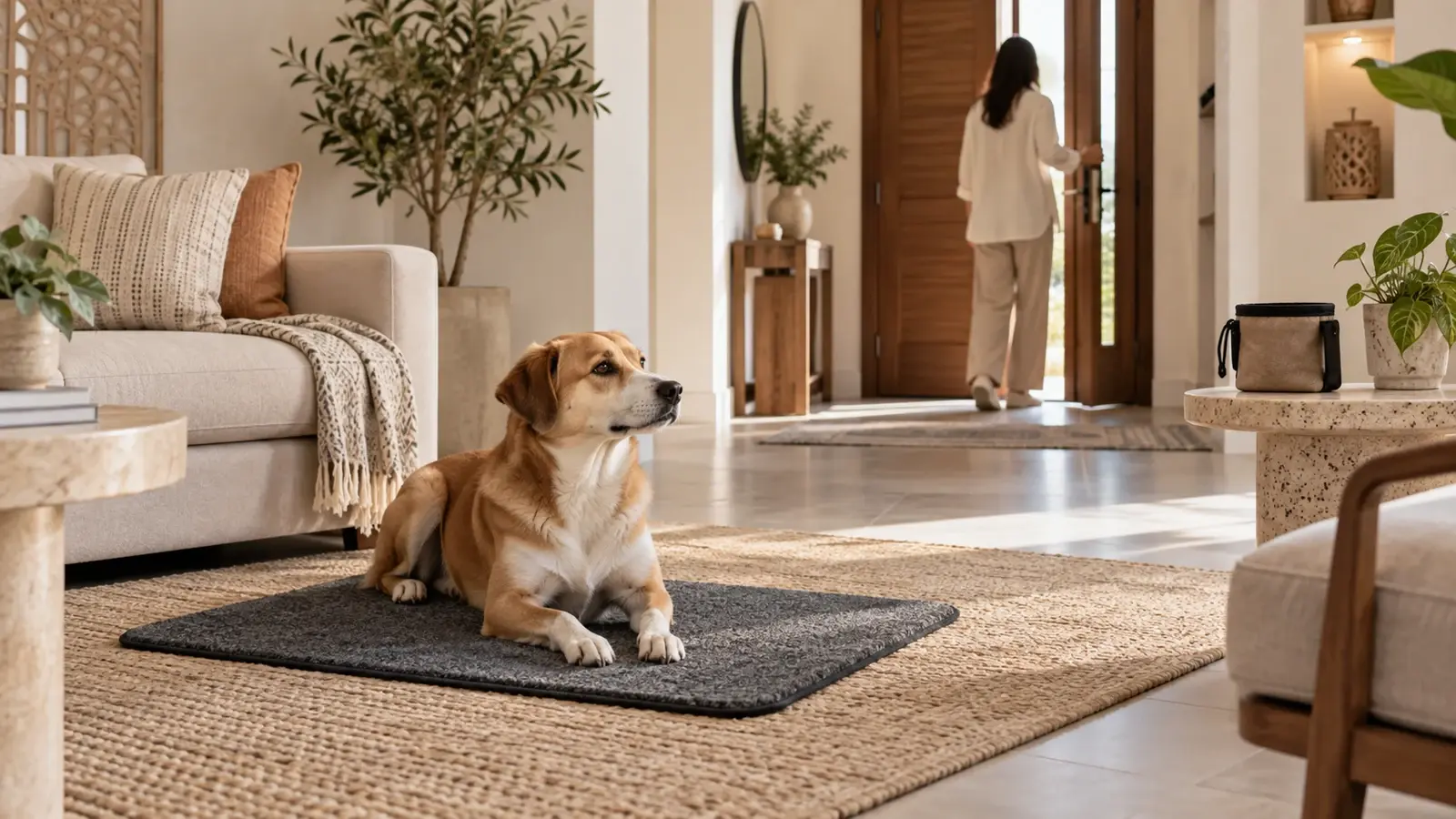
Use a stable, non-slip mat, blanket or bed that is comfortable enough to rest on. Put it away from the front door, not in a route where people must pass close by. The dog should be able to leave it and move to a quieter safe area. Begin after the dog's ordinary needs have been met, in a cool indoor room and without a real visitor expected.
- Keep the first sessions under a minute and finish before the dog becomes restless.
- Have small rewards from the dog's normal daily food allowance, or use a toy, calm attention or another safe reward the dog genuinely values.
- Do not drag, push or lure a worried dog onto the mat. Start by rewarding a look, sniff or step towards it instead.
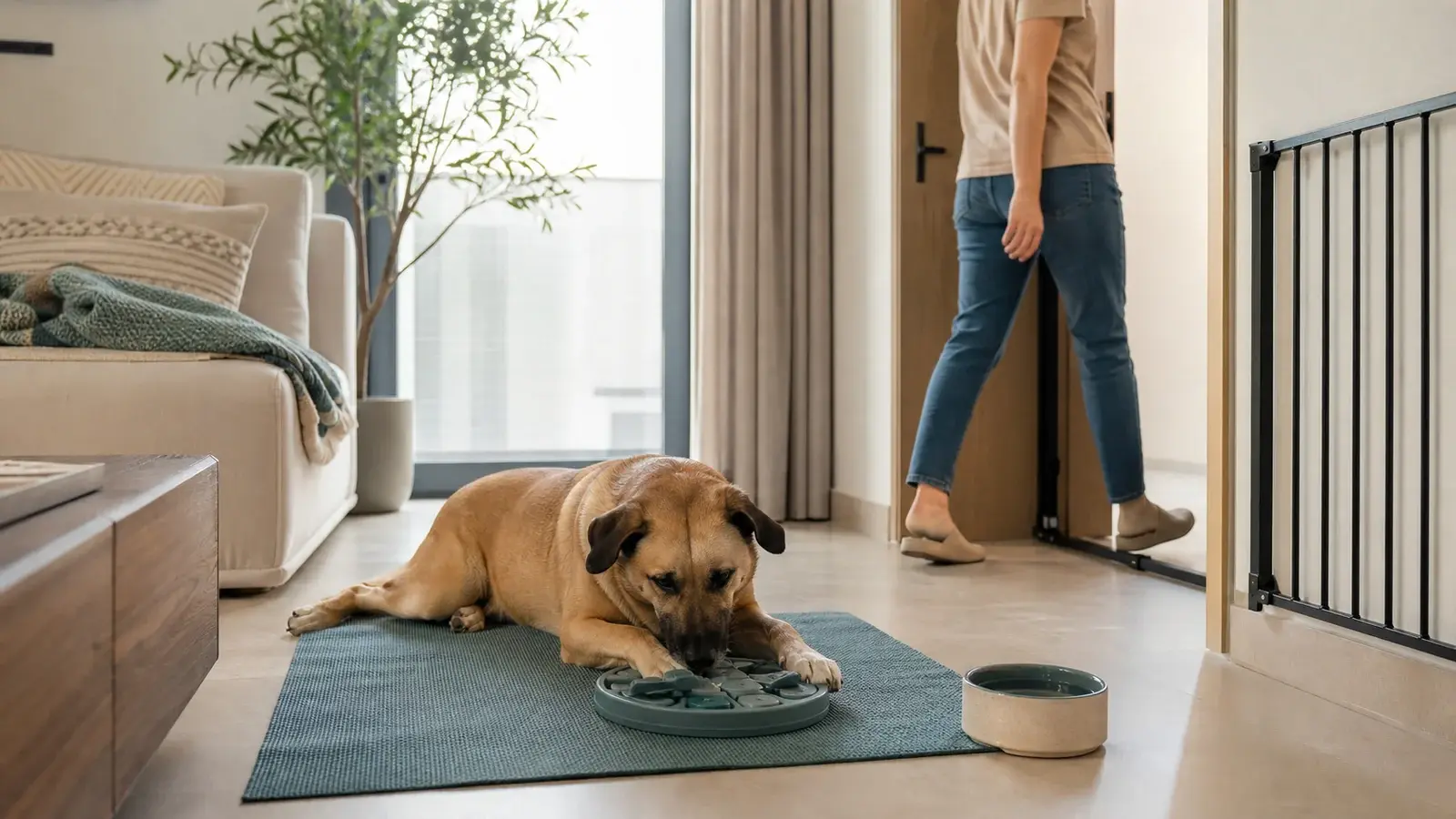
- Do not use a balcony, bathroom or crate as a default place to put a dog during visitor activity unless it is already a safe, voluntarily used retreat and the dog is comfortable there.
2. Build calm behaviour before naming it
Dogs Trust recommends beginning settle practice somewhere quiet and rewarding relaxed behaviour on a blanket. Start with the mat on the floor and simply notice calm choices: stepping onto it, sniffing, standing quietly, shifting weight, sitting or lying down. Deliver the reward on or near the mat, then pause. When the dog is repeatedly choosing the mat, add one consistent cue such as ‘mat’ immediately before it is likely to go there.
3. Add the door in tiny, planned layers
A knock, the lift sound or the door opening can be a much bigger challenge than the mat itself. Dogs Trust's visitor guidance builds from a low-level door sound to an actual knock and then a helper. Keep the dog with you and work through one change at a time. A recording played very quietly is one option; turn it off and return to the easiest mat practice if the dog cannot eat, orient back to you or settle.
- Practise your own movement towards the door, then return and reward the dog on the mat.
- Add one quiet sound, reward calm behaviour, then stop. Do not repeat it until the dog is overwhelmed.
- Open and close the internal or front door only as far as the dog can handle while remaining comfortable.
- Ask a helper to follow a script: one gentle knock, wait, then leave. Keep the helper outside until the earlier step is easy.
- For the first entry rehearsal, keep the helper neutral and give the dog distance. The visitor should not reach, stare at, call or feed the dog without your clear plan.
4. Make a real-visitor plan before the bell rings
Training sessions and real arrivals have different goals. For an expected guest, put the mat and rewards in place before the door activity starts. Decide who answers the door and who stays with the dog. If the dog is not ready, use management rather than testing the training: a secure internal barrier or closed room with water, cooling and a familiar activity may be kinder than bringing the dog to the entrance. Never leave the dog loose with a visitor just because it completed a rehearsal.
For a delivery or unplanned building visit, a simple safety routine is more useful than a perfect settle: create distance, prevent access to the open doorway and ask the person to wait while you secure the dog. Check your building's own procedures separately; this article does not establish whether a visitor, contractor or delivery person may enter any particular property.
5. Let the dog's response decide the next step
AVSAB recommends reward-based methods for all dog training and says aversive methods should not be used. Stop the exercise if the dog freezes, crouches, repeatedly tries to escape, growls, barks continuously, lunges, snaps or cannot take a reward it normally enjoys. Increase distance, end the visitor element and let the dog decompress in its safe space. These signs do not tell you the cause; they tell you the current setup is too difficult.
A five-session starter plan
- Session 1: reward calm investigation and short rests on the mat in a quiet room.
- Session 2: add your cue only when the dog is already choosing the mat, then reward a few easy repetitions.
- Session 3: take one or two steps towards the door and back while the dog remains comfortable on the mat.
- Session 4: add one very quiet, pre-recorded knock or one gentle knock from another household member.
- Session 5: ask a prepared helper to approach, knock once and leave; do not progress to entry unless the previous work is consistently easy.
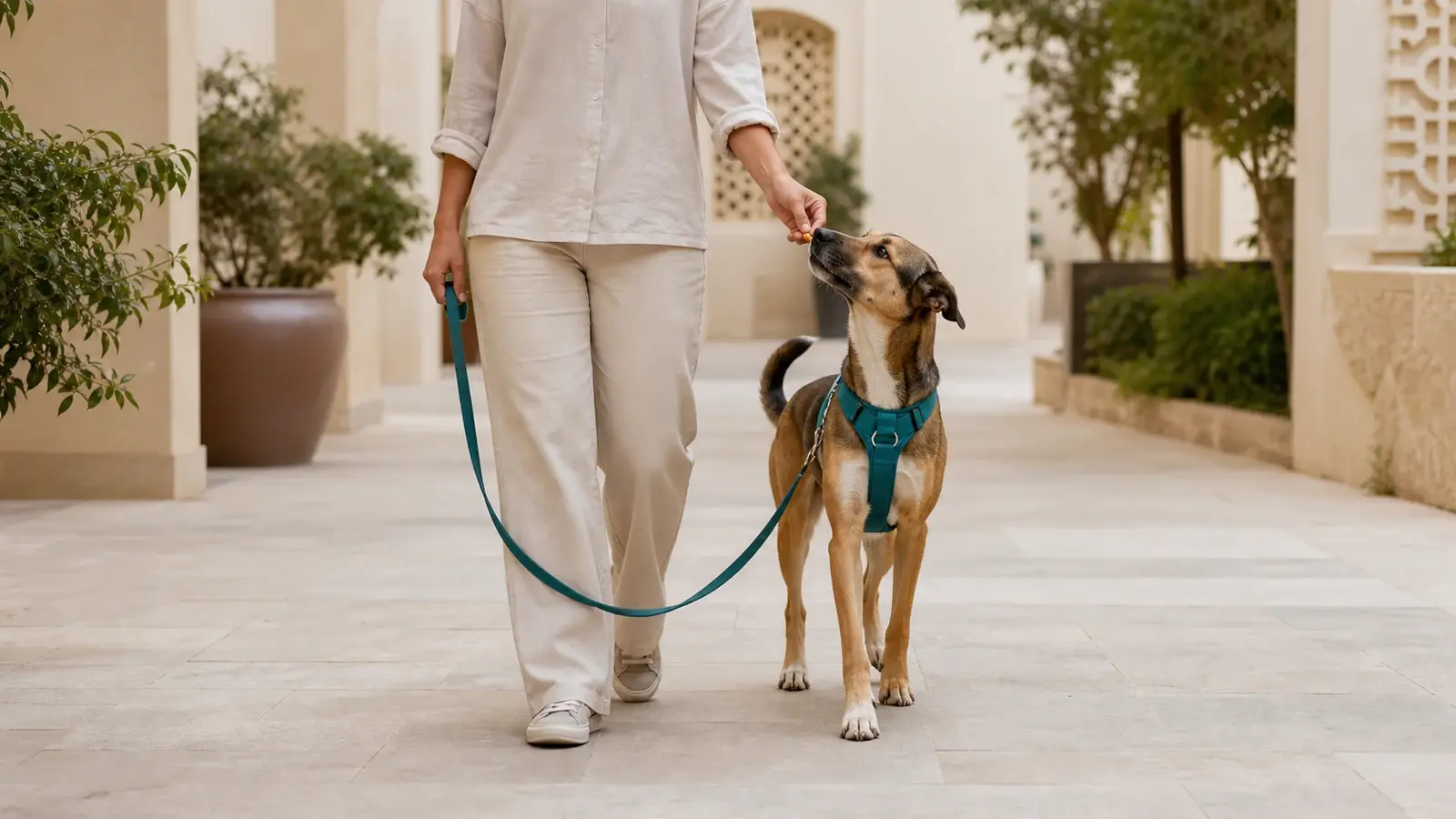
There is no universal timetable. Repeat an easier session whenever you need to, and reserve longer visitor practice for a day when the dog is rested and the household is calm. For foundations away from guests, see the home-alone settling guide. For a separate skill once you leave the building, use the reward-based loose-lead guide.