The short answer
- Give the new cat a secure, comfortable room with its own food, water, litter tray, hiding place and rest area; keep the resident cat's usual space and routine.
- After the newcomer has settled, exchange familiar bedding or scent cloths without making either cat approach.
- Progress to brief views through a secure barrier, then short supervised meetings in a room with space and exits, only when both cats are comfortable.
- Keep resources in separate, accessible places after meetings begin; a shared hallway can become a bottleneck.
- If either cat becomes tense, separate calmly and return to an easier stage. There is no fixed number of days or guaranteed friendship.
To introduce a new cat to a resident cat in a UAE apartment, begin with two complete living spaces behind a closed door. Let the newcomer settle before swapping scents; let both cats choose whether to investigate. Only then arrange short, protected views of each other and, later, brief supervised meetings. Do not put the cats together on arrival to see if they will ‘sort it out’.
The Feline Veterinary Medical Association (FelineVMA) describes a sequence that can take days, months or longer. Progress depends on the cats' response, not the calendar. UAE animal-welfare law requires carers to take necessary precautions against harm, pain and suffering and to consider the animal's needs. That is a broad duty of care; the room and training steps below are an editorial application of feline professional guidance, not a legal formula for cat introductions.
1. Check whether the flat can support two complete spaces
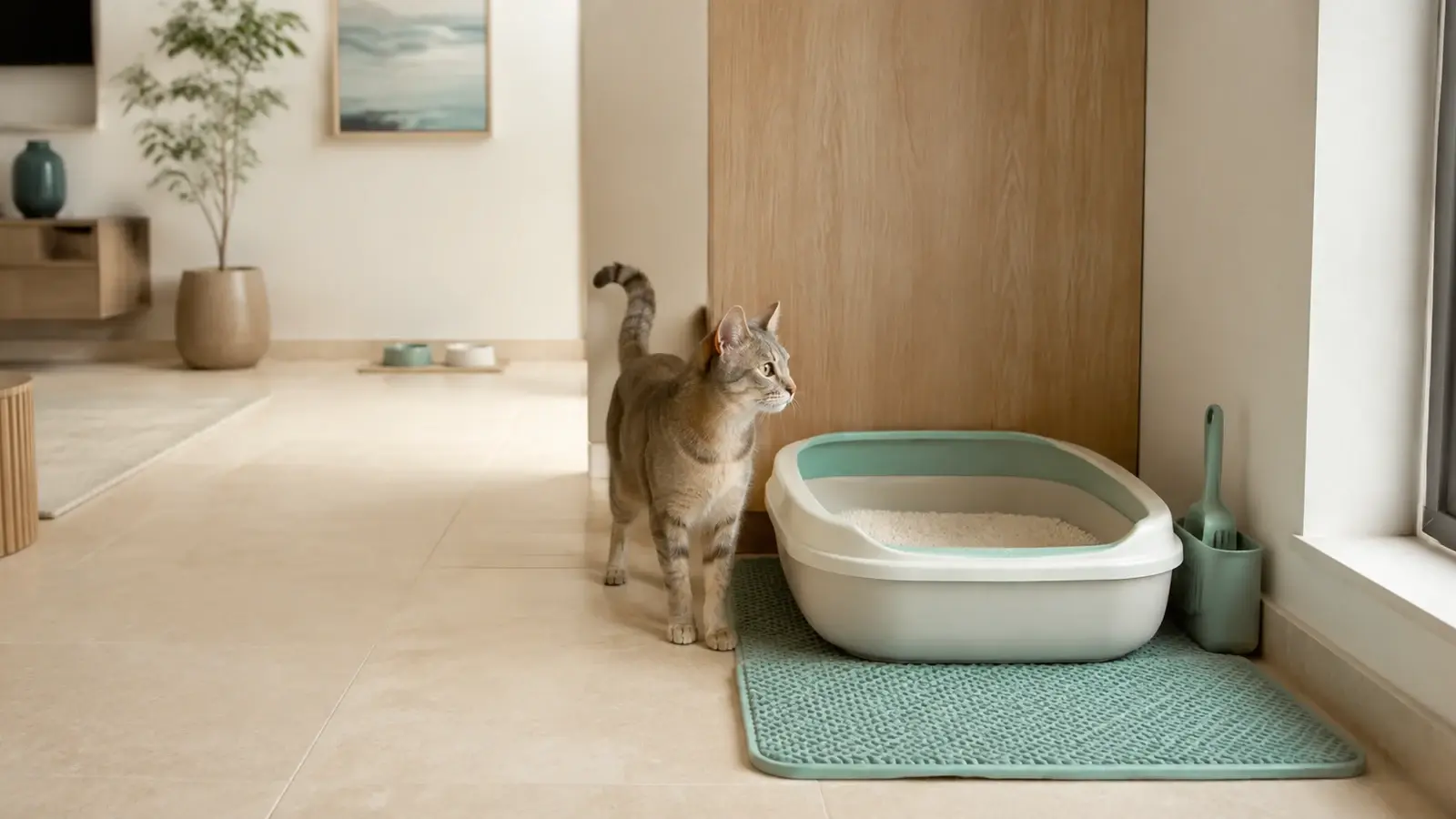
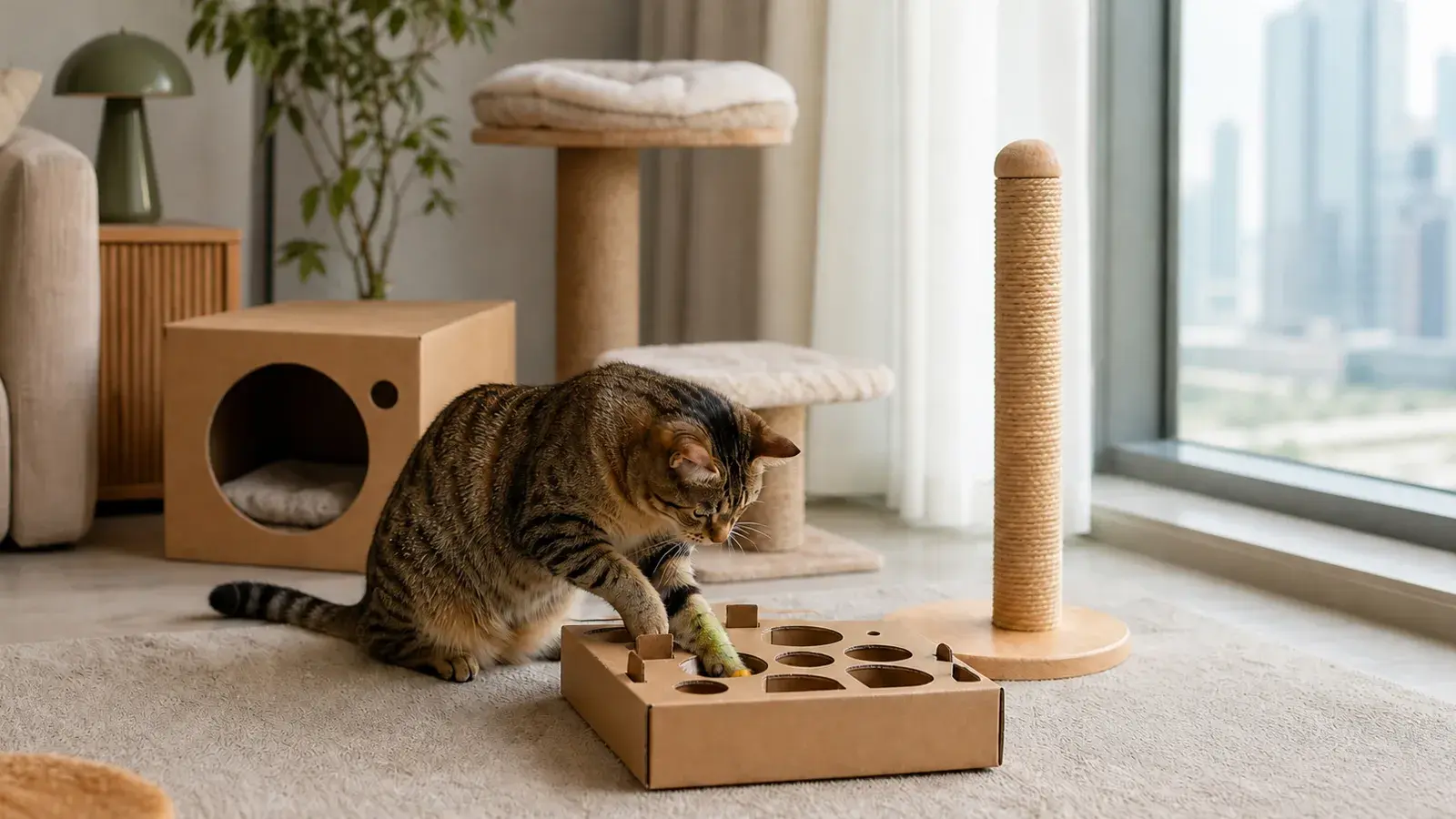
Before adoption, identify a quiet room for the newcomer that closes securely and stays comfortably cooled. Give it a litter tray, food, water, a hiding place, a perch or other safe height, a scratching surface and a resting place. Keep food and water apart from the tray. The resident cat must retain access to its usual resources without having to pass the new cat's door. FelineVMA recommends separate, visually spaced resources and ideally one of each key resource per cat plus one extra across the home.
Avoid using a balcony, hot utility room or a bathroom that cannot comfortably fit all essentials as the transition space. Check that windows and balcony access are secure and that cooling remains reliable when the room door is closed. If the only spare room cannot provide safe, comfortable separation for as long as the cats need, plan a different setup before adopting rather than compressing the introduction into a weekend.
2. Bring the newcomer straight to its room
Ask a veterinarian about each cat's health and the newcomer's preventive-care needs before introductions, especially if an animal is unwell. On arrival, carry the new cat in its secure carrier directly into the prepared room while the resident cat is elsewhere. Close the door, open the carrier and let the newcomer come out voluntarily. Preserve the resident cat's feeding, resting and play routine as far as possible. Wait until the newcomer is exploring and using its resources comfortably before beginning scent work.
3. Exchange scent without forcing an encounter
Swap a small piece of familiar bedding between rooms, or gently collect cheek scent on separate soft cloths if each cat welcomes touch. Place the item where the other cat can choose to approach or ignore it, away from its food and hiding place. Reward relaxed investigation with a valued treat, play or calm attention; do not hold the item under a cat's nose. Repeat while both cats remain comfortable. FelineVMA lists avoidance, pacing, growling, hissing, house-soiling and changes in normal behaviour as reasons to slow down.
When scent is ordinary to both cats, let the newcomer briefly explore a shared room while the resident cat is comfortably secured elsewhere, then return the newcomer to its room before the resident cat comes back. FelineVMA includes this supervised exploration before visual meetings. Keep both cats' safe spaces available throughout.
4. Let them see each other through a secure barrier
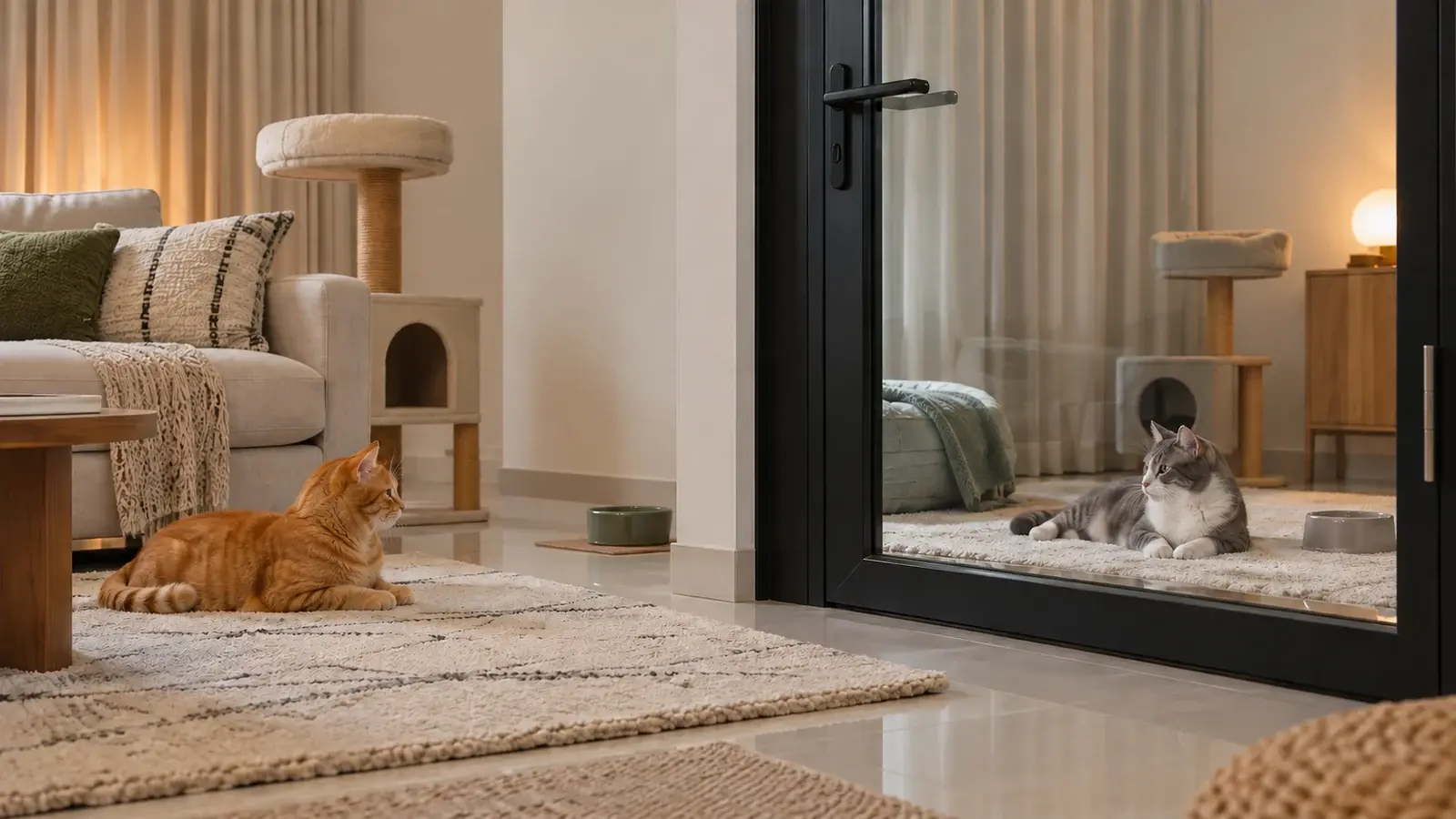
Use a closed glass door, a properly secured screen or an escape-proof cat gate. Check that a kitten cannot slip through gaps and that the barrier cannot tip or open when pushed. Begin with a short view at a distance; partially cover the barrier if needed. Let either cat leave. Pair calm moments with separate rewards or play, and end before tension builds. Do not carry one cat up to the other or confine an unwilling cat in a carrier to force visual contact.
5. Move to short, supervised meetings only when ready
Choose the room with the most usable distance, clear exit routes and safe high places. Have a calm adult watch each cat if possible. Open access without pushing either cat through the doorway. Use separate play or small rewards for relaxed behaviour, keep the first meeting brief and return each cat to its own space before stress rises. Repeat at the cats' pace; increase time together only after several comfortable sessions. Cats Protection notes that some cats may never want a feline housemate, even with careful introductions.
If they lock into a stare or conflict starts, place a cushion, large piece of cardboard or similar visual barrier between them and guide them apart without grabbing either cat. Do not put your hands between fighting cats. After separation, return to an easier step and assess the layout, especially narrow corridors and access to trays. Do not leave the cats together unsupervised just because one meeting went well.
Know when the plan needs individual help
Quiet tension can be easy to miss: one cat may repeatedly occupy a corridor, watch the other's exit, or prevent access to food, water or litter without a fight. Persistent hiding, appetite or toileting changes, injury, intense fear or repeated conflict call for veterinary advice; ask about a qualified feline behaviour professional where appropriate. A behaviour change can have medical causes, so do not try to diagnose it from this guide. The goal is safe, comfortable coexistence; friendship cannot be promised.
For a room-by-room resource plan, see the UAE apartment litter-tray guide and indoor cat enrichment guide. If you are still deciding whether a second cat fits your home, use the Dubai adoption readiness checklist before making the commitment.