A practical litter-tray setup
- Choose a tray large enough for the cat to turn, dig and toilet without being crowded.
- Place it in a quiet, accessible indoor location, away from food and water and clear of noisy appliances or blocked exits.
- For a multi-cat home, start with one tray per cat plus one extra, spread across separate locations.
- Keep the cat's familiar litter where possible and offer a choice before making a complete change.
- Remove waste at least daily and clean the tray regularly with a mild product that is safe for the cat and tray material.
- Treat sudden house-soiling, straining, pain, blood, repeated tray visits or inability to pass urine as reasons for prompt veterinary contact, not misbehaviour.
For an indoor cat, the litter tray is an essential resource rather than a decorative item to hide. A workable setup gives the cat enough space, privacy without entrapment, reliable access and a clean substrate it is willing to use. This guide is about prevention and everyday care; it is not a way to diagnose toileting changes.
UAE animal-welfare law requires people caring for animals to take necessary precautions against harm, pain and suffering, account for the animal's needs according to scientific knowledge and experience, check animals at least daily and obtain veterinary care. That is the legal duty. The setup below is PetsGo's practical editorial application of recognised feline guidance to UAE homes, not a separate litter-tray law.
1. Choose a tray the cat can use comfortably
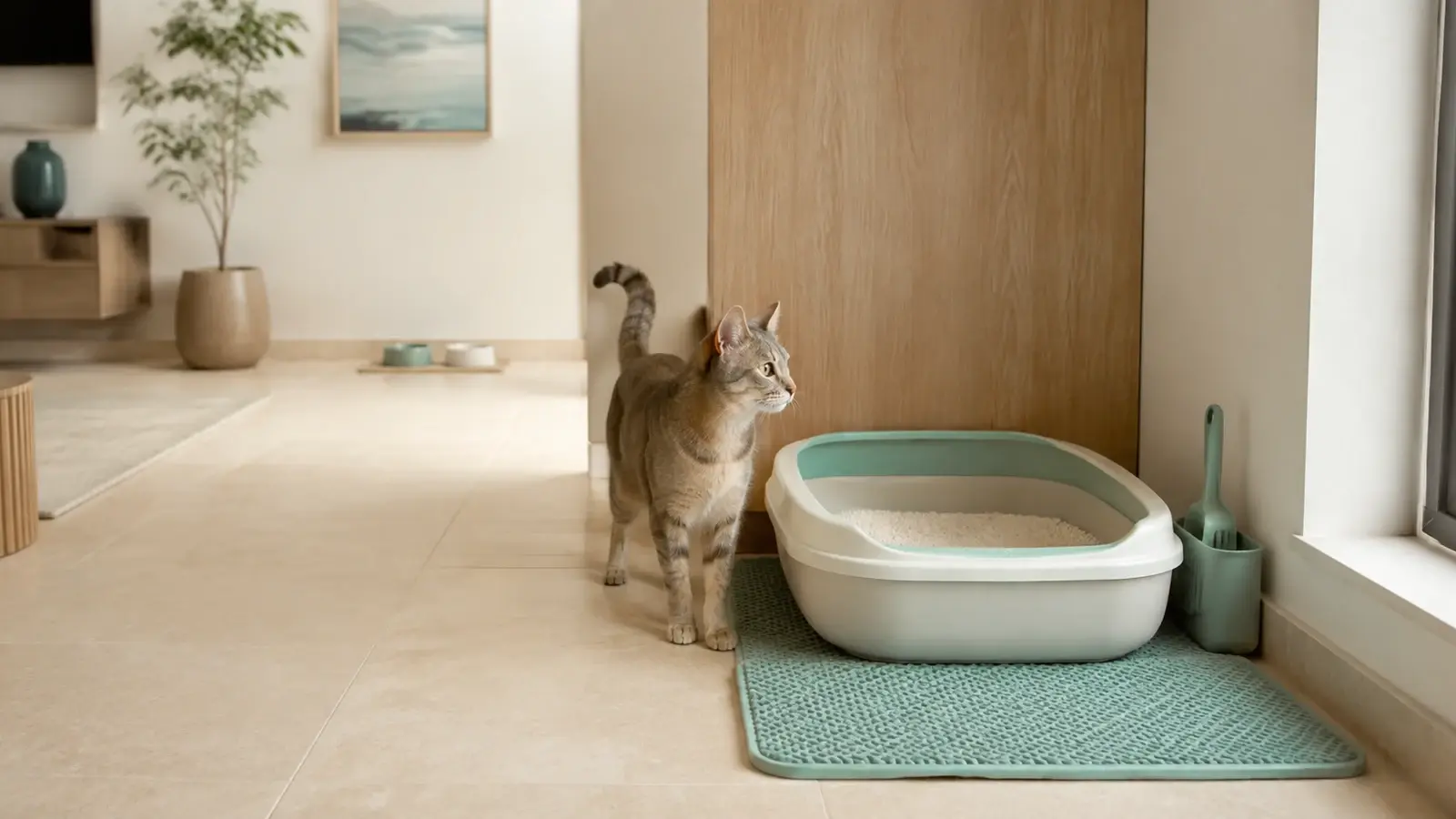
Feline guidelines favour generous space: the cat should be able to enter, turn, dig, squat and leave without pressing against the sides. Many trays sold for adult cats are smaller than this. A large, sturdy open tray is a sensible starting point, but individual cats may prefer an open or covered option. If you are unsure, offer choices rather than deciding from appearance alone.
- Check that the tray stays still when the cat steps in and does not tip during digging.
- Use an entry height the individual cat can cross easily; kittens, older cats and cats with reduced mobility may need a lower entrance.
- Avoid top-entry designs when access is difficult, and do not place the only entrance where another pet can block it.
- If a covered tray holds odour or makes the cat reluctant to enter, try a large open alternative in a separate location.
- Follow the tray's safety and cleaning instructions, especially for any moving or automatic mechanism.
2. Pick a quiet location with a clear exit
Put the tray in the cat's main indoor living area where it remains accessible at all times. Choose a calm position away from food and water, slamming doors, washing machines, busy entrance routes and places where a child, dog or another cat can corner the user. A screen can add visual privacy only if it does not narrow the entrance or trap the cat.
In a UAE apartment, keep the tray inside the reliably cooled, secure part of the home. An exposed balcony can become hot, may create an escape or fall risk and can make the only toilet unavailable when the door is closed. Strong direct sun and a hot, unventilated room are poor substitutes for a comfortable indoor location. These are practical UAE adaptations, not temperature limits published in the feline guidelines.
3. Give multiple cats genuinely separate choices
International Cat Care's 2025 consensus guidance recommends one tray per cat plus one extra. Treat that as a useful starting point, not a guarantee: placement and access still matter. Three trays lined up side by side create one toilet station that another cat may guard. Spread them across distinct, quiet locations so a cat has another route if one area feels unsafe.
- Do not expect cats to share simply because they sleep or play together.
- Avoid dead-end locations where one cat can wait at the only exit.
- Keep at least one tray easy to reach on each regularly used level of a multi-storey home.
- If space is tight, improve separation and access as far as practical rather than clustering every tray in one small room.
- Map food, water, rest, scratching and litter separately with the PetsGo indoor-cat enrichment guide.
The UAE apartment cat-enrichment guide explains how to spread essential resources so one cat cannot quietly control access to everything.
4. Keep litter familiar and let preference guide change
Feline guidance reports a general preference for soft, sandy, unscented clumping litter, but the individual cat's established preference matters. A newly adopted cat is easier to settle when you ask which tray and litter it used before. Do not replace every tray with a strongly scented, coarse or unfamiliar product in one step.
- Keep at least one familiar option while testing a new litter in a separate tray.
- Change one feature at a time: tray design, location, litter type or depth.
- Watch which option the cat chooses over several ordinary visits instead of placing or holding the cat inside.
- Avoid perfumes and deodorising powders unless a veterinarian specifically advises a suitable product.
- If the cat has breathing, skin, paw, mobility or urinary concerns, ask the treating veterinarian which substrate is appropriate.
5. Build a cleaning routine you can sustain
Remove urine clumps and faeces at least once a day, and more often when several cats use the same tray or the cat avoids a used area. Top up or replace litter according to the product and veterinary guidance. International Cat Care's 2025 consensus guidance advises periodically emptying the tray, washing it with mild detergent and hot water, and rinsing it thoroughly; the exact interval depends on use and soiling.
- Keep a scoop beside the tray where pets and children cannot play with it.
- Use a washable mat only if it stays flat, does not trap claws and does not block entry.
- Avoid ammonia-based cleaners around soiled areas because feline guidance notes that their smell can resemble urine to a cat.
- Follow every cleaning product's dilution, contact-time, rinsing, ventilation and storage directions; never mix products.
- Dispose of used litter according to the product instructions and applicable building or local waste rules rather than assuming it can be flushed.
6. Preserve the setup during a move or new arrival
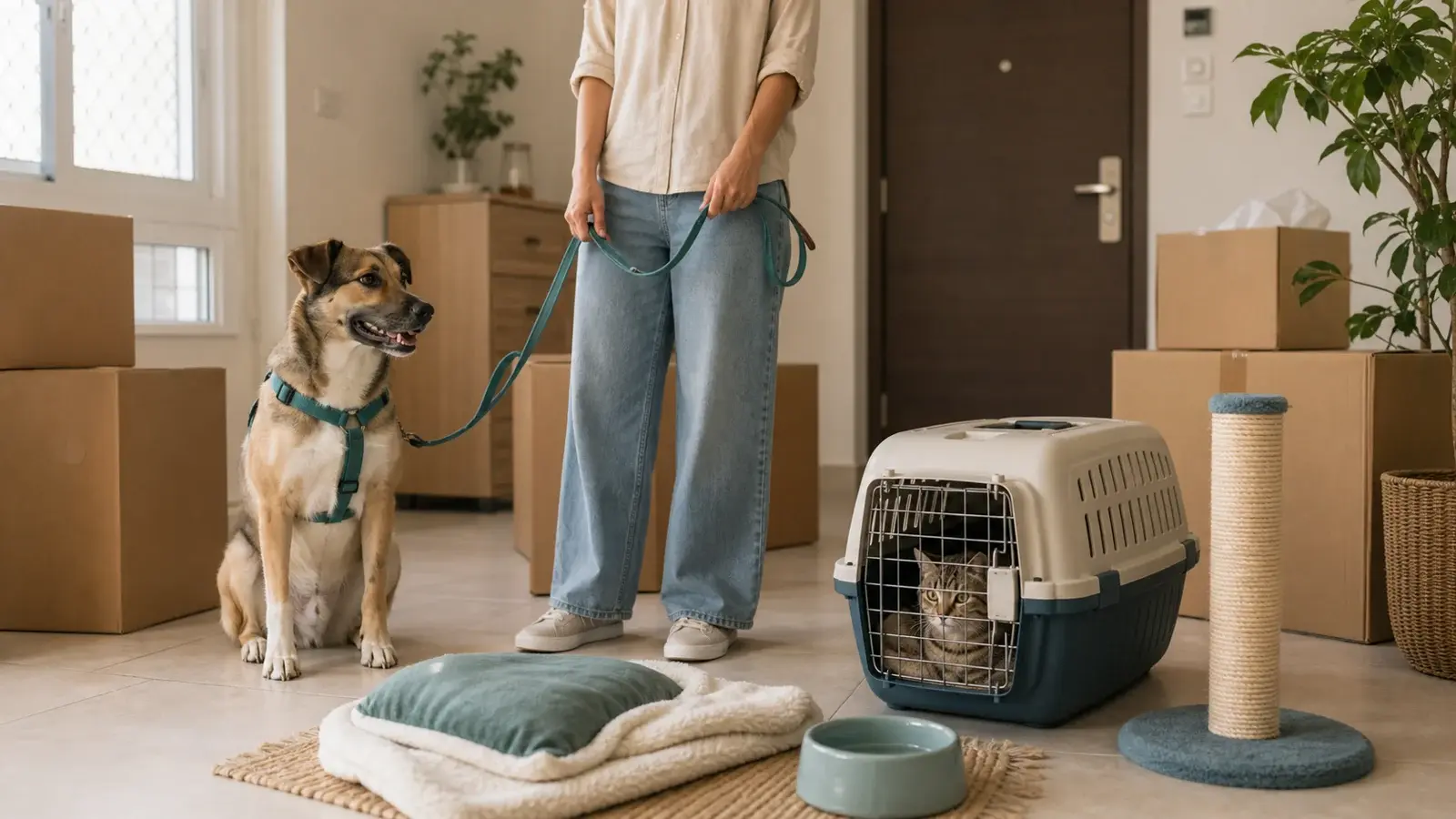
For a new cat, begin in a quiet secure room with the familiar tray and litter, food and water placed separately, a hiding option and comfortable rest. During a home move, keep the litter kit with the responsible person instead of burying it in the moving van, and prepare the tray before the carrier opens. The UAE home-moving checklist sets out the full controlled-transfer sequence.
Keep external doors, windows and balconies secure while the cat settles. Expand access gradually, then add trays before opening a new level or large section of the home. Do not test whether the cat can remember a distant tray through a maze of boxes, closed doors and unfamiliar rooms.
7. Know when setup changes are not enough
Contact a licensed veterinarian promptly if your cat starts toileting outside the tray, visits repeatedly, strains, cries, passes blood, produces unusually small amounts, drinks differently or changes appetite, movement or behaviour. These signs have more than one possible cause; do not diagnose them from the tray or assume the cat is protesting.
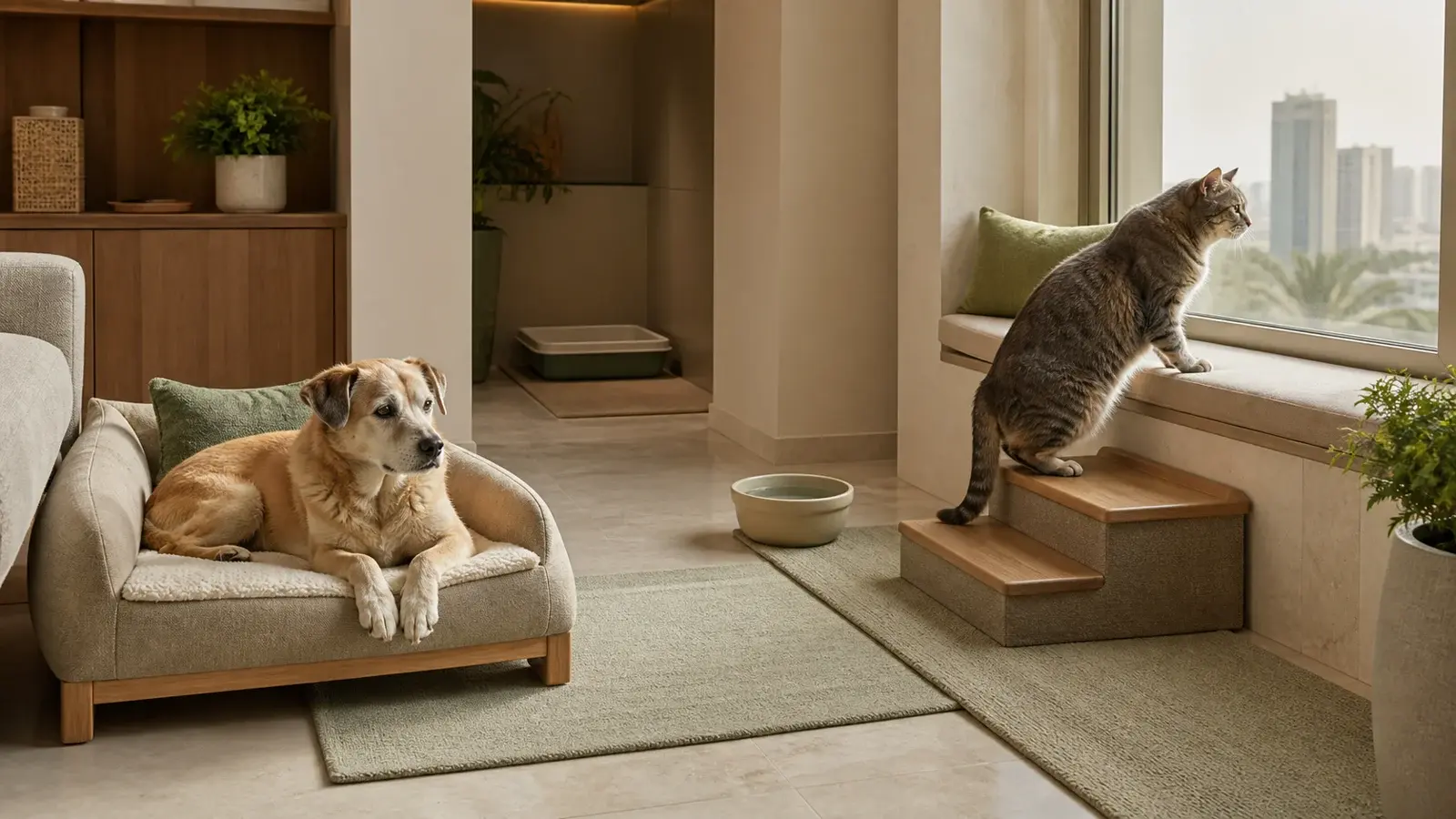
If mobility is changing, the senior-pet home guide covers lower tray entries, non-slip routes and monitoring without dismissing a change as normal ageing. A useful litter setup is simple: enough space, easy access, real choice, familiar substrate and steady cleaning, with veterinary help when the pattern changes.