The short answer
- If you expect Halloween visitors, put your dog or cat in a comfortable, secure indoor space before opening the front door; give one adult responsibility for the door.
- Keep chocolate, sugar-free sweets, gum and wrappers in a closed container the pet cannot reach. Check labels: some sugar-free products contain xylitol, which is especially dangerous for dogs.
- Skip a pet costume if it restricts movement or breathing, has chewable pieces, or makes the animal uncomfortable.
- If a pet may have eaten a hazardous treat, contact a local veterinarian or emergency veterinary clinic promptly, with the packaging if available.
The useful Halloween question for a UAE pet household is: how do we keep the pet safe when the door may open repeatedly and sweets move around the home? Prepare the pet's room, assign the doorway, and put treats away before the first guest. This applies whether you host a small gathering or your own building has an organised activity; it does not assume trick-or-treating happens in every UAE neighbourhood.
Halloween events are taking place in the UAE this October; for example, LEGOLAND Dubai Resort lists a 2026 Halloween programme. That event does not establish what will happen in your residential building. Ask the organiser or building management whether visitors are expected and follow the property's access arrangements. The plan below is useful for any evening with costumes, guests or shared sweets.
1. Set up the pet's quiet space first
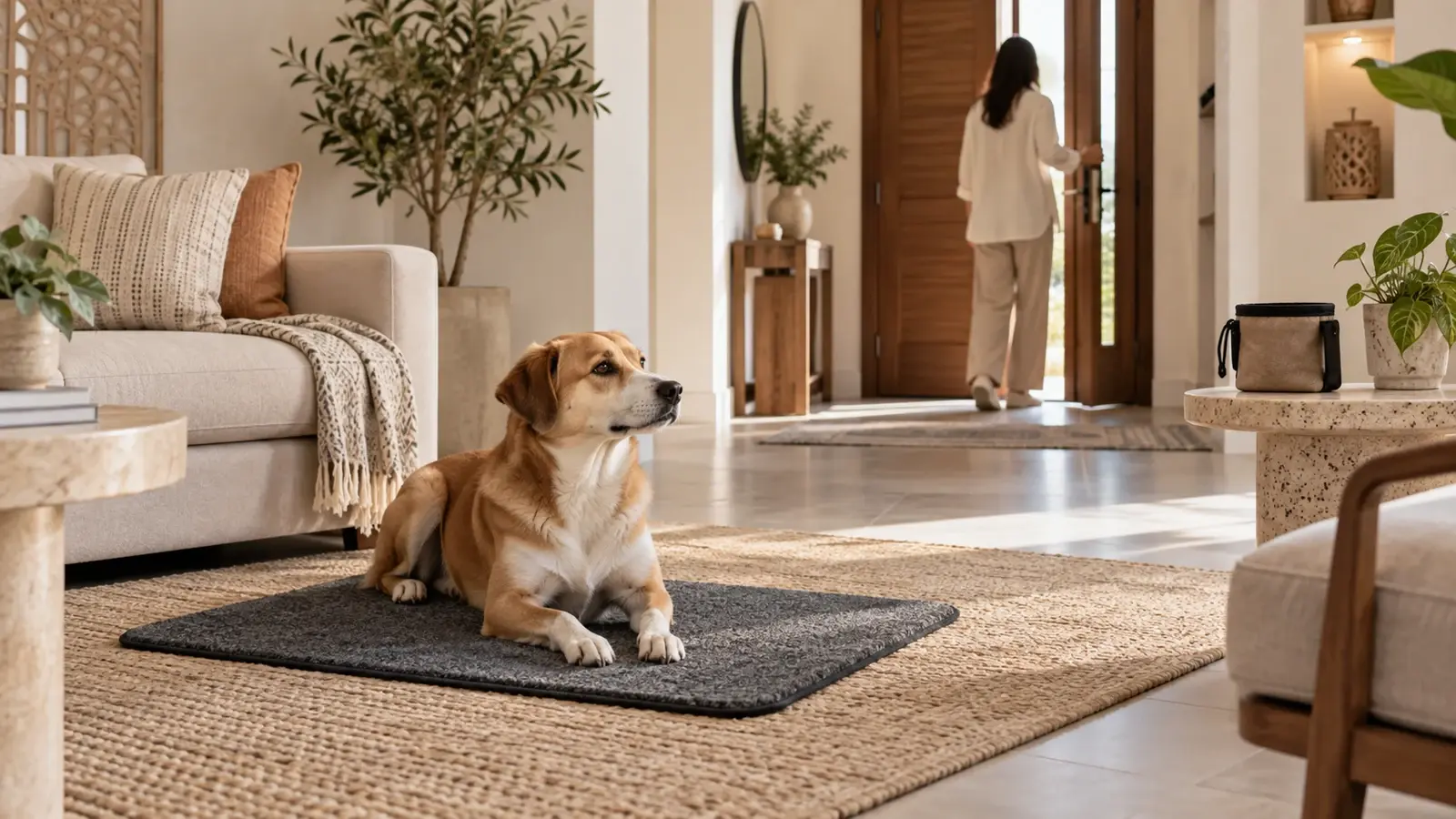
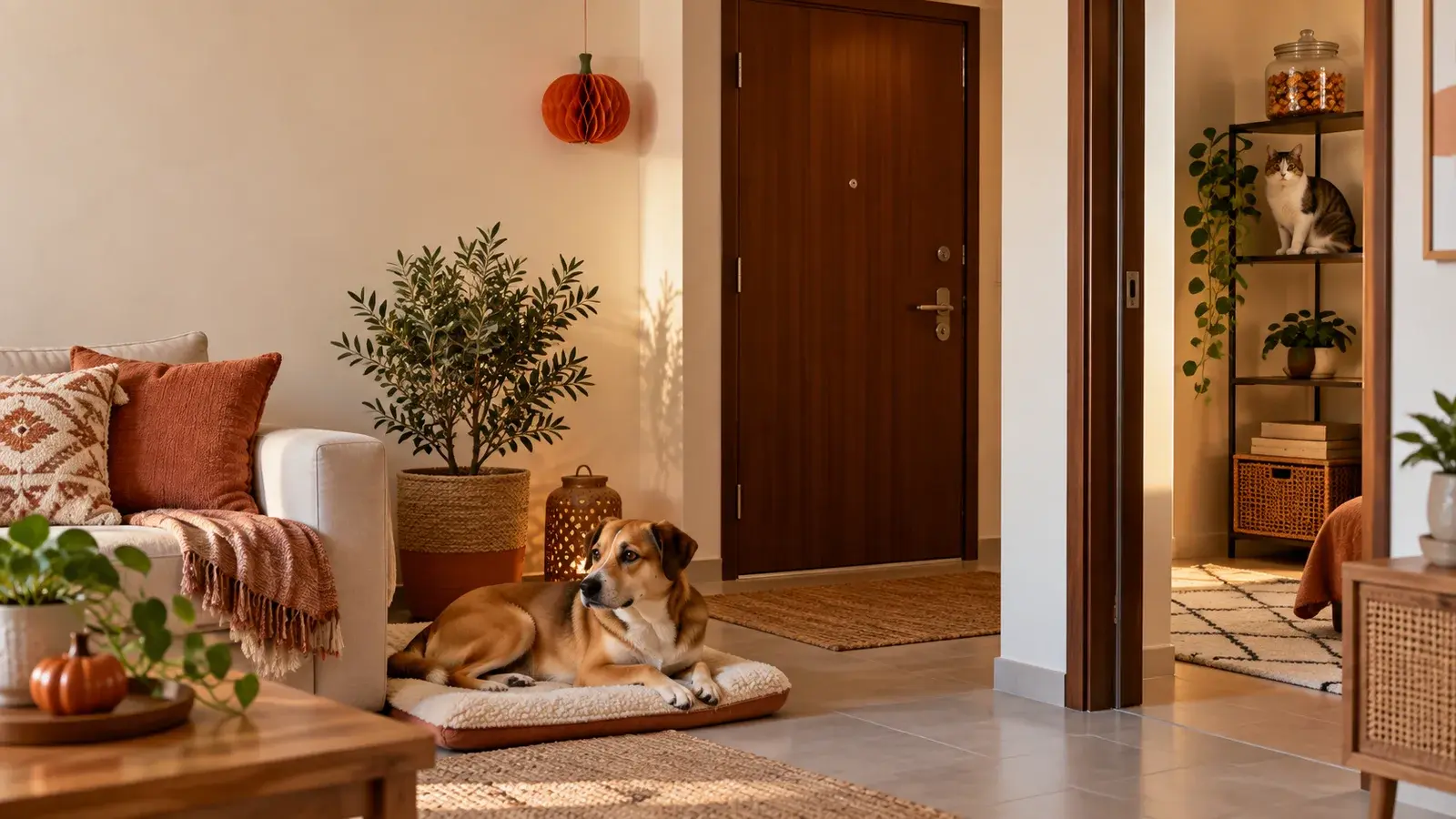
The ASPCA advises a comfortable room away from the front door for pets that may find repeated visitors frightening. Choose a room the pet already knows. Add its usual bed or hiding place, fresh water and a familiar activity; give a cat access to its litter tray. Check that windows, balcony access and the internal door close securely. Do a calm rehearsal on an ordinary day so you know the space works.
- Put the pet in the room before guests or children reach the entrance, rather than trying to catch it after the bell rings.
- Tell everyone in the household which door stays closed. Do not ask visitors to enter the pet's room for photos or greetings.
- If the pet chooses to hide or rest, leave it undisturbed. If confinement causes clear distress, make a different safe arrangement with veterinary or qualified behaviour guidance.
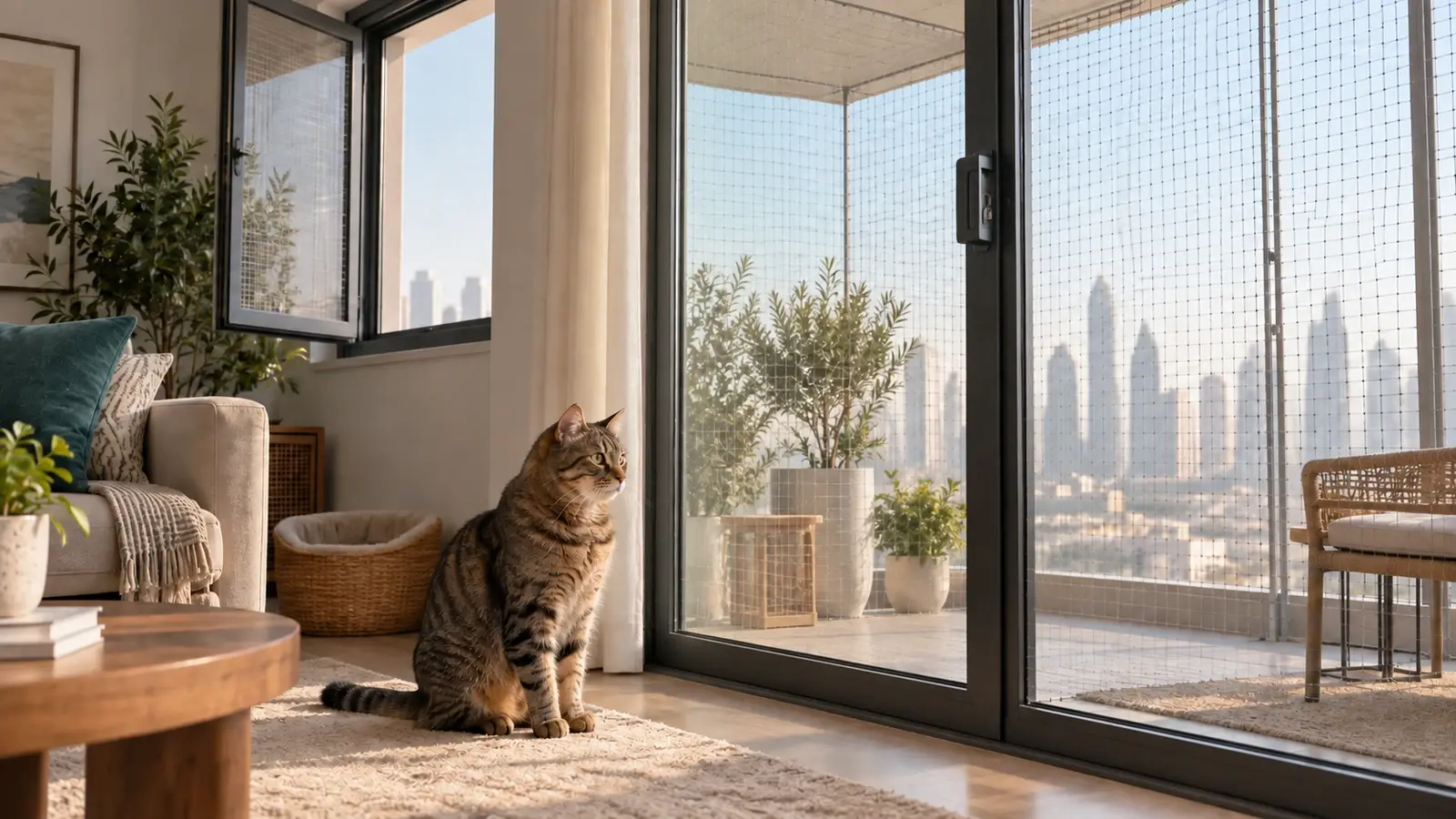
For an apartment, check the full escape route rather than only the front door: the UAE balcony and window safety guide covers openings that can become a problem when people move between rooms. UAE animal-welfare law sets a broad duty to take precautions against harm, pain and suffering. This home setup is practical welfare advice, not a Halloween-specific legal requirement.
2. Give the doorway one clear routine
Before the evening begins, agree who answers the door and who checks the pet. Keep a barrier between the pet and the entrance whenever the outer door opens. If you are offering treats, set them out of reach and hand them over at the door yourself. Do not rely on a pet's usual recall when an unexpected visitor, costume or noise appears in a corridor.
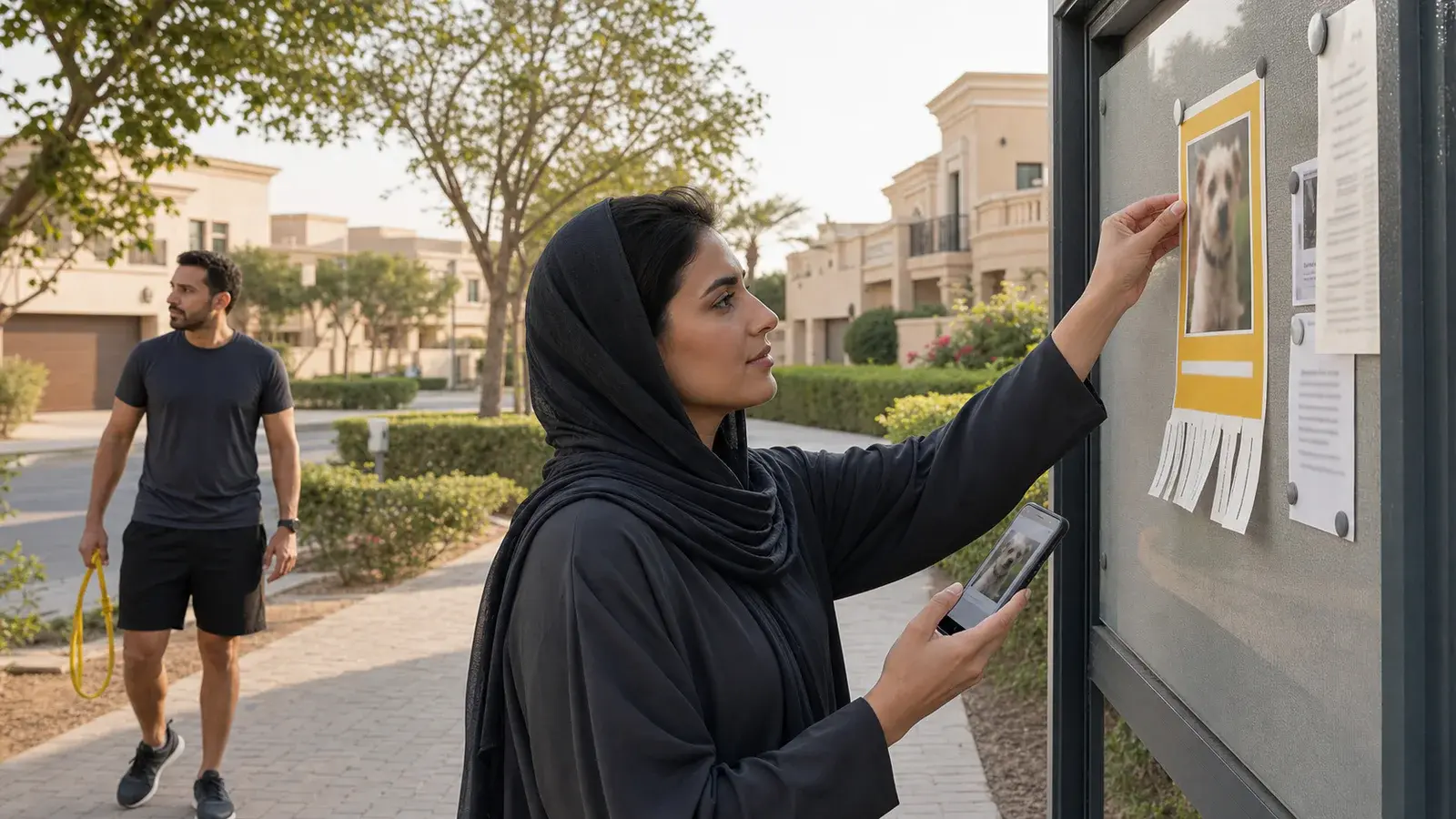
For later, quieter practice, see how to teach a dog to settle when visitors arrive. If a pet escapes despite the plan, act promptly; Dubai owners can use the first-day lost-pet checklist.
3. Control sweets and wrappers, including after guests leave
ASPCA warns that chocolate can be dangerous to both dogs and cats. The FDA warns that xylitol in some sugar-free sweets and gum can cause a serious emergency in dogs. 'Sugar-free' does not always mean xylitol is present: read the ingredient list rather than guessing. Treat bags and small costume accessories also need to be kept away from pets because they can be swallowed.
- Use a lidded container in a closed cupboard for sweets; do not leave bowls on a low table or bags on the floor.
- Ask children and guests to keep treat bags in one pet-free area. Check sofas, bedrooms and the entry floor after the gathering.
- Put wrappers and used decorations in a closed bin before letting the pet back into shared rooms.
- Keep candles and accessible electrical decorations away from pets; battery lights avoid an open flame but their batteries and wires must also be inaccessible.
4. Let the pet's comfort decide about costumes
A pet does not need a costume to take part. ASPCA advises against dressing a dog or cat unless it enjoys the experience. If you try one, check that it does not restrict movement, sight, breathing or normal communication, and that there are no small parts to chew. Remove it at the first sign of discomfort; never leave a costumed pet unattended. Keep human costume pieces out of reach as well.
A five-minute check before the first arrival
- Confirm whether your building or gathering actually expects Halloween visitors and how the entrance will be used.
- Close the pet's quiet room and check water, litter or toileting access, ventilation and window or balcony security.
- Name the adult handling the doorway and tell guests the pet's room is off limits.
- Lock away sweets and wrappers, check labels on sugar-free products, and save your local veterinary contact.
- After the activity, clear the floor and low surfaces before reopening the pet's room.
Keep the plan proportional to your household. If no visitors are expected, the most useful step may simply be storing treats securely. If a pet is already frightened by knocks, guests or costumes, arrange calm separation and ask a veterinarian for individual advice rather than forcing exposure.