The senior-friendly home plan
- Watch how your pet moves through an ordinary day before changing the setup.
- Create continuous, non-slip routes between rest, water, food and toilet areas.
- Keep essential resources on an easy-to-reach level and provide more than one option where useful.
- Use only stable, appropriately angled steps or ramps, and introduce them gradually with rewards.
- Protect older pets from UAE heat while preserving calm, suitable activity and choice.
- Report reduced mobility or unexpected changes promptly instead of assuming they are normal ageing.
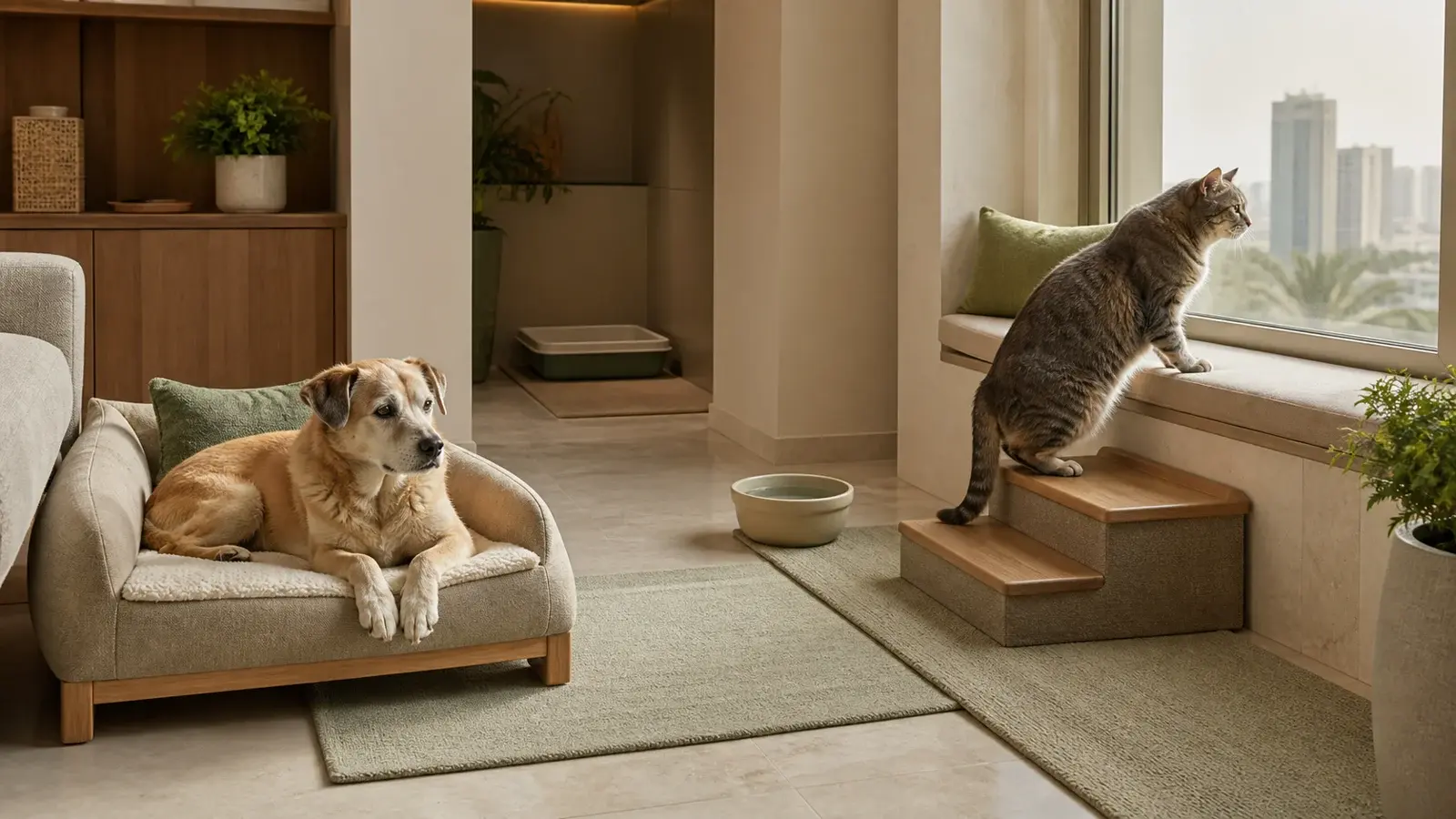
A senior-friendly home is not a room full of specialist products. It is a set of clear routes and easy choices: somewhere comfortable to rest, steady footing, accessible water and food, a practical toilet area and protection from avoidable hazards. The best changes begin with the individual dog or cat, because species, breed, body size, previous injuries, health and the home layout all affect what helps.
UAE animal-welfare law requires owners and carers to take necessary precautions against harm, pain and suffering, account for an animal's needs and provide suitable care. That is the legal duty. The room-by-room ideas below are an editorial application of veterinary senior-care guidance, not additional UAE rules, a diagnosis or an individual treatment plan.
First, map your pet's real daily route
Follow your pet through a normal day without prompting. Note every jump, slippery turn, narrow gap, raised threshold and trip between sleeping, drinking, eating and toileting. Watch the return route too: stepping down can be different from climbing up. AAHA senior-care guidance notes that short home videos can help a veterinarian evaluate changes in movement, so record a natural walk or jump when it is safe and useful rather than repeatedly asking the pet to demonstrate a difficulty.
- Which smooth surfaces make paws slide or legs spread?
- Does the pet pause before a step, sofa, tray or doorway?
- Can food, water and the toilet be reached without stairs?
- Is another pet or person blocking a narrow resource route?
- Are beds, bowls or trays moving when the pet uses them?
- Does the route cross a hot balcony, sunny window area or outdoor surface?
Build continuous traction across slippery floors
AAHA includes rugs and yoga-style mats among possible ways to improve footing. Use a series of flat, non-slip runners to connect the places your pet already uses. Secure every edge so the solution does not create a new trip hazard, and keep routes wide enough for the animal to turn without stepping onto a smooth floor.
- Test the backing on the actual tile or stone; a rug that grips one floor may slide on another.
- Remove curled edges, loose threads and mats that bunch under the feet.
- Keep nails and paw fur managed according to advice for the individual pet, but do not attempt painful handling.
- Ask the veterinary team before using boots, socks, toe grips or a lifting harness; fit and suitability matter.
- Do not drag or pull a pet across a surface it is avoiding.
Make favourite resting places easier to enter and leave
Place a stable, supportive bed on the pet's main living level, away from busy doorways and direct air-conditioning draughts. A low entrance can reduce the need to climb, while enough padding can make rest more comfortable. Keep at least one familiar option during any change; replacing every bed and moving every resource at once removes useful predictability.
Keep food and fresh water within easy reach
WSAVA recommends continuous access to clean, fresh water and notes that nutrition should match species, life stage and health. Put a stable water bowl on the main living level and consider an additional clean station if the home is large. Use a non-slip base and leave enough room for a comfortable stance. Bowl height can help one animal and be unsuitable for another, so ask the veterinary team before changing it for a mobility or medical reason.
Reduce obstacles around toileting
For a cat, place a large, stable litter tray with an entry the cat can use comfortably on each regularly occupied level where practical. Keep the familiar litter unless there is a reason to change it, and position the tray in a quiet area that another pet cannot guard. A very low opening can ease entry, but the tray still needs to contain litter and give the cat room to turn.
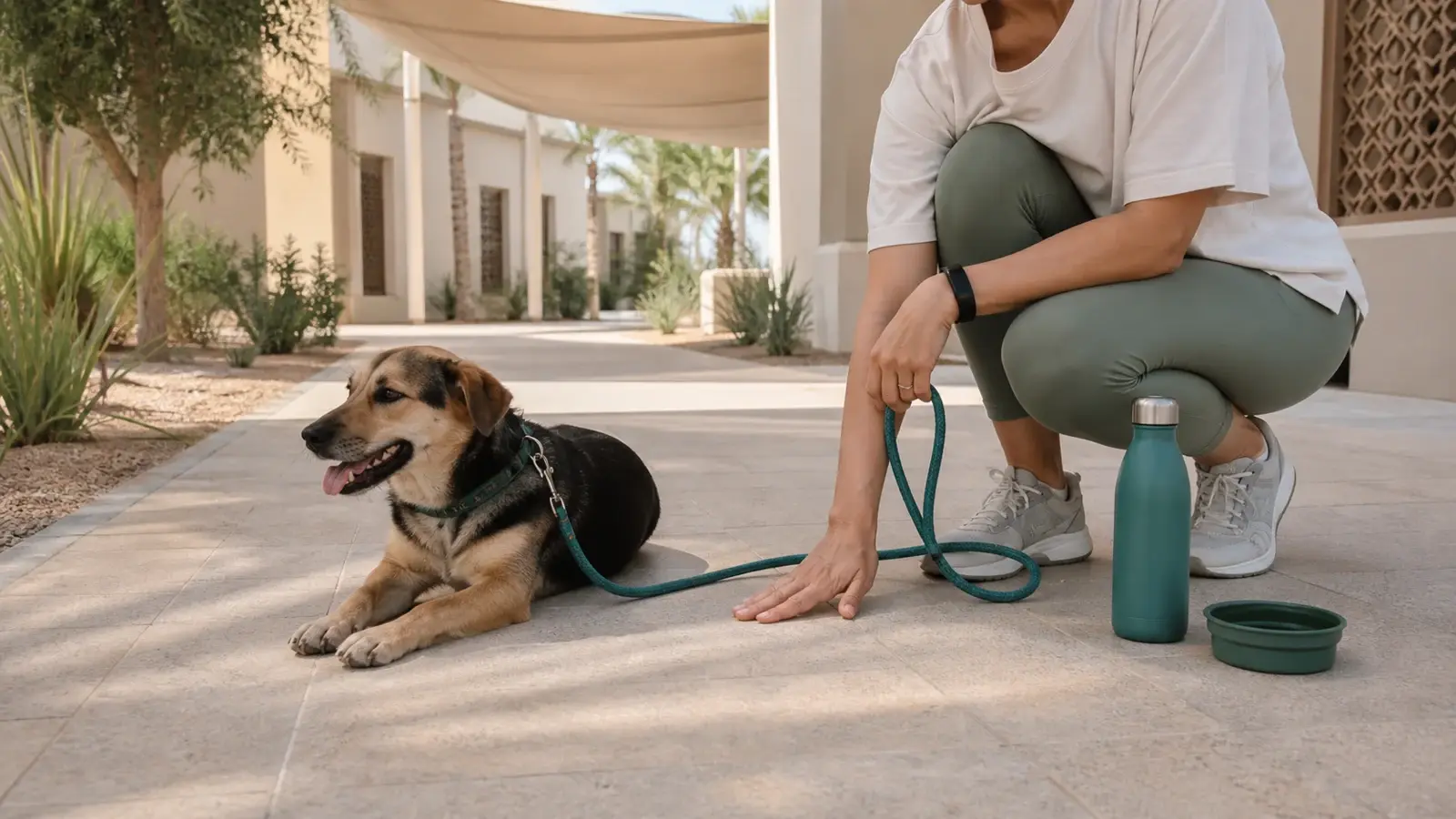
For a dog, make the toilet route short, well lit and non-slip. Provide more frequent safe opportunities if the individual plan requires them, without forcing stairs or a long hot walk. The UAE summer dog-walk safety guide explains how to assess live conditions, the route and the dog before going outside. A toileting change or accident warrants veterinary discussion rather than punishment.
Use steps and ramps carefully, then block real hazards
A ramp or set of low steps can preserve access to a favourite place, but only if it is stable, has grip, is wide enough and suits the pet's movement. Ask the veterinary team which option and angle are appropriate. Introduce the equipment on the floor first, reward investigation and let the animal choose to use it; never pull a lead or push from behind.
- Add a secure barrier where a fall down stairs, from a balcony or into a pool is possible.
- Keep furniture routes consistent when vision or hearing may be reduced.
- Use soft night lighting on essential routes without shining bright light into resting areas.
- Clear electrical leads, unstable side tables and clutter from turning spaces.
- Supervise the first uses and remove equipment that rocks, slips or frightens the pet.
Preserve choice, play and gentle interaction
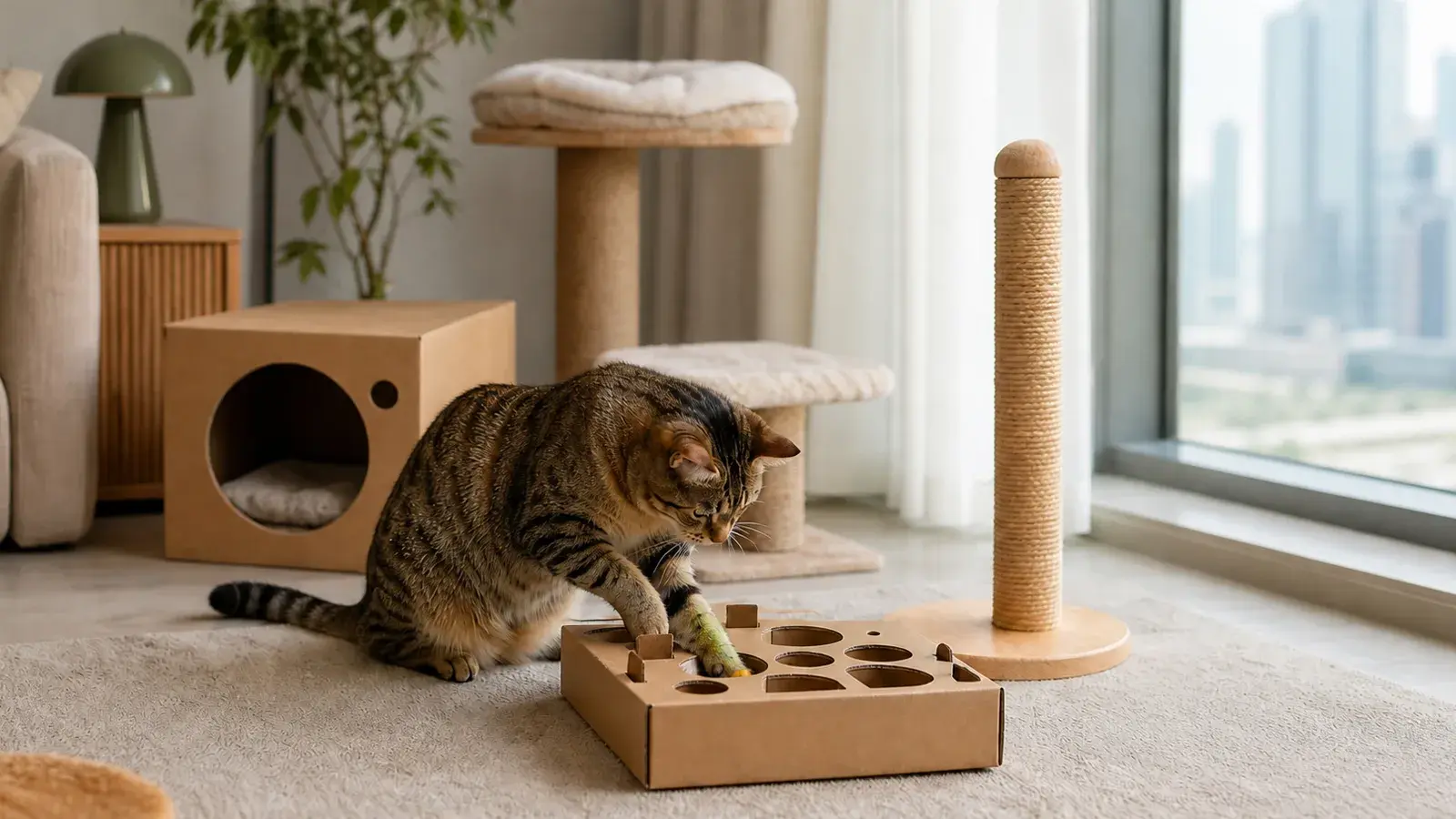
Accessibility should not make the home smaller or the day empty. Adapt favourite activities so the pet can still opt in: move a cat's viewing place to an attainable height, scatter a few easy search opportunities from the normal food allowance, or offer a dog a calm sniffing activity on a non-slip surface. The goal is safe participation, not testing stamina.
For cats, the UAE apartment enrichment guide can be adjusted by lowering perches, shortening play and making puzzles easier. For dogs, keep familiar reward-based cues but avoid repeated sits, jumps or tight turns if movement appears uncomfortable. Stop when the pet disengages, slips, pants unexpectedly or seems worried.
Keep a short record of meaningful changes
Once a week, note how your pet eats, drinks, toilets, sleeps, grooms, plays and moves. Record the same ordinary route from the same angle when your veterinarian says video would be useful. A pattern is more informative than a vague memory, but the record is not a scoring system or a reason to postpone care.
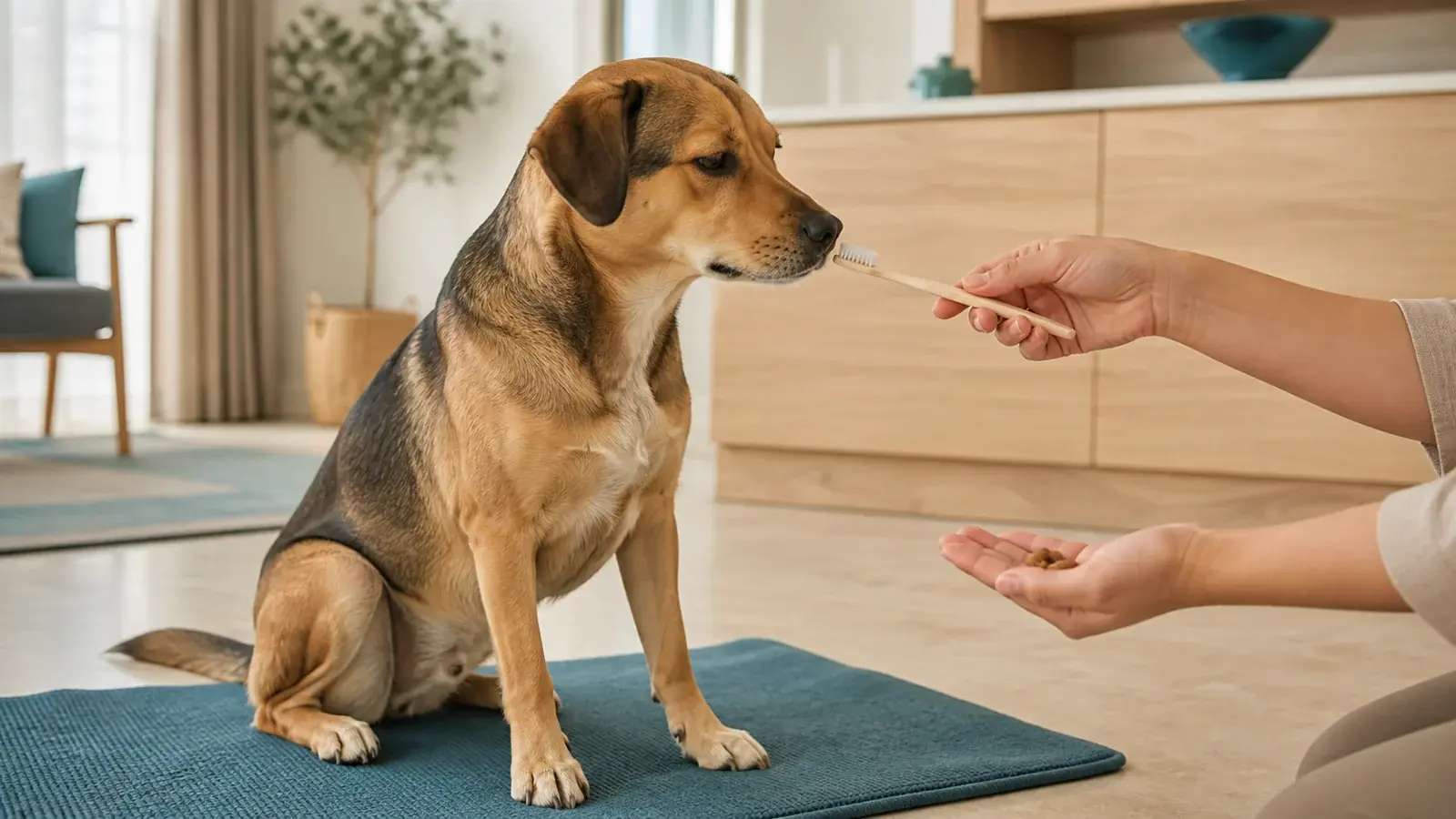
Older pets may also need dental handling adapted to comfort. The UAE dog dental-care routine explains why pain, inflamed gums or new resistance should lead to veterinary assessment rather than forced brushing.
A seven-day home audit
- Day 1: observe and sketch the routes your pet already chooses.
- Day 2: secure one continuous non-slip path to the most-used resources.
- Day 3: check bed entry, padding, draughts and access to a cooled indoor area.
- Day 4: steady the food and water stations and make fresh water easy to reach.
- Day 5: review litter or outdoor toilet access without changing the whole routine.
- Day 6: block one fall hazard and test any step or ramp for movement before introduction.
- Day 7: keep what the pet uses, record unresolved difficulty and discuss it with the veterinarian.
Seven days is an audit, not a deadline for the pet to adapt. Change one feature at a time, preserve familiar choices and let professional assessment guide anything related to pain, disease, diet or mobility equipment. A useful senior home is calm and legible: the animal can see a safe route, reach what it needs and continue taking part in family life without being pushed.