A good water setup in one minute
- Offer at least two water bowls for one cat; for more cats, start with one per cat plus one extra, in separate locations.
- Put bowls in quiet, accessible indoor spots away from litter trays, directly adjacent food and cleaning products.
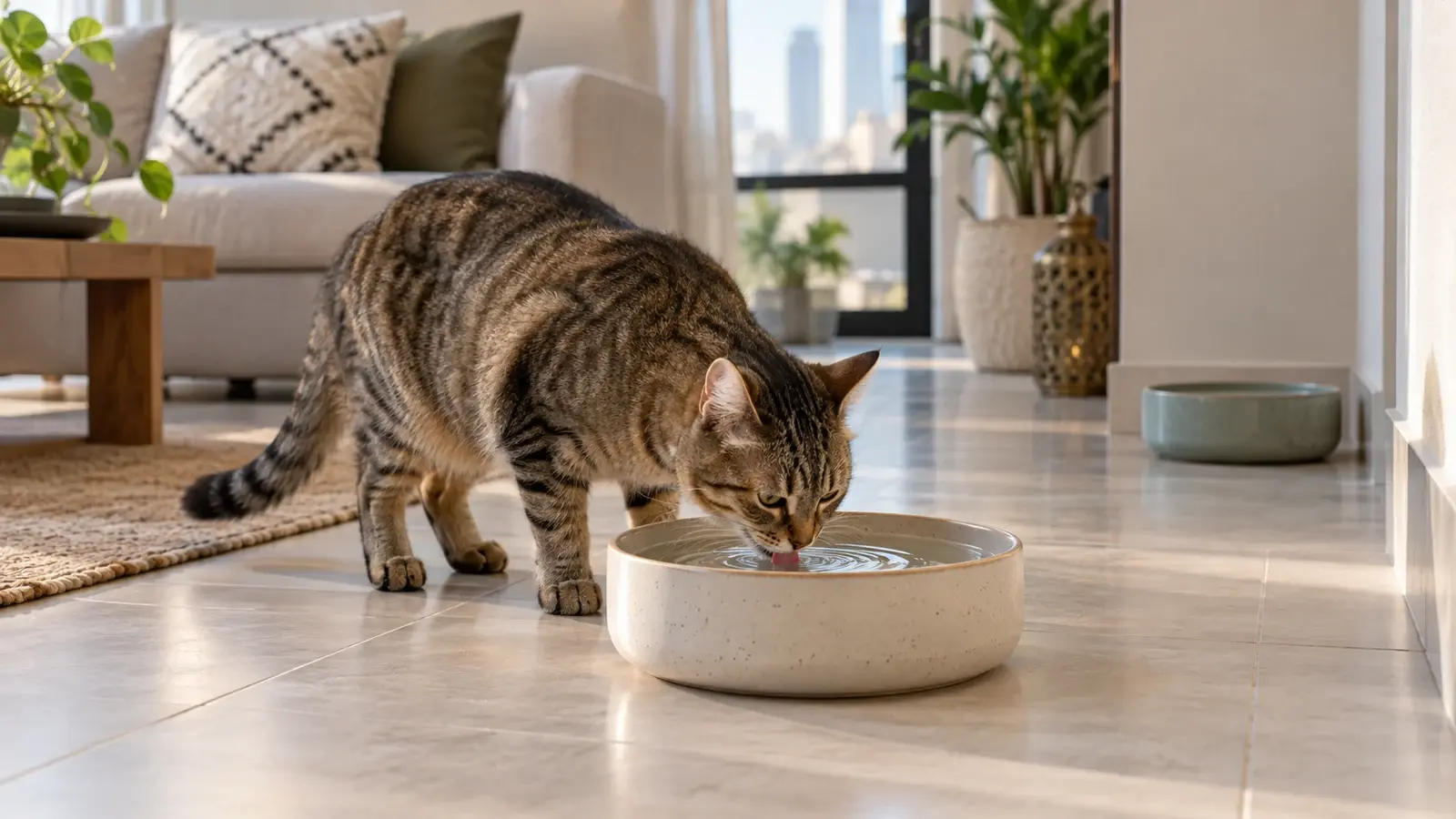
- Try a stable, wide, shallow bowl and let your cat's preference guide changes.
- Replace water daily and wash and rinse bowls regularly, ideally daily.
- Keep an ordinary bowl available if you trial a fountain; speak to a veterinarian about a meaningful change in drinking or toileting.
Where should a cat's water bowls go in a UAE apartment? Start with two separate, quiet indoor spots that the cat can reach without passing a noisy appliance, another pet or a closed door. Keep water away from the litter tray and do not press it against the food bowl. Refresh both bowls every day. International Cat Care recommends at least one water bowl per cat plus one extra; that means two for a one-cat home, even when the flat is small.
UAE animal-welfare law, in Article 6 of Federal Law No. 16 of 2007, says animals must have constant access to an appropriate water source or be given their needs of pure water daily. That is the legal requirement. The two-station layout below is practical guidance from International Cat Care and PetsGo's application to apartment life; it is not a separate UAE legal rule or a way to judge an individual cat's hydration.
Map two usable drinking routes
Walk through the flat at the times your cat uses it. A bowl behind a bedroom door is not accessible when that door is shut. A bowl in a narrow passage may be guarded by another cat or dog. These door and traffic checks are an editorial way to apply professional advice that water should be spread across quiet locations, not a claim that one room arrangement suits every home.
- Keep one station in a main living area and another in a separate calm part of the home that stays accessible. In a multi-level home, provide at least one on each floor.
- Choose spots away from the litter tray, busy doorway and noisy appliances. Do not use a food-and-water double feeder; crumbs can contaminate the water.
- Give the cat room to approach and look around while drinking. A bowl pushed into a corner can leave the cat facing a wall.
- For multiple cats, spread bowls out so one animal cannot easily block every water source. Give a cat its own option if a dog also uses the room.
- Keep the stations indoors and protected from direct sun or heat. The UAE-specific indoor placement is a practical precaution, not a claim that the law prescribes an air-conditioning setting.
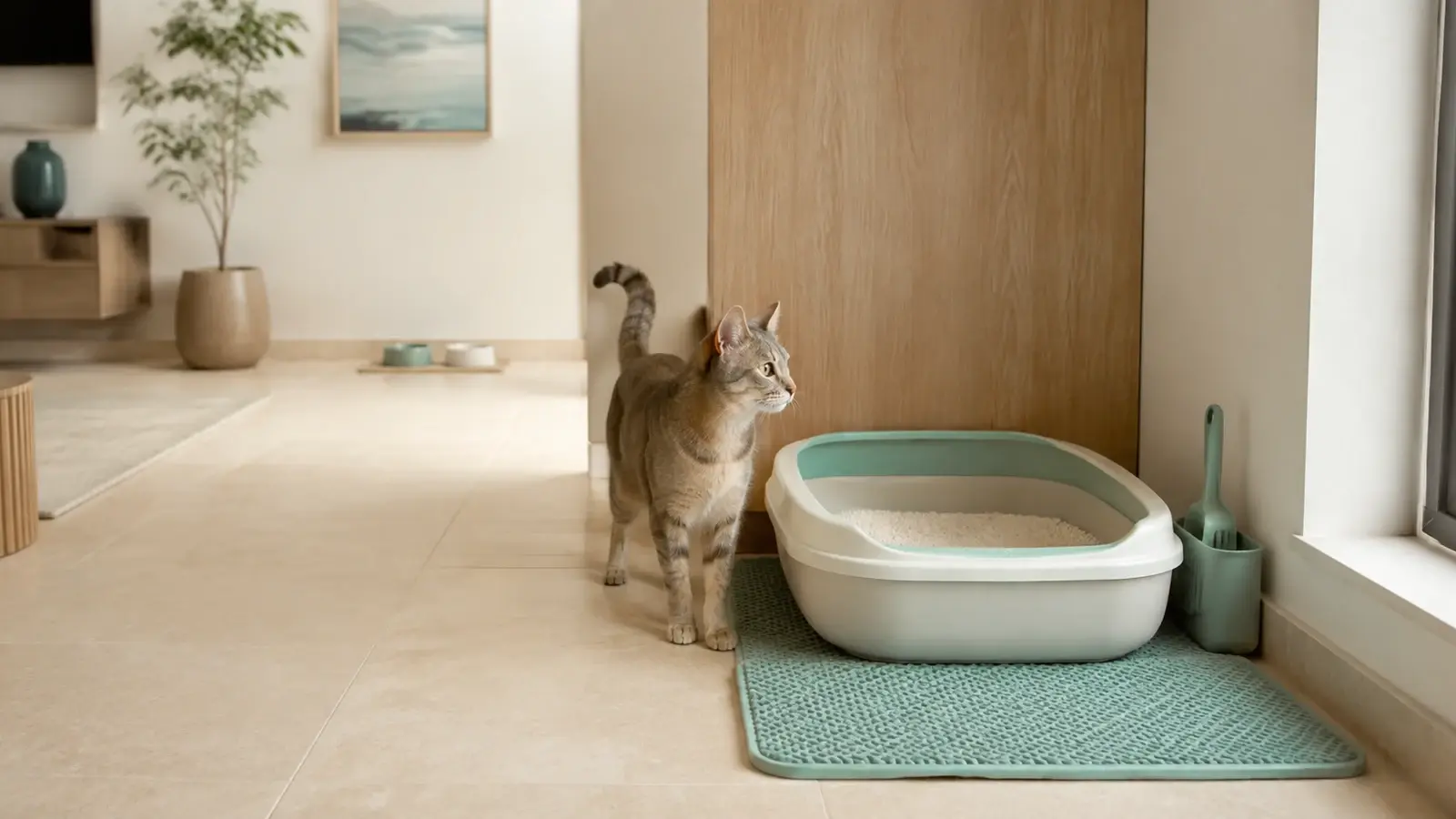
For the matching toilet-space plan, see our cat litter-tray setup guide. The wider indoor-cat enrichment guide covers how to spread other resources through a small home.
Choose a bowl the cat will actually use
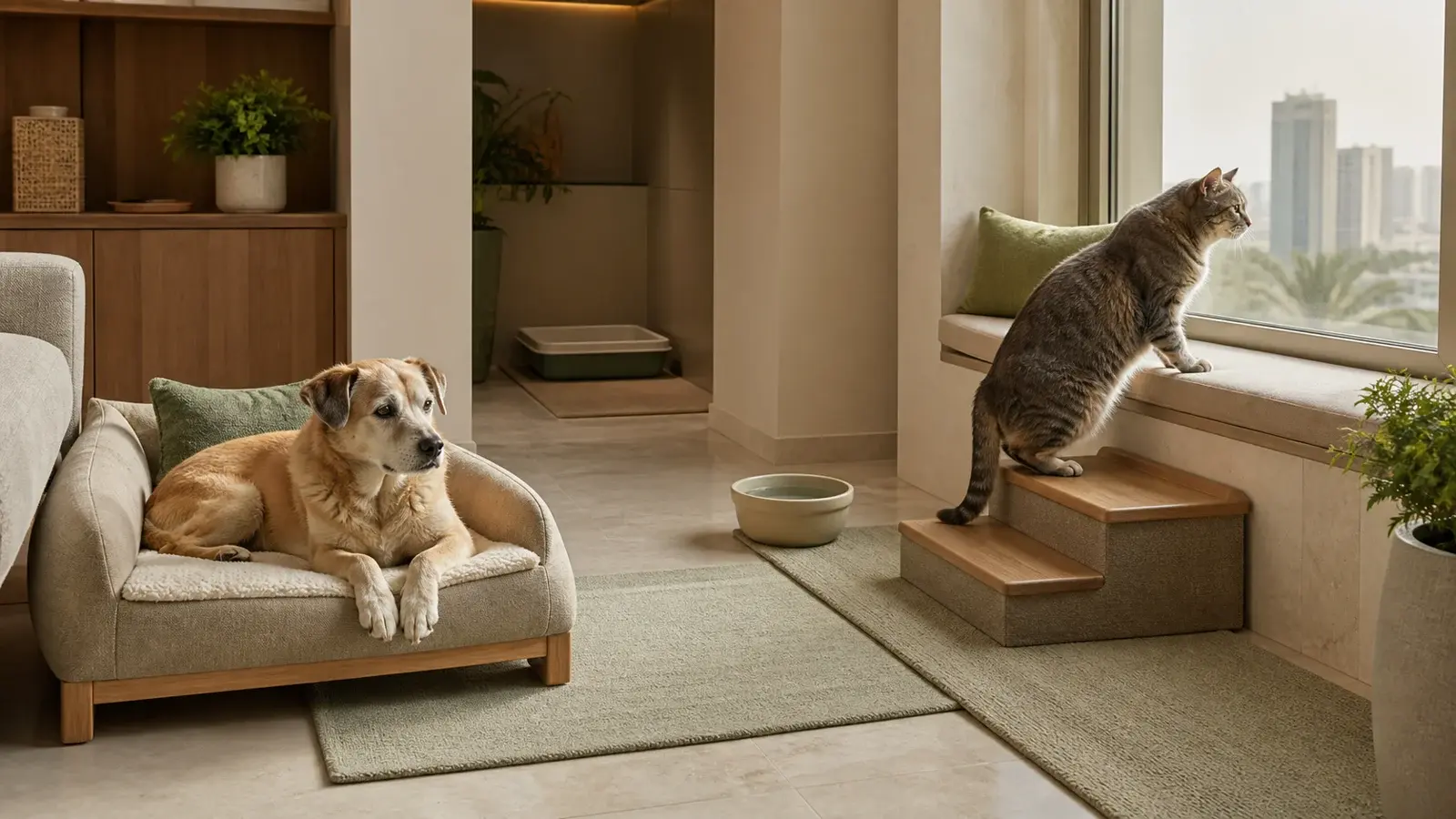
International Cat Care says many cats favour wide, shallow glass or ceramic bowls filled generously, but preferences differ. Start with a stable container that is easy to wash, then offer a second shape or material alongside the familiar bowl rather than abruptly replacing every water source. A raised option may help some cats with reduced mobility, but comfort and height should be discussed with a veterinarian if movement is changing. See our senior-pet home guide for other access adjustments.
Make freshness a daily task
Replace the water daily. Wash bowls regularly, ideally daily, with soap or washing-up liquid and hot water, then rinse well. International Cat Care warns that mould and bacteria can build up in food and water bowls. Keep cleaning sprays, plant fertiliser and other household chemicals away from the water station. In a UAE flat, a second bowl also gives a sitter an easy backup to check if one is spilled or blocked; that backup use is PetsGo's practical inference.
Treat a fountain as an optional extra
Some cats like moving water; others dislike the noise or change. If you try a fountain, leave the familiar bowls in place. International Cat Care suggests introducing the empty, switched-off fountain first, adding water after the cat is comfortable, and turning on the motor only later. Disassemble and clean it, and change its filter, as the manufacturer directs. A fountain that needs power and maintenance should not be the home's only water source.
Notice changes without trying to diagnose them
You may rarely see a healthy cat drink, especially one eating wet food. International Cat Care says that alone is not a concern when the cat is otherwise well and its habits have not changed. A sudden or sustained increase in drinking, concern that the cat is taking too little, or changes in urination, appetite, weight or behaviour merit veterinary advice. Do not infer a disease or prescribe a daily water target from one bowl measurement.
If your veterinarian recommends a diet change or a wet-food plan for an individual cat, follow that advice gradually. A bowl layout cannot replace veterinary care or determine whether a cat has had enough fluid. The useful home habit is simpler: keep several clean choices available, notice changes from your cat's usual pattern and know when to ask for help.