The storage plan at a glance
- Keep unopened dry food and cans in a cool, dry indoor cupboard; the FDA recommends below 80°F (about 27°C).
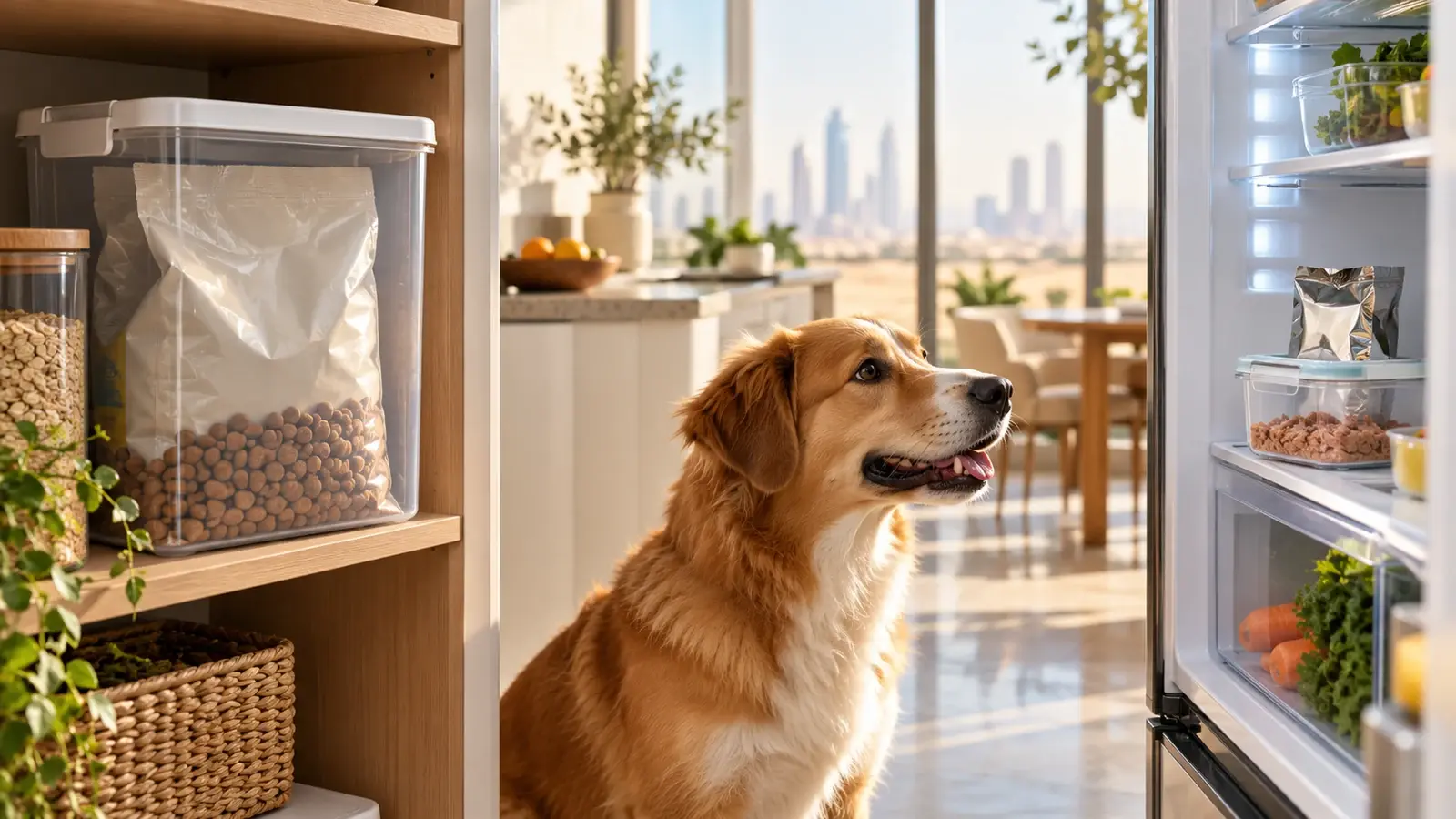
- Keep dry food in its original bag, ideally with the whole bag inside a clean, lidded bin; retain the batch code and date.
- Cover and promptly refrigerate opened wet food at 40°F (4°C) or below, or discard it; follow the product label for how long to keep it.
- Wash and dry food bowls and scoops after each use, and check packaging before feeding.
Where should you keep dog or cat food in a UAE home? Put dry food and unopened cans in a cool, dry indoor cupboard, away from a balcony, garage, sunny window or hot car. Keep the dry food in its original bag; if you use a bin, place the whole bag inside it. Cover and promptly refrigerate opened wet food, or throw leftovers away. This is a practical application of FDA pet-food storage advice to UAE homes, where an uncooled storage spot may become too hot.
UAE animal-welfare law, Article 6, requires feeding suited to an animal's age and species in quantities that meet its nutritional needs, and appropriate water access. It does not set a household cupboard temperature or prescribe a storage bin. The temperature and handling advice below comes from the US FDA and veterinary guidance, not from a UAE storage regulation.
Choose the cupboard by its real conditions
The FDA says dry food and unopened canned food should be stored in a cool, dry place below 80°F (about 27°C); excess heat or moisture may degrade nutrients. In a UAE flat or villa, choose a cupboard within the regularly cooled living area, away from the hob, direct sun and damp cleaning supplies. A storage room that is comfortable in winter may not stay suitable when cooling is off or the door is closed. If you cannot tell whether a space stays cool, check its actual conditions rather than relying on its name. These location checks are editorial applications of the FDA limit, not a UAE legal threshold.
- At purchase, reject torn bags, leaking pouches and visibly damaged cans; the FDA advises buying packaging in good condition.
- At home, keep food off a damp floor and away from cleaning chemicals. Close bags securely and keep food where pets cannot reach the whole supply.
- Follow any more specific storage instructions on the product label. If your home cannot provide suitable storage for a large bag, buying a smaller quantity is a practical option, not a prescribed shelf life.
Keep the original bag, even when you use a bin
Putting the entire dry-food bag inside a clean, lidded bin combines easy handling with the packaging designed for that food. The WSAVA Global Nutrition Committee advises retaining the original package because decanting can shorten shelf life and makes traceability harder; a poorly cleaned bin can also attract pests. The bag carries the product name, maker, batch or lot code and best-before information that may be needed if there is a problem.
If you must pour kibble into another container, the FDA says it should be clean, dry and tightly lidded. Keep the original packaging information, and wash and completely dry the container between bags to remove old fat and crumbs. Do not top a fresh bag onto old crumbs. Photographing the label as an extra record is a useful household habit, but keeping the physical bag is the simplest way to preserve the full details.
Refrigerate opened wet food promptly
The FDA says to promptly refrigerate or discard unused canned and pouched pet food, tightly cover refrigerated food and keep the fridge at 40°F (4°C) or below. WSAVA says uneaten canned food should be refrigerated and used within 48–72 hours, while following the can's label for more specific instructions. Use the shorter or more specific label direction where applicable; do not treat the best-before date on an unopened package as a deadline for an opened portion.
Keep bowls clean and act on product concerns
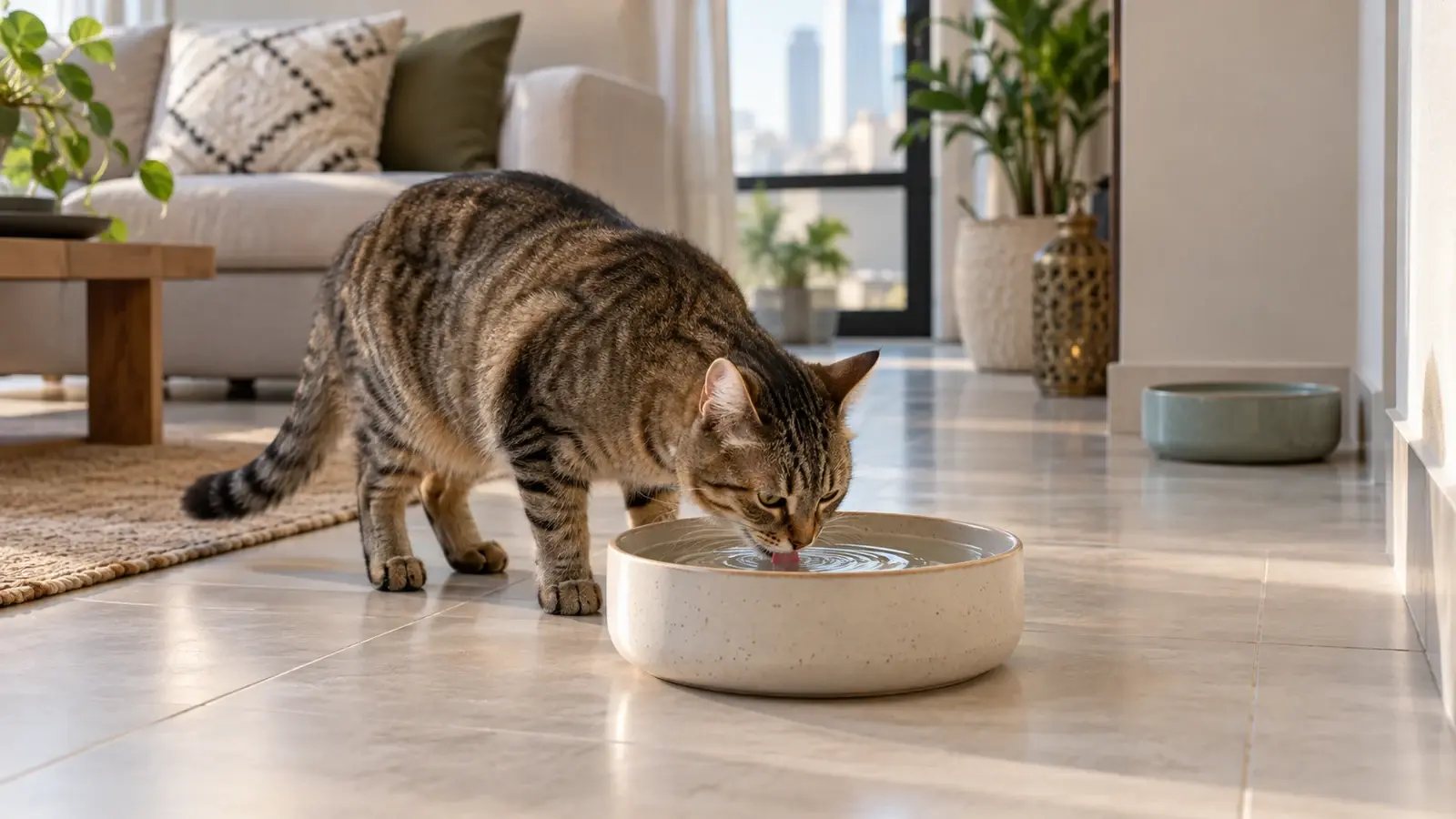
The FDA's safe-handling advice says to wash hands before and after handling pet food, and to wash food bowls and measuring utensils after each use. Use a dedicated clean scoop rather than dipping a used bowl into the bag. For water-bowl placement and cleaning, see our cat water-station guide.
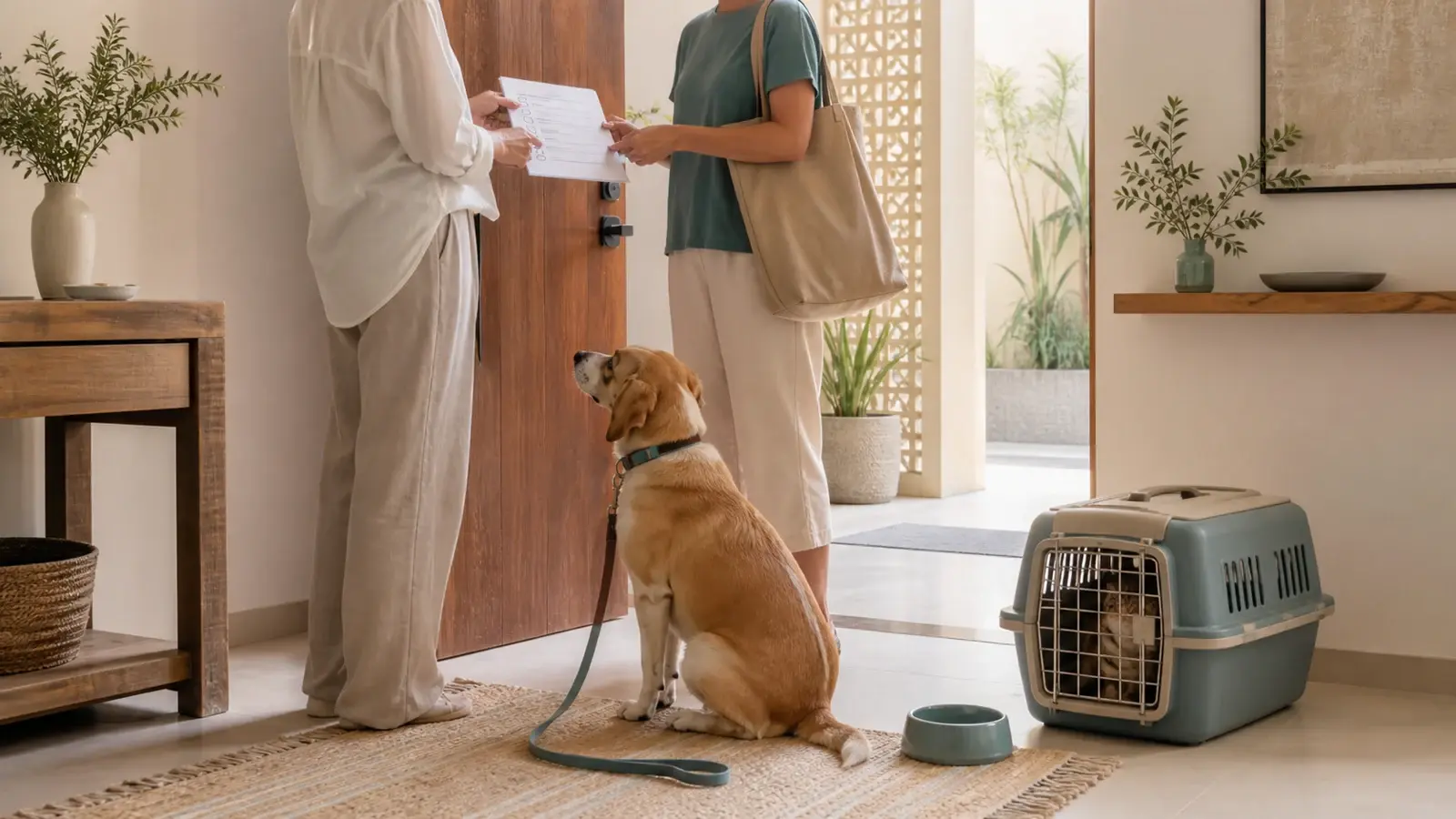
A foul smell, leaking or swollen can or pouch, foreign object, or a pet becoming unwell after eating are reasons to stop using the suspect product and contact your veterinarian; they do not prove the food caused an illness. Keep the package and batch details for the manufacturer and your veterinary team. If a sitter will feed your pet, include the storage spot, label instructions and veterinary contact in the UAE pet-care handover. For a home cooling problem, use our AC failure plan to plan the pet's immediate safety separately from the food check.