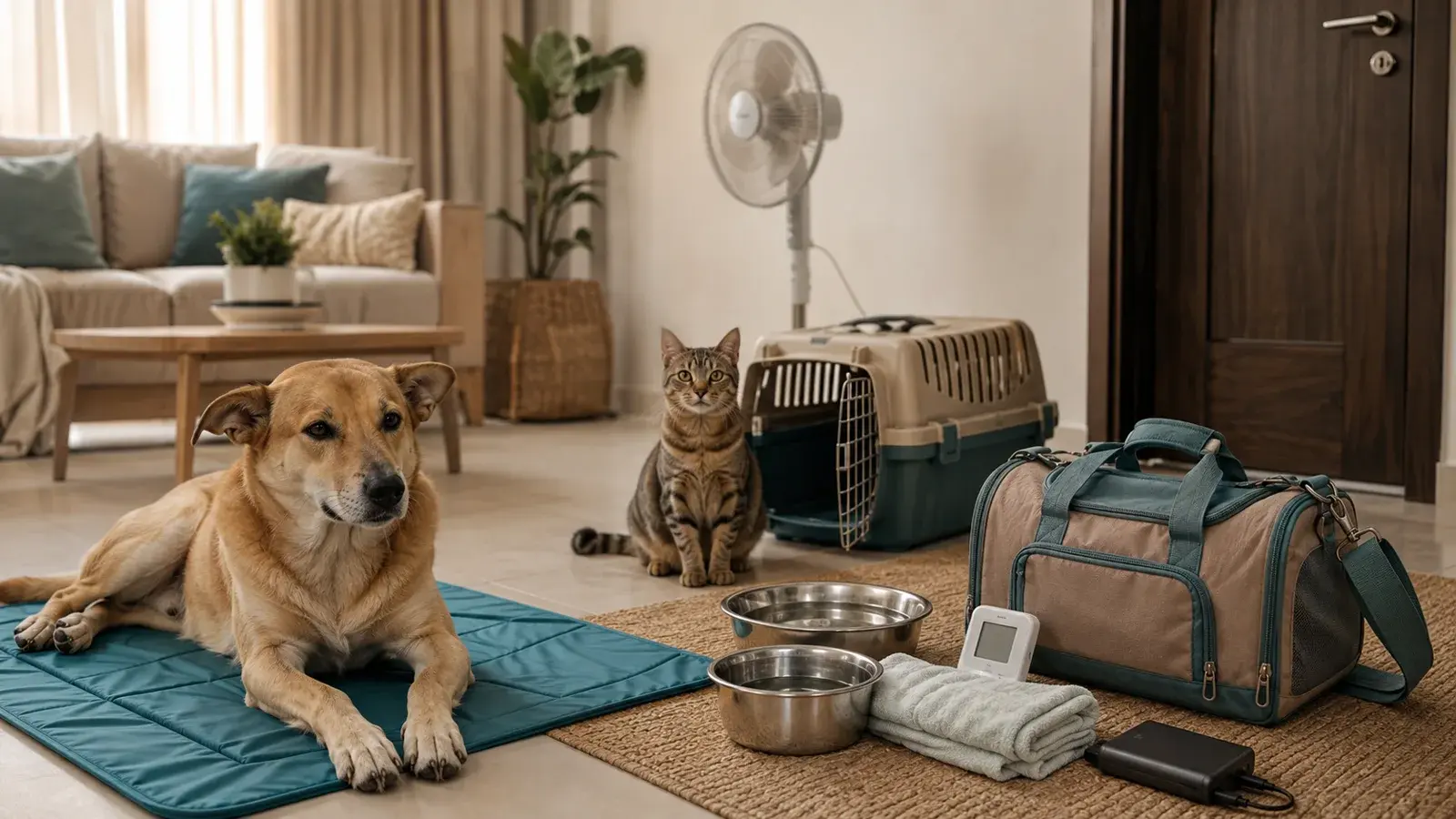
Your cooling-failure plan
- Choose two cooled places that could receive your pet, and confirm how you would get there.
- Give a nearby trusted person secure access if your pet is ever home without you.
- Keep carriers, leads, water, records and the usual veterinary details ready for a controlled transfer.
- When cooling stops, check the actual room, local weather, repair estimate and your individual pet instead of waiting for a universal temperature cut-off.
- Move early if you cannot keep the space cool, shaded and ventilated or cannot monitor the pet reliably.
- For possible overheating, begin appropriate cooling, contact a veterinarian urgently and follow their transport instructions.
An air-conditioning fault can turn from an inconvenience into a pet-safety decision, particularly when strong sun warms an apartment or villa while nobody is home. The useful work happens before the failure: arrange access, identify a cooled destination and know how you will move each animal without losing time at the door.
UAE animal-welfare law requires owners and people in actual control of an animal to take necessary precautions against harm, pain and suffering, account for the animal's needs and provide appropriate care. It also specifically requires protection for animals kept outdoors from fluctuating weather and health risks. Those are legal duties. The household sequence below is PetsGo's practical editorial application of the law, live UAE weather information and veterinary guidance; it is not a separate legal code or an individual veterinary plan.
1. Prepare before cooling fails
Pick a primary and a back-up destination: for example, a pet-permitted home with working cooling, or a suitable boarding provider already inspected and confirmed. Ask whether the animal can arrive at short notice and how access works outside normal hours. A lobby, shaded balcony, parked vehicle or building corridor is not a cooled destination.
- Save the building or property-management fault route and the relevant electricity provider's current reporting route; confirm them from your bill or official provider site.
- Keep the usual veterinary clinic and an appropriate out-of-hours veterinary option confirmed and easy to call.
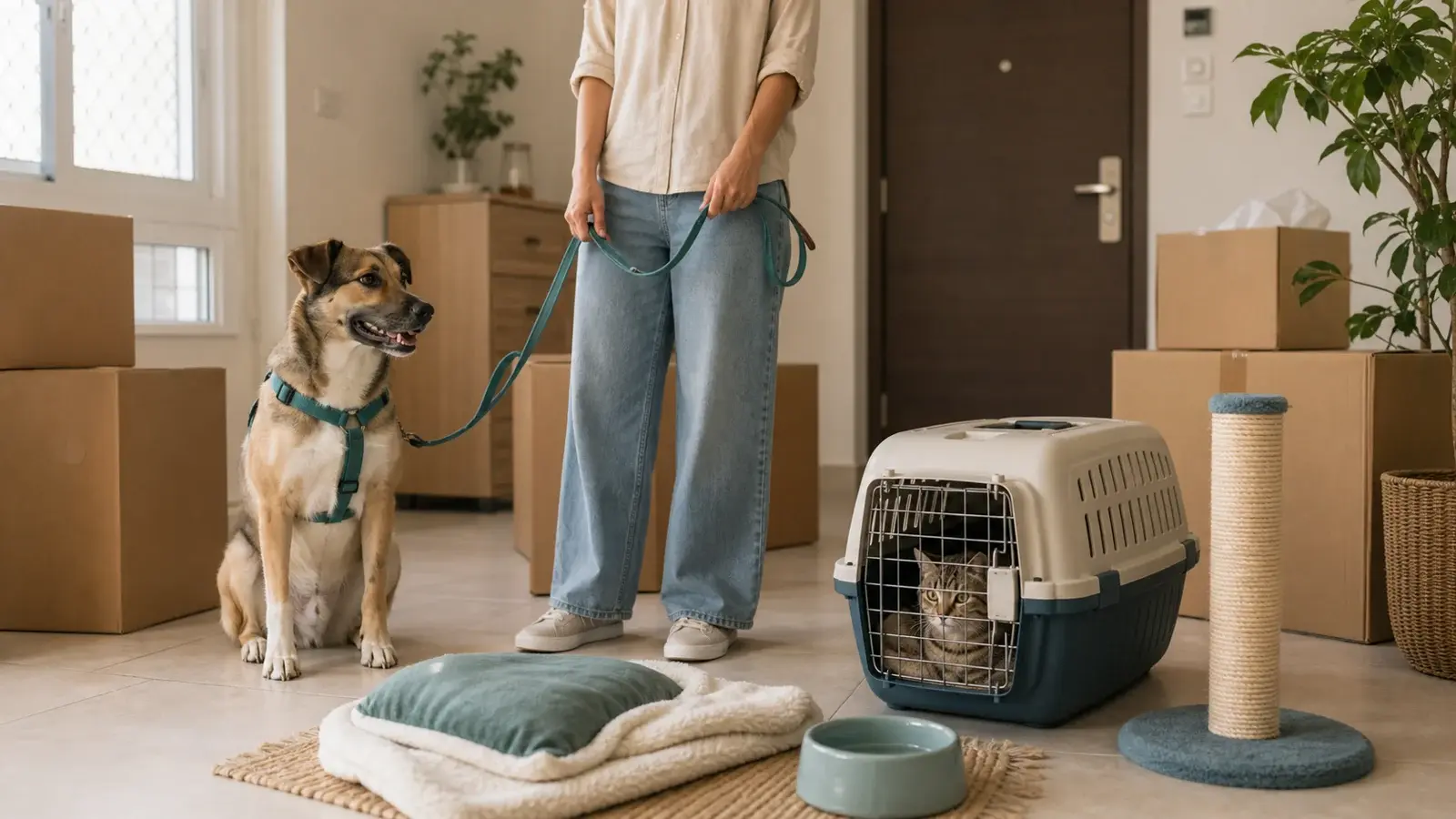
- Place a secure carrier for each cat and suitable dog harness, collar and lead where they can be reached without searching.
- Pack water, bowls, familiar food, waste or litter supplies, a towel, current records and any prescribed item in its original labelled packaging.
- Give a nearby trusted keyholder clear written permission and building access, then practise the route while lifts and doors are working.
- If using a connected room monitor, test its alerts and battery behaviour; treat it as an early warning, not proof that the pet is safe.
If a sitter or boarding provider is part of the plan, use the UAE boarding and pet-sitter checklist to check temperature monitoring, overnight supervision, cooling failures, transport and emergency authority before you need the service.
2. Check the situation without delaying action
Confirm whether the fault affects one unit, the whole home or the building, and ask for a repair estimate. Check the room where the animal actually is, not only the thermostat near the faulty unit. Direct sun, closed internal doors and upper floors can make rooms differ. Check the National Center of Meteorology's live local forecast, station information and warnings for the relevant location; a reading from another emirate or yesterday's routine is not enough.
3. Make the coolest safe indoor zone you can
Move the pet away from sunlit windows into the coolest secure indoor room, close curtains or blinds, and provide clean drinking water in more than one stable bowl. The British Small Animal Veterinary Association advises access to a cool, shaded, well-ventilated area and warns against leaving pets in a hot room. A fan may improve air movement when power is available, but it does not restore air conditioning or make an increasingly hot room safe.
- Let the animal choose between safe resting surfaces; do not confine it in a sunny room or closed carrier while waiting.
- Use a cooling mat only according to its instructions and only if the pet has already used it safely without chewing or puncturing it.
- Keep windows, balcony doors and the front door secure; do not create an escape or fall risk in the attempt to add airflow.
- Keep normal water freely available and never force water into the animal's mouth.
- Do not apply ice directly, wrap the pet in wet towels or give human medicine.
4. Move early when the home cannot stay suitable
Cool the vehicle before bringing the animal out and confirm that the destination is ready. Move each cat inside a closed, secure carrier and keep it level and ventilated. Keep each dog safely controlled with suitable equipment and use the vehicle restraint or travel crate according to its instructions. Never leave an animal waiting in the vehicle, even while checking in or collecting a key.
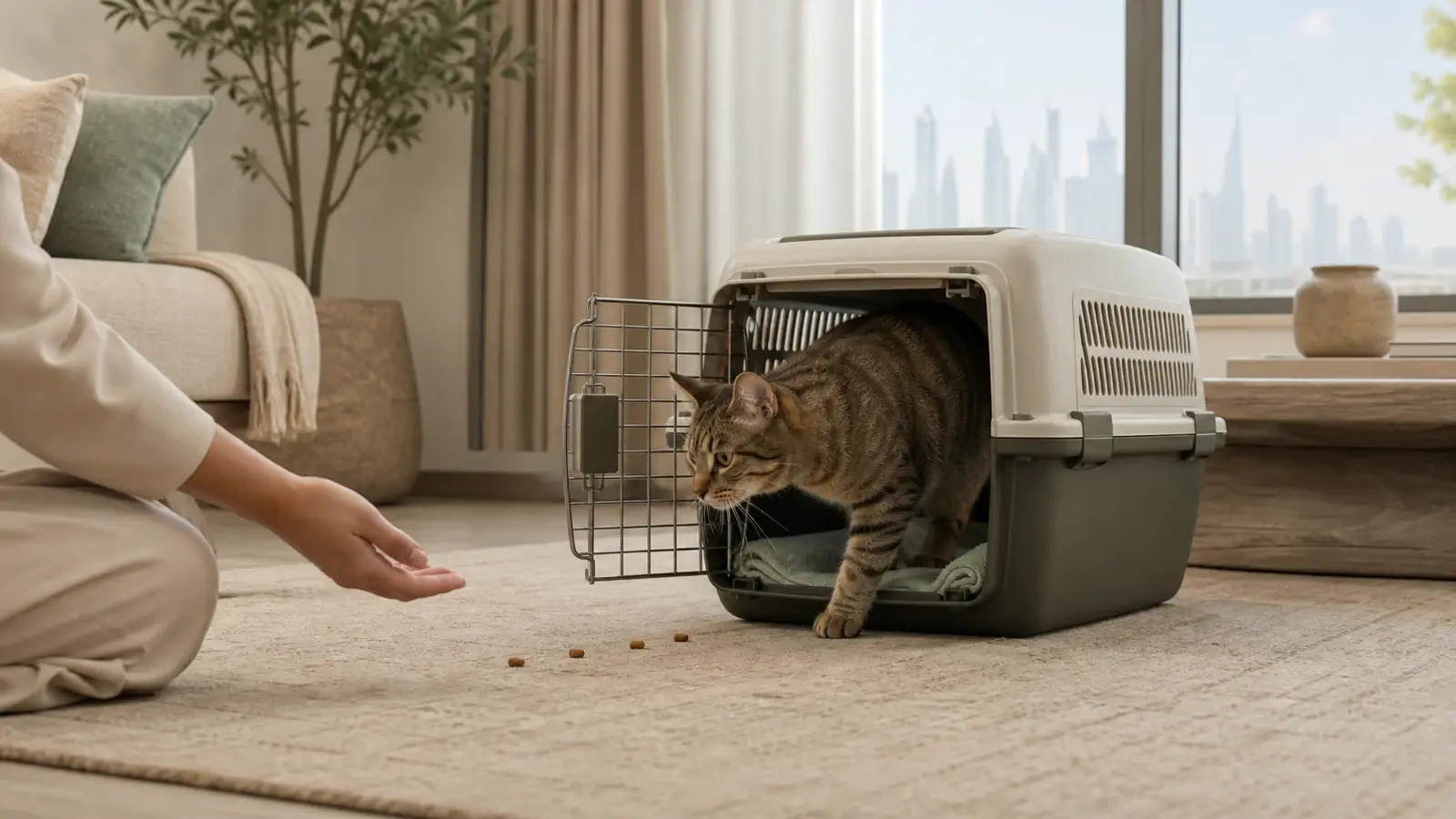
If a cat is not yet comfortable with its carrier, begin the reward-based cat carrier plan before the next hot-weather fault. During a real failure, security comes first: do not open the carrier in a corridor, car park or vehicle. For building handovers or a change of address, the UAE home-moving checklist has a room-to-room transfer sequence that also helps with temporary relocation.
5. Plan for a failure while you are away
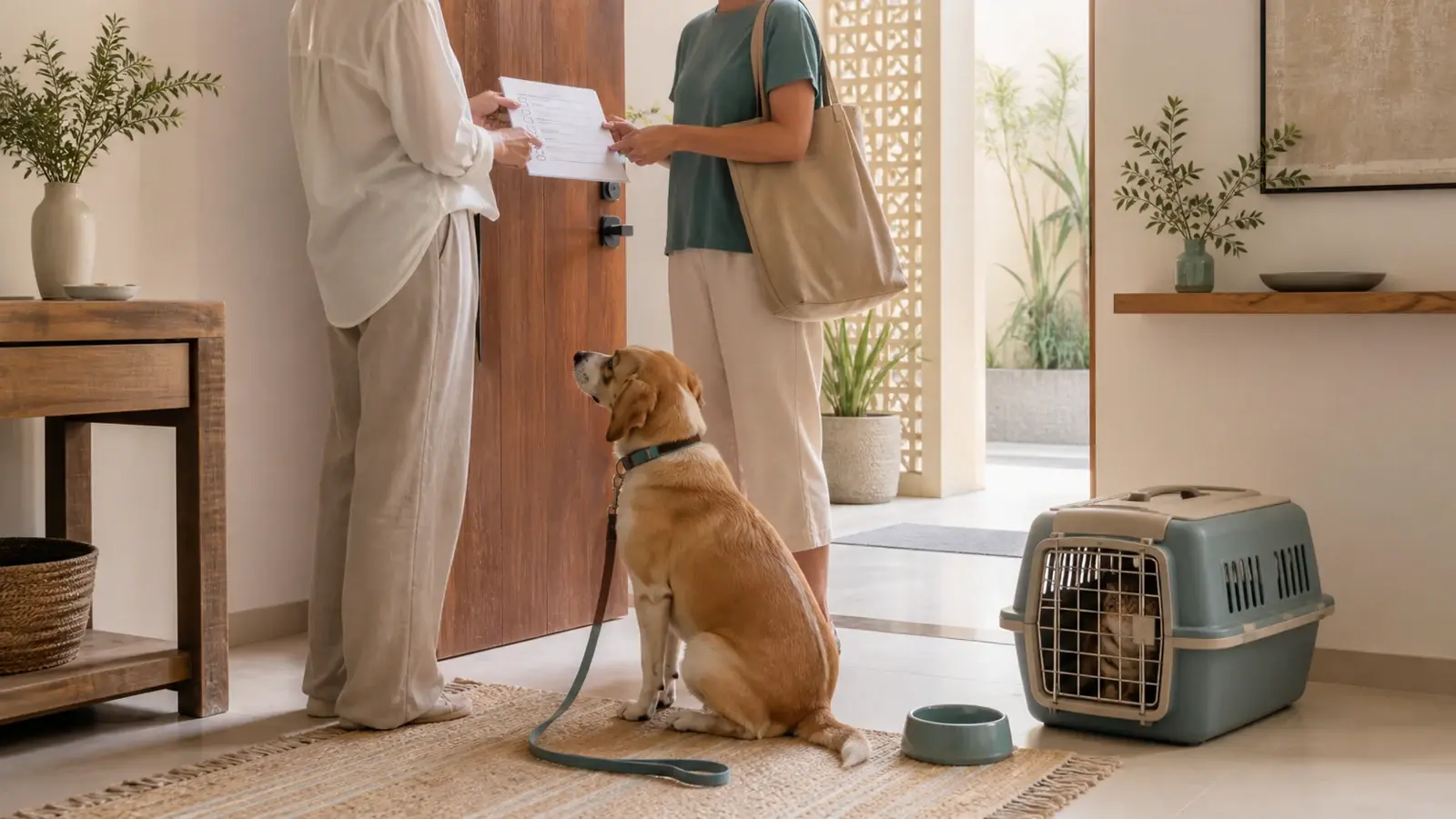
An alert is useful only if someone can act on it. Agree who will check the home, who can authorise relocation and who is next in line if the first person is unavailable. Do not publish travel dates, entry codes or the home's address in a community group. Share access privately with the named people who need it and cancel or change it when the care period ends.
- Write the pet's normal location, hiding places and safe handling method.
- State which carrier, lead and exit route to use for each animal.
- List both cooled destinations and the person who confirms arrival.
- Give the keyholder permission to contact the veterinarian and explain any spending authority.
- Make sure the keyholder knows that a camera or sensor going offline can mean lost power or connection, not a normal room.
6. Make the plan fit the individual pet
The Royal Veterinary College identifies flat-faced dogs and cats, overweight animals, pets with thick coats, very young or older animals, and animals with airway, lung or heart conditions as more susceptible to heatstroke. Ask the treating veterinarian in advance how quickly your individual pet should be moved and what transport or monitoring adjustments are appropriate. Do not wait for a failure to seek that advice.
This guide focuses on dogs and cats. Rabbits, birds, reptiles and other animals have different environmental and transport needs. Ask a veterinarian experienced with the species for a specific back-up plan rather than applying dog or cat cooling steps.
7. Recognise possible overheating and call for help
Possible early signs described by the Royal Veterinary College include panting, distressed or noisy breathing, restlessness, pacing, seeking shade or water, drooling, red gums or tongue, vomiting or diarrhoea. Cats may show subtler changes. Lethargy, confusion, weakness, collapse or seizures can occur as heatstroke advances. These signs can have other causes, so do not try to diagnose the problem at home.
After the fault, reset the plan
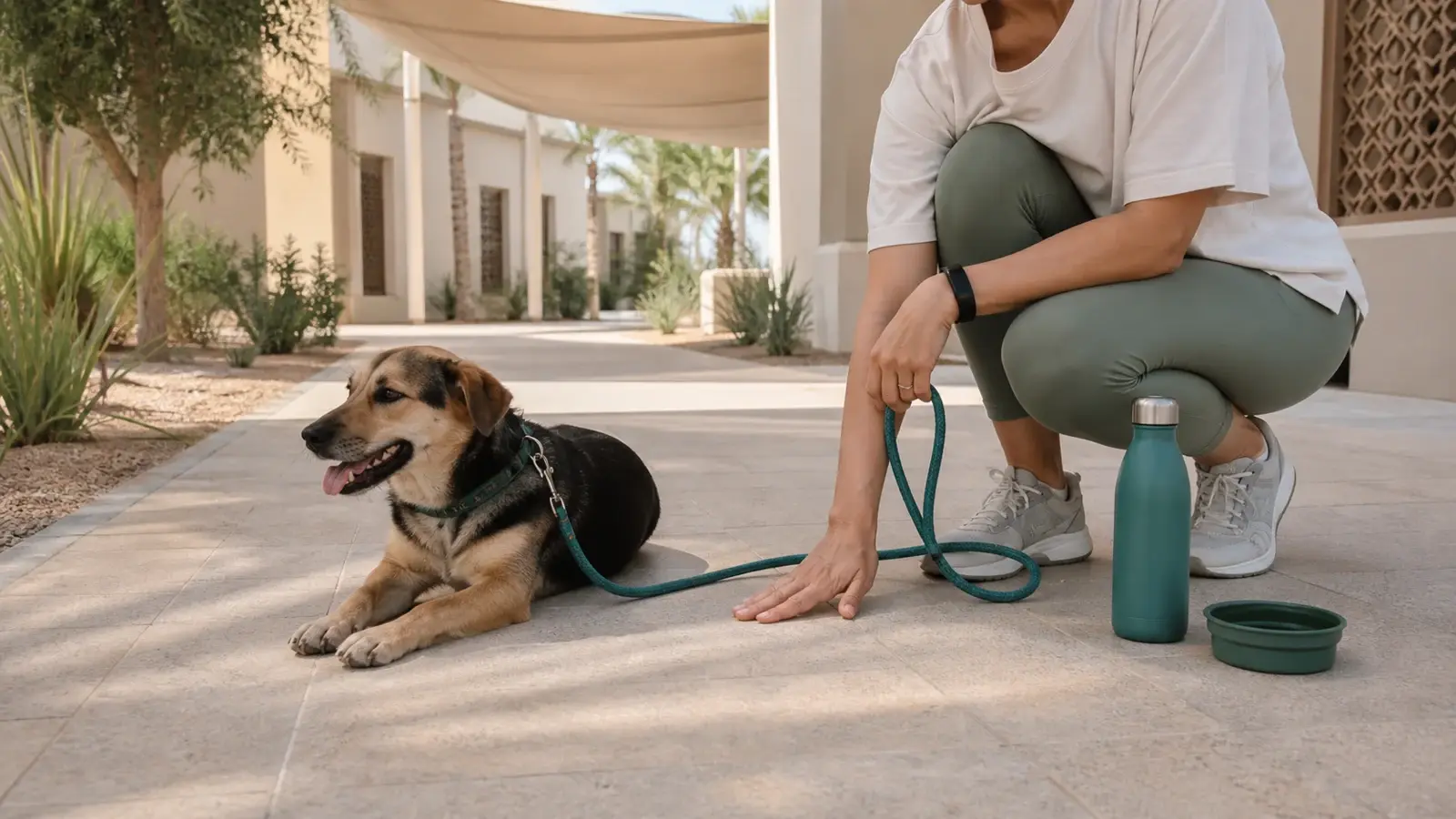
Do not return the animal simply because power has come back. Confirm that the relevant room has cooled and that the system remains stable. Refill the go-bag, recharge communication and monitoring devices, record what delayed the response and update the keyholder or destination details. If the failure also disrupted a dog's outdoor routine, use the UAE summer dog-walk heat-safety plan rather than compensating with a long walk in unsuitable conditions.
A useful cooling-failure plan is deliberately plain: notice the problem, reach the animal, keep the environment as cool and secure as possible, and move early to somewhere reliable. Preparation cannot prevent every fault, but it can remove the dangerous delay between an alert and a safe destination.