A calm recall foundation
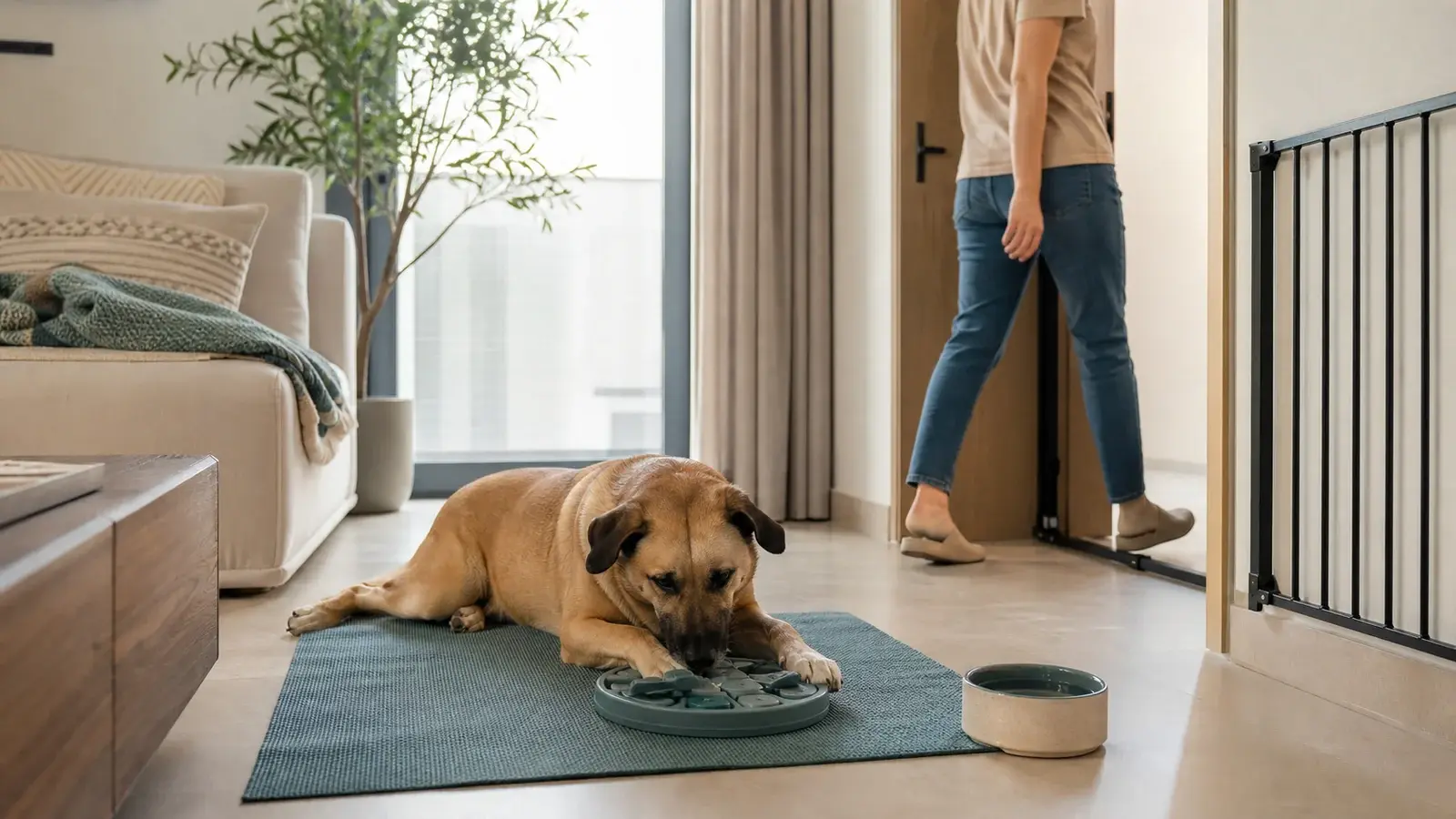
- Keep your dog physically secure while learning: doors, balconies, gates and leads are management, not a test of recall.
- Pick one cheerful recall word and say it once; reward the dog generously on arrival.
- Start with easy room-to-room games in a quiet, cooled indoor space before adding distance or distractions.
- Do not call the dog to end something enjoyable or to scold them. Go to the dog instead when practical.
- Add one new challenge at a time, using an enclosed area and then a long line where permitted and safe.
- If the dog is frightened, aggressive, in pain, suddenly less responsive or at risk of reaching danger, prioritise safety and get individual professional help.
A recall means that your dog turns and comes close enough for you to take hold safely when called. It is not a promise that a dog may be loose in every place, nor is it a cue to use only when something has gone wrong. A dependable recall is built through many low-pressure repetitions in places where the dog can succeed.
The American Veterinary Society of Animal Behavior recommends reward-based methods for all dog training and says aversive methods should not be used. UAE animal-welfare law separately requires carers to take necessary precautions against harm, pain and suffering. The law establishes a welfare duty; this training sequence is PetsGo's practical application of professional guidance, not an additional legal rule.
1. Choose one cue and one arrival routine
Choose a short word such as “come” that everyone can say in the same upbeat way. Avoid repeating it in ordinary conversation. Decide what happens when the dog arrives: calmly take the collar or harness if the dog is comfortable with that handling, then give a reward they genuinely value. This makes the whole finish, not just the approach, worth repeating.
- Prepare several small food rewards from the normal daily allowance, or use a suitable toy or game if that matters more to your dog.
- Say the cue once when your dog is already likely to turn towards you; do not spend the cue on a situation they cannot yet handle.
- Mark the arrival with a consistent word such as “yes”, then deliver the reward close to you.
- Use a gentle collar or harness touch only if it has already been introduced positively; practise that separately when needed.
- End after a few successful turns. A short game is enough.
2. Start with easy room-to-room games
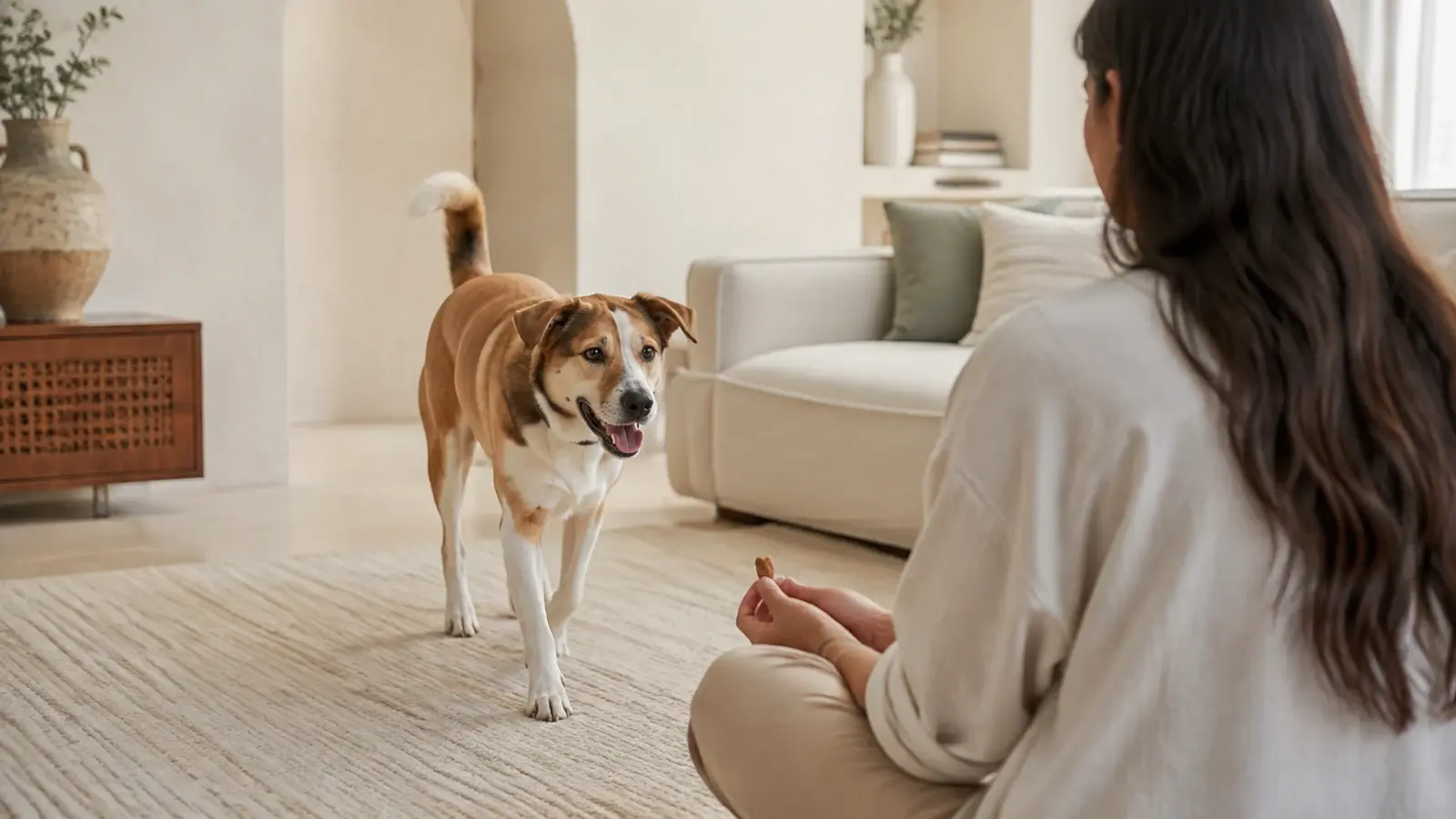
Begin when the dog is relaxed in the same room or just a few steps away. Say the cue once, take a small step backwards and reward when the dog arrives. Once this is easy, have another household member call from a nearby room, or briefly step behind a doorway and call. AVSAB notes that dogs often need the skill taught in each new setting; success in one room is not proof that the cue will work outside.
3. Protect the cue from bad news
A dog can learn that coming predicts the end of play, a bath, nail care or being told off. As AVSAB's recall guidance explains, calling a dog and then immediately doing something they dislike can weaken the response. When there is no urgent safety reason, walk to the dog for the less welcome task. During practice, call, reward, briefly hold the harness or collar if that is part of the routine, then release the dog back to an appropriate activity.
- Never punish, chase or grab roughly after the dog arrives, even if they took time to come.
- Avoid calling the dog repeatedly just to put the lead on and leave the park or end a game; mix in rewarded recalls followed by permission to return to safe fun.
- If you need to collect the dog, approach quietly rather than using the recall cue as background noise.
- Keep the cue for a real opportunity to earn something good.
4. Add distance and distractions one at a time
Move from one quiet room to another, then to a safe enclosed area only after many first-call successes indoors. A new place, a new person, a smell, another dog or more distance is a meaningful increase in difficulty. Make only one of those changes at a time and return to generous rewards. If attention is elsewhere, move closer or lower the difficulty rather than trying to out-shout the environment.
For outdoor practice, use an enclosed area where access is permitted, or use a long line attached to secure, comfortable equipment while you maintain control. A long line is a safety tool, not something to jerk or use to pull a dog back. Check the space for tangles, traffic and other people before beginning, and do not drop the line until the dog has demonstrated reliable responses across many safe contexts.
5. Make the plan fit UAE conditions
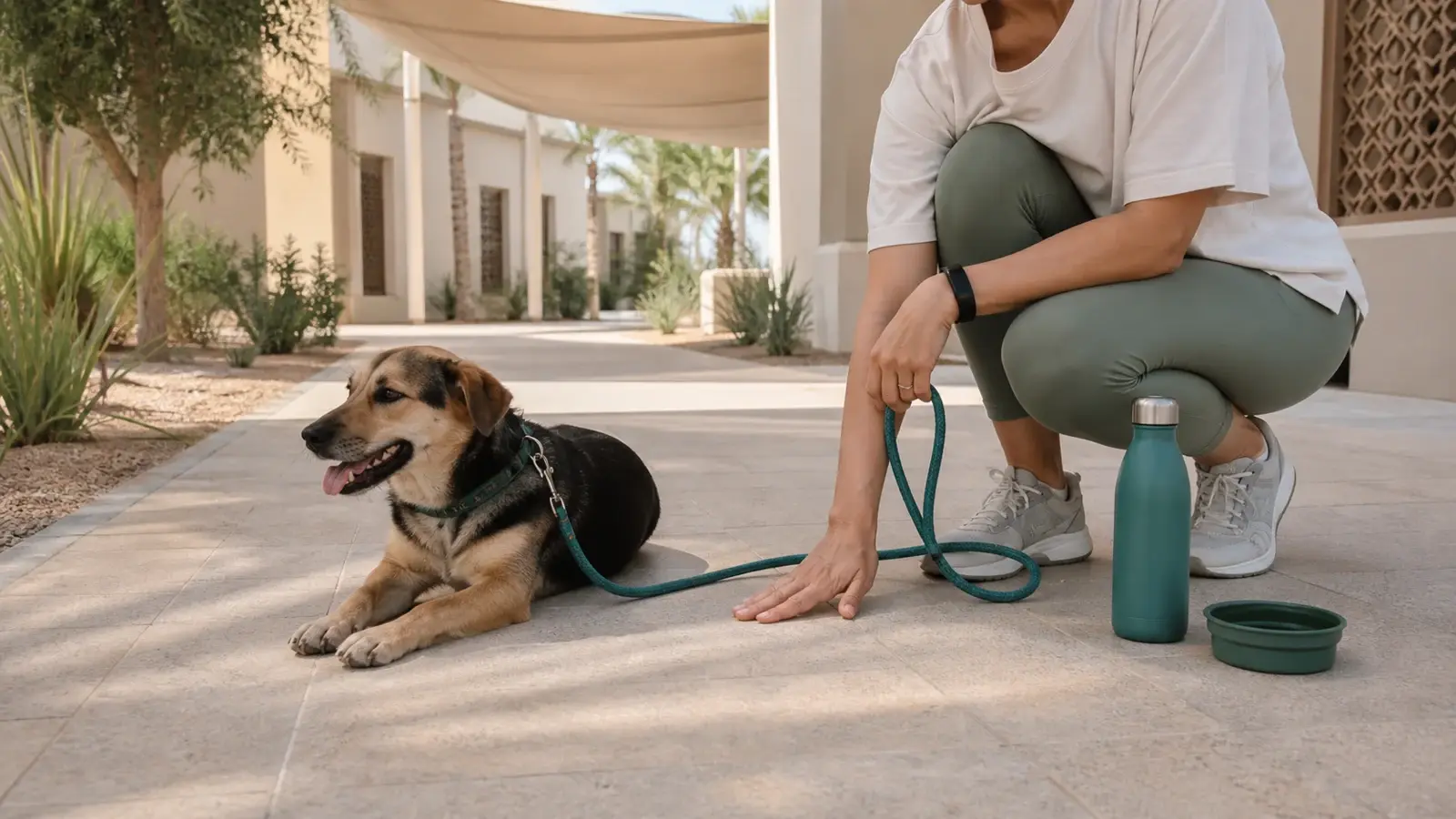
Indoor recall games are particularly useful when hot or humid conditions make a longer outdoor training session unsuitable. They are mental practice, not a substitute for safe toileting, exercise or the veterinary advice an individual dog may need. Before any outdoor work, check live conditions, the surface, shade and your dog's ability to cope. The UAE summer dog-walk safety plan explains why no single time or temperature is a universal green light.
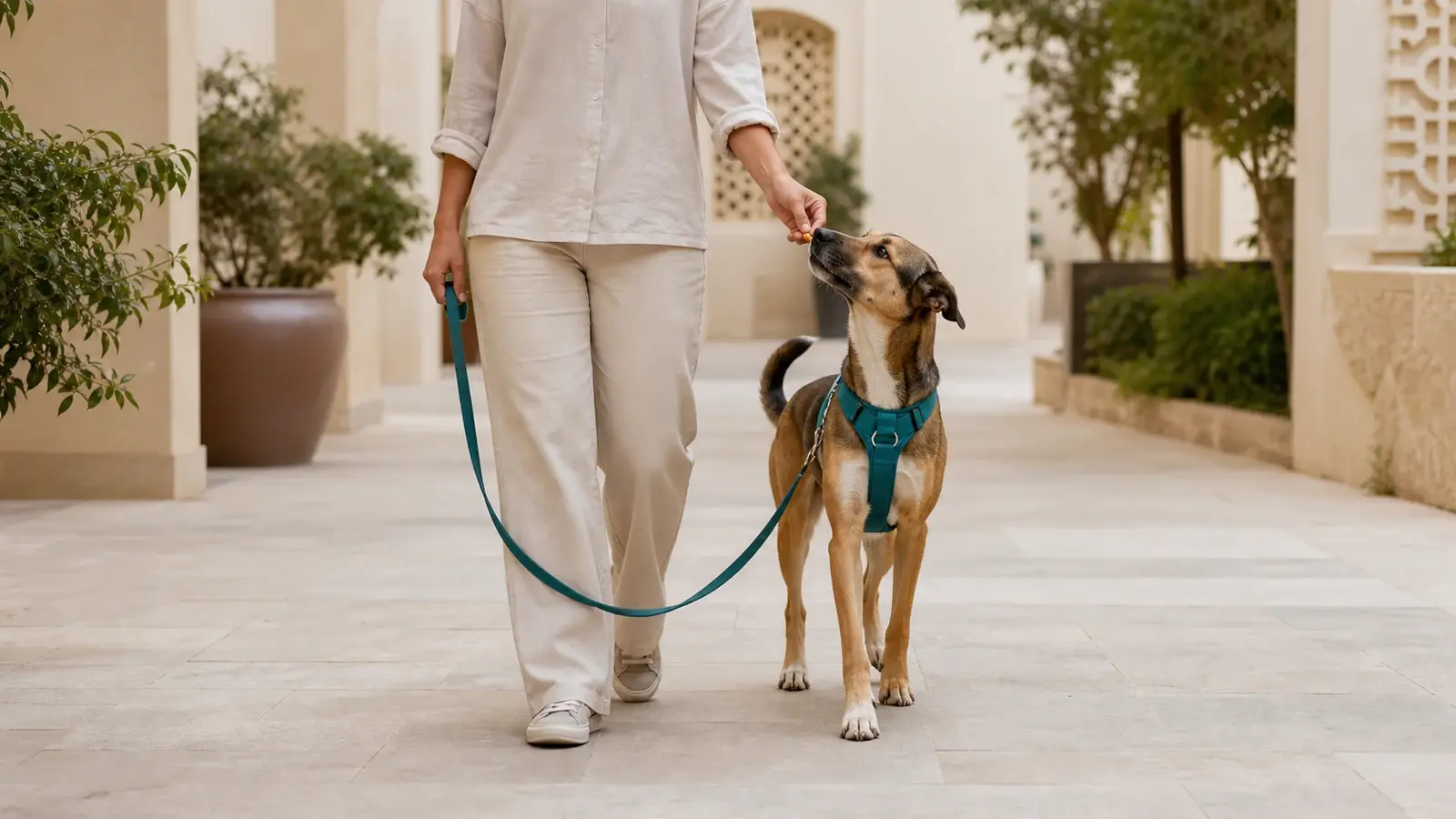
Recall and loose-lead skills support each other but solve different problems. Keep the dog on a lead wherever that is required or prudent, and teach a relaxed lead separately. Our reward-based loose-lead guide starts with the same principle: make the earliest practice easy enough to reward.
When to pause and get individual help
A generic recall plan is not appropriate for every situation. Stop and prioritise distance and safety if the dog freezes, panics, repeatedly bolts, guards a resource, reacts aggressively, seems painful or has an abrupt change in behaviour. Contact a licensed veterinarian to assess a possible health contribution and ask for referral to an appropriately qualified reward-based behaviour professional where needed. This article cannot assess the cause of a behaviour change or replace individual care.
A flexible five-session starter plan
- Session 1: call from one or two steps away in the quietest room, reward each arrival, then finish.
- Session 2: take turns with another household member calling from across the same room.
- Session 3: call from a nearby room or around an open doorway, keeping the distance easy.
- Session 4: add a low-level distraction, such as a toy on the floor that the dog can readily leave.
- Session 5: repeat the easiest successful version in a new safe location, then step back if the response changes.
These are not daily deadlines. Repeat an easier session as often as your dog needs. The useful measure is a happy, prompt first response in a safe context, not how far away you can stand or how quickly you can stop using rewards.