The short answer
- For a UAE car trip, secure your cat in a closed carrier or your dog in a suitable restraint, away from the front airbag and driver.
- Cool the car before loading, carry water and plan a direct handoff at the destination.
- Never leave a pet alone in a parked car, even for a quick errand or with the windows open.
- Check the destination's pet policy and your route from parking to its entrance before you depart.
How do you take a dog or cat by car in the UAE safely? Treat the journey as three transfers—home to car, travel, and car to destination. A secure ride can still go wrong at an open apartment lift, a hot parking bay or a busy arrival. The American Veterinary Medical Association's car-travel guidance supports restraint, carrier use and never leaving a pet unattended in a car. The transfer checklist below is PetsGo's practical application of that guidance to a common UAE apartment journey, not a statement of a particular emirate's traffic law.
1. Plan the route before you load
Confirm the appointment, pet access and exact entrance with the vet, sitter or venue. Ask where you can stop close enough for a controlled handoff. If you are alone and the destination requires you to leave the pet in the car while you check in, arrange a different arrival plan. Check whether the car's cooling works before bringing the animal down from your home.
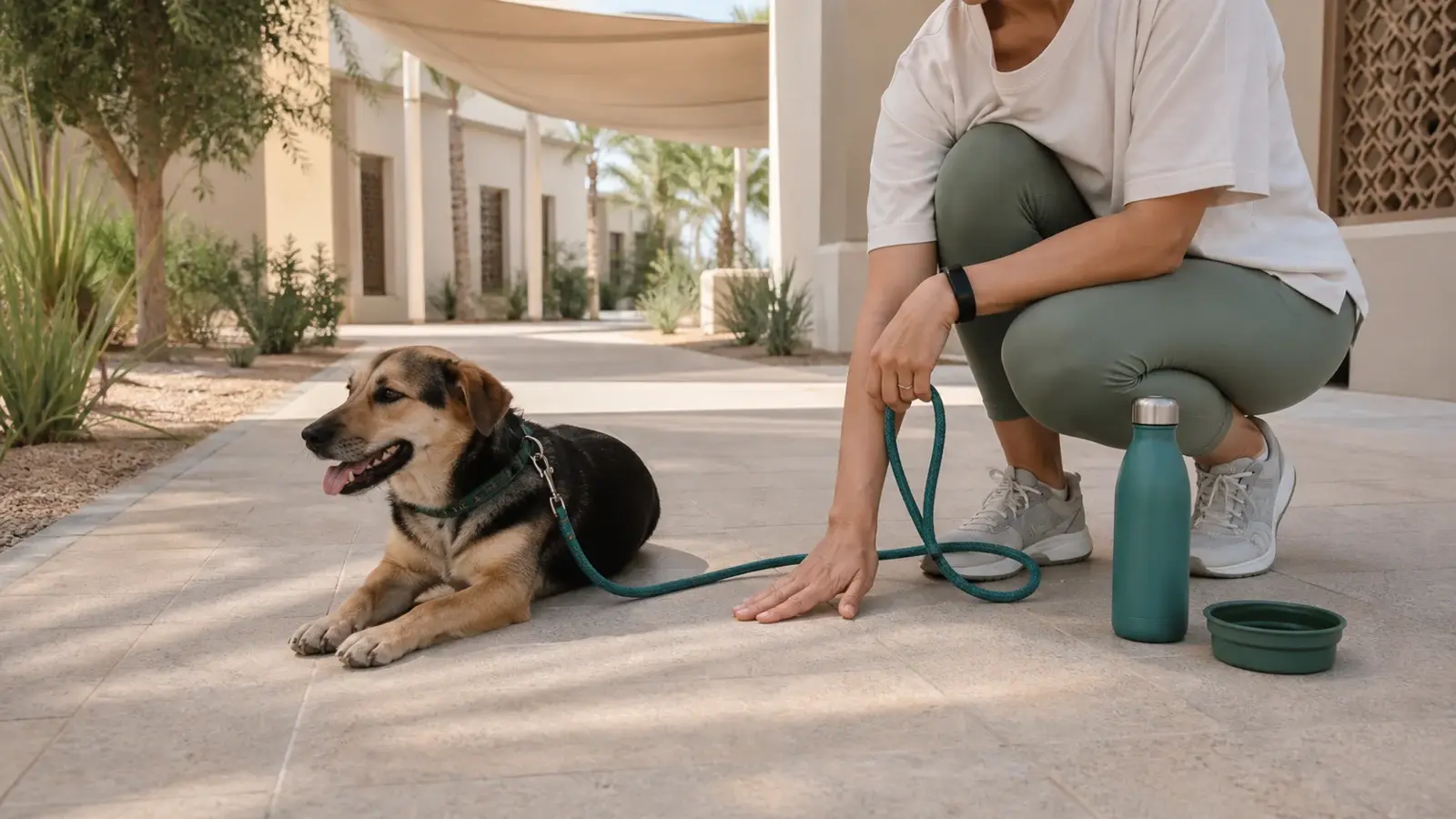
- Pack water, a bowl, lead and waste bags for a dog; keep a cat's carrier closed through the full transfer.
- Keep the destination address, your regular vet's details and a reachable contact to hand.
- For a longer journey, identify a safe stopping place where the pet can remain with you, and allow time for a dog's toilet break.
The AVMA's pet travel guide recommends packing emergency contact information, including your veterinarian's number and a 24-hour veterinary hospital at your destination. For a routine UAE drive, having those details ready is sensible preparation.
2. Secure the pet before the car moves
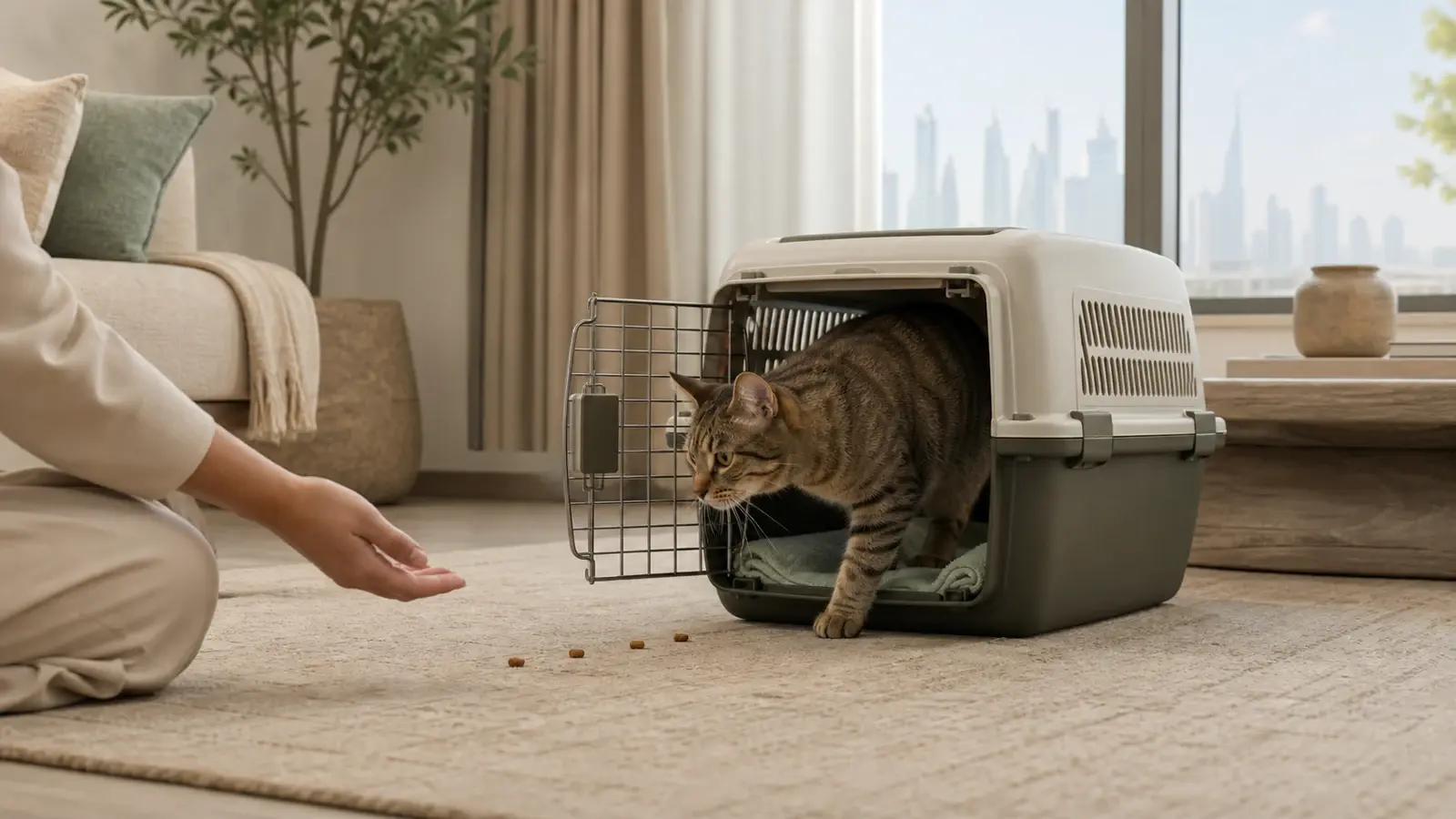
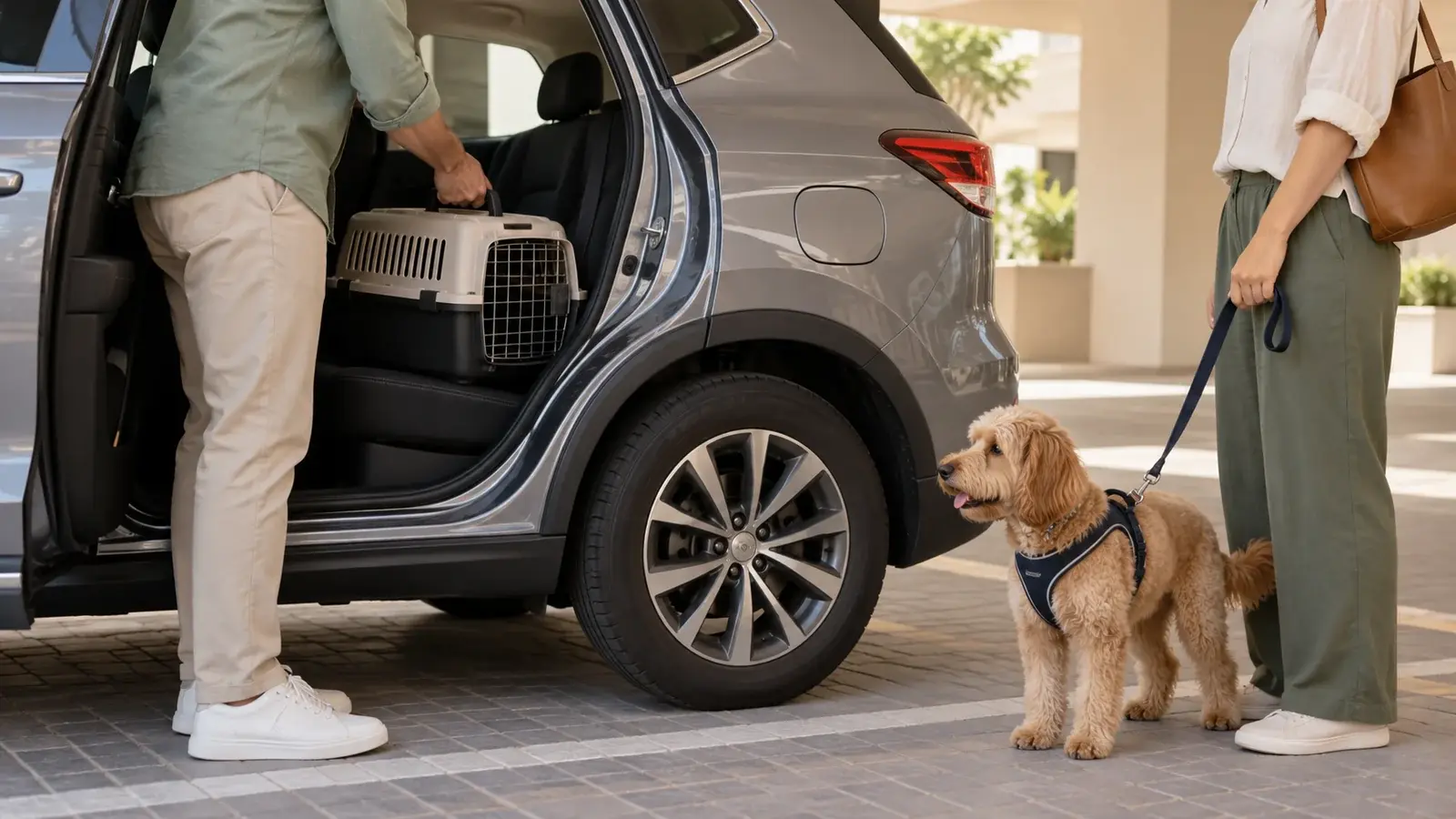
Put a cat in a ventilated carrier with a reliable latch, then position the carrier so it cannot slide or tip. Do not open it in the vehicle or parking area. For a dog, choose a correctly fitted travel restraint or suitable secured carrier. Keep both species away from the driver's space and front passenger airbag. Follow the restraint manufacturer's instructions for installation; the veterinary guidance does not certify a particular product or guarantee crash protection.
If the carrier is new, start calm carrier practice before the appointment. For a dog, practise entering, settling and leaving the parked car with rewards before attempting a long drive. If travel repeatedly causes distress or sickness, ask your veterinarian for individual advice rather than trying medication from an online article.
3. Keep the journey and every stop comfortable
Pre-cool the cabin, check airflow reaches the pet's position and avoid direct sun through the window where practical. Do not put a carrier where luggage blocks its ventilation. Keep the drive as direct as possible. On a longer trip, offer water and plan breaks appropriate to your pet; the AVMA suggests stopping about every two hours for dogs to exercise and relieve themselves. That is general professional guidance, not a fixed UAE requirement.
4. Make the arrival a controlled handoff
At the destination, park, switch from driving to handling, and check that you have a clear path before opening a door. Clip the dog's lead to its harness before releasing the travel restraint. Carry a cat in its closed carrier all the way inside. In a shared building, keep the pet secure through lifts, corridors and automatic doors. If two adults are travelling, agree who holds the pet and who handles bags and reception.
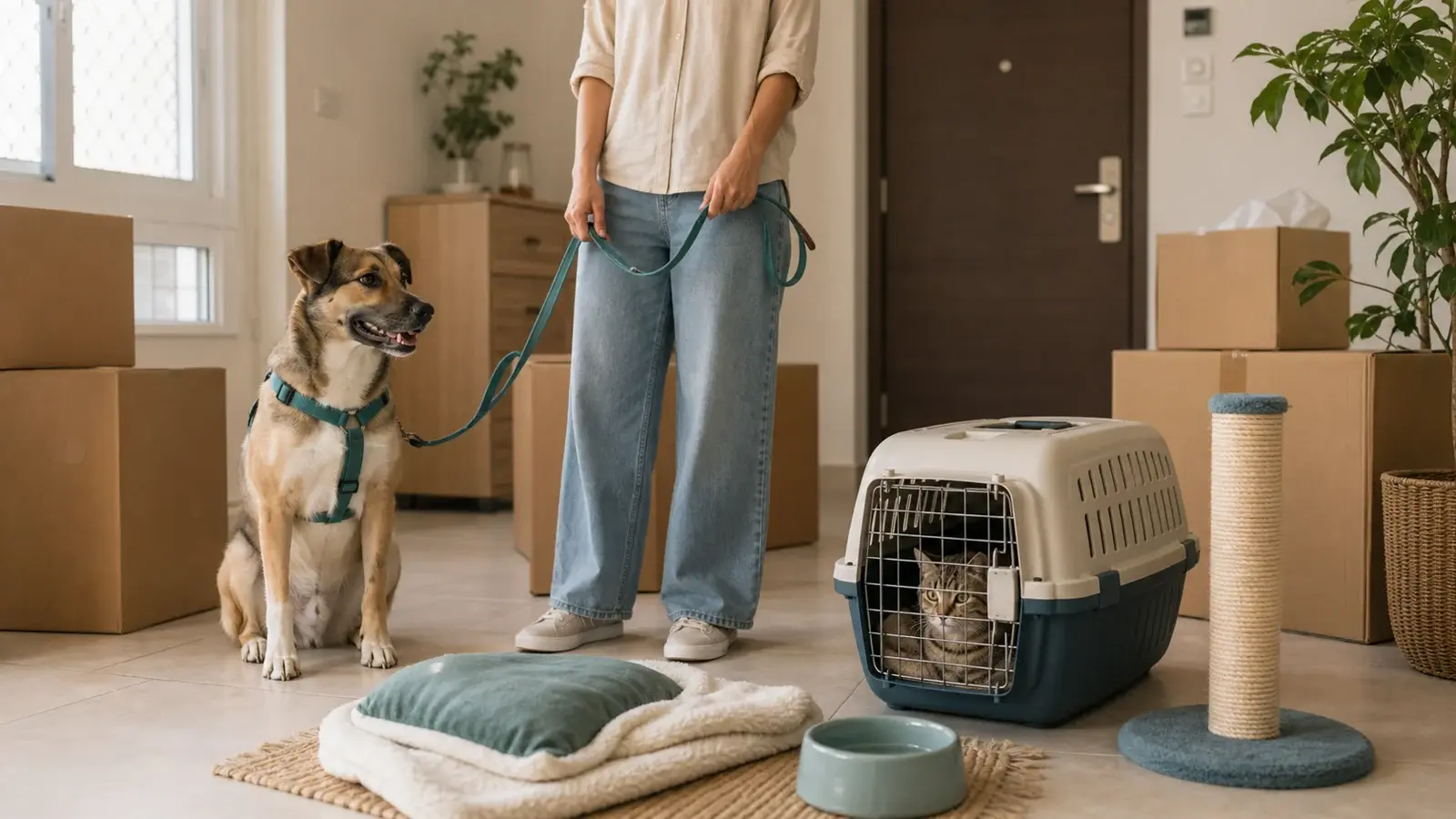
If the trip is part of a house move, use the fuller UAE moving-day plan. If heat or a long walk from parking makes the handoff unsuitable, ask for a closer drop-off or rearrange the visit. For outdoor dog activity, see the UAE heat and hot-surface guide.
When to stop and get help
If your pet seems unwell during or after travel—especially with marked panting, weakness, poor coordination or collapse—move to a cooler safe place and seek emergency veterinary care. The AVMA lists excessive panting, unsteadiness and collapse as signs of heat stress, but they can have other causes. Do not use a blog checklist to diagnose the problem or delay care.
Before the next trip, review which transfer was hardest: leaving home, riding, parking or entering the destination. Change that one step first. A short, well-planned drive is usually more useful than adding avoidable stops.